Select Page
Why is it so hard to maintain healthy relationships when you have a mental illness, and can counselling help?

Why is it so hard to maintain healthy relationships when you have a mental illness, and can counselling help?

I like to think that I’m a pretty good friend. I’m loyal, thoughtful and I’m a good listener but when it comes to my mental illness – sometimes it can feel like I’m not the most considerate. The truth is that when you have a mental illness sometimes you have to be a bit selfish.

I cancel plans at the last minute, ignore text messages for days and I control where we go if I’m feeling particularly anxious. I know, not cool. But it’s essential to my happiness, in the long run, I asked on Twitter what other people thought how their mental illness an impact on their relationships. Here’s what I found out:

It feels like no one else understands.

It’s true. No one else can fully understand exactly what you’re going through. Even when I talk to other people my age with depression and anxiety, they don’t have an experience which is identical to me. I speak to a lot of people who fear abandonment, but that’s never been an issue for me. I actually crave alone time and probably appear quite rude as a result.

Some people can’t face leaving the house, but that’s never really been a consistent problem for me. Like I say, not everyone will understand your irrational fears and the root of your sadness and this can be a source of conflict. Try to explain your feelings no matter how strange they may seem. Even if your friends can understand them, they can be aware and begin to accommodate them. This is also true at work. It can be really hard to open up to your employers but ultimately it’s the best way forward.

Like I said earlier, sometimes people do think I’m being rude. Even if they don’t (a few friends know my history and they can tell I’m just going through something) I start to tell myself I’m rude. Then is escalates into negative thoughts like I’m a bad friend, I’m useless, no one likes me… You get the idea.

One of the things I’ve had to deal with recently is having to be aware of my emotions now that I’m in recovery. When I was in the middle of a mental breakdown it was pretty easy to attribute all of my negative emotions to depression.

Now that I’m functioning ‘normally’ most of the time it can be tricky to spot when a relapse is coming. This means that my friends and family might think I’m just sad when really I’m struggling to cope. Then I worry that I’m just being dramatic.

I like to think I’m quite sociable, but if I’m struggling mentally more or less just shut down.

Similar to Jess, I lose the ability to speak! It can be really hard especially if my husband is asking me what he can do to help. Often I don’t know the answer and I can’t form a sentence to communicate. I feel incredibly lucky that my partner is so understanding, and he is so patient when I have a down day.

You should be aware though, that there are services available like marriage counselling, CBT and talking therapy. I personally found that counselling really helped me have healthier relationships. I never really discussed my relationships directly with my counsellor, but having someone impartial to talk to undoubtedly took a lot of pressure off my friends and family. As much as the people close to you will want to help, the fact is that they don’t always know how to. They’re not trained professionals. It really is an amazing opportunity to be able to speak to someone who actually knows how mental illness works. They can spot patterns and offer practical advice in a way that friends and family aren’t qualified to do.

But I’m not perfect. Sometimes I fly off the handle and it’s nothing to do with my mental illness, but I’m working on it. How to you maintain healthy relationships with your mental illness?

The most important things that counselling has taught me

The most important things that counselling has taught me

If you’ve been diagnosed with a mental illness then you’ve probably been told a million times that it’s good to talk.

Being open and honest with your partner, family and friends is definitely a step in the right direction as keeping your feeling bottled up is a recipe for disaster.

But the truth is sometimes your nearest and dearest – no matter how hard the try – don’t always say the right thing, because they’re not trained in how to deal with your illness.

That’s when talking to a professional counsellor can really help, because you can get more than just comfort and reassurance – you can actually learn the skills to get better.

Here’s a few things I learned from counselling:

1. Consistency is key

You can’t rush recovery, and consistency is really important to make sure everything is roughly going to plan.

I became so reliant on alcohol to cope that I had to give it up entirely, and if I had fallen off the wagon after a few weeks and claimed it wasn’t working that wouldn’t have been a consistent approach.

I actually gave it up for a whole year, and that commitment gave me the energy to be on time for all of my appointments and also helped me recognise what my emotions were really doing without the impact of booze on my system.

2. You’ve got to do the work

There are a lot people who think you can just ‘choose’ to get better from a mental illness, but it’s a lot more complicated than that. When I was in the worst phase of my depression I didn’t even think getting better was an option, I thought I’d be unhappy forever.

But after the little boost from medication I eventually got to a point where I could make more conscious choices, and that’s where counselling came into play.

I had to make the choice to turn up for my appointment every week, tell the truth, and decide to do the difficult things like avoid alcohol and put myself in awkward social situations. At the time it all felt like such a slog, but you really have to do the work to get better. It won’t just happen on it’s own.

3. I’m my own worst enemy

One of the turning points in my recovery was during a counselling session where I was asked about why I felt under so much pressure to be a high achiever.

I was listing off all the things that I had to deal with at work, as well as chores at home like having a perfect garden and a clean and tidy house.

I said something along the line of ‘every other person can manage to do all these things at once and I can’t do it’. My counsellor asked me ‘who are all these other people?’ and I kind of shrugged and said, ‘everyone!’.

She explained that this was just an assumption I had made about everyone else in the world, when actually it was ME who had set the unrealistic standards for myself, and no one else. I was assuming that everyone else had it all figured out when that’s simply not true.

4. Rest is part of the process

I’ve always been an impatient person.

I would much rather rush a task and get onto the next one instead of taking the time to make the first one perfect, but I learned through counselling that actually going slow and having lots of rest is beneficial.

I personally got into a state of depression over a space of several years, and it takes a lot of rest and taking care of yourself to undo all of that damage that has been done.

More about counselling here.

Talking therapy – a painful step in my recovery from depression and anxiety

Talking therapy – a painful step in my recovery from depression and anxiety

It’s easy for me to sit here and tell you to get therapy.

I was lucky enough to receive counselling from the NHS after I was diagnosed with depression and anxiety, and without it I’m not sure how my recovery would have panned out. Walking into a tiny little room every week and baring my soul to a complete stranger seemed unthinkable at the time, but I knew I was lucky to be given access to the service so I always attended my appointments, even though I dreaded them.

I saw a Community Psychiatric Nurse over the course of a year and it wasn’t easy. In fact, it was really quite uncomfortable at times and having social anxiety made it even harder because my body had a physical reaction every time I walked into that room. I wanted nothing more than to run out the door and never look back, because it was a dark and difficult place to be.

I’m not telling you all this to put you off, I’m telling you because I think its important to have realistic expectations when you start to open up about your mental illness to a professional.

They are here to help you but that doesn’t mean the experience is going to be enjoyable. It’s hard work, its a grind, a long slog and along the way you’ll inevitably want to give up.

I had moments of hope. Sometimes my nurse would tell me I looked better than the week before or that I was making real progress and would be able to get back to work soon. But more often than not it was painful and drawn out. Most weeks I felt like it was a waste of time even showing up, but as the weeks and months passed by I realised that she was on my side.

I could ask her impartial opinion on things that were bothering me, like whether I should attend a friend’s birthday party even though it made me anxious or if it was OK to drink alcohol on my medication. She wasn’t giving me love and affection like my family, but she was giving me care. Professional care and help that I so desperately needed even if I didn’t want it at the time. Looking back now I can see that having that constant source of knowledge on tap every week was invaluable, and a real turning point in my recovery.

Seeing my regular doctor was all well and good, but being able to talk for longer that ten minutes with a medical professional was a tool which I really feel should be available to everyone with a mental illness.

If you’re on the fence about getting therapy then I would say give it a go. If your GP is able to offer you free access then grab it with both hands, and if you need to pay for it yourself then it’s still worth the money and an investment in your recovery that I promise will pay off in the long run.

Have you tried therapy?

Wedding planning with depression and anxiety

Wedding planning with depression and anxiety

I started planning my wedding in 2014, just two years after my initial diagnoses of depression and anxiety.

On the outside, I appeared to be quite happy and excited but truthfully I found the whole experience rather stressful. To be honest I could get stressed in an empty room and it’s definitely one of my triggers, so I try to keep it under control.

But planning a wedding is a whole new level of stress that I’d never experienced before!

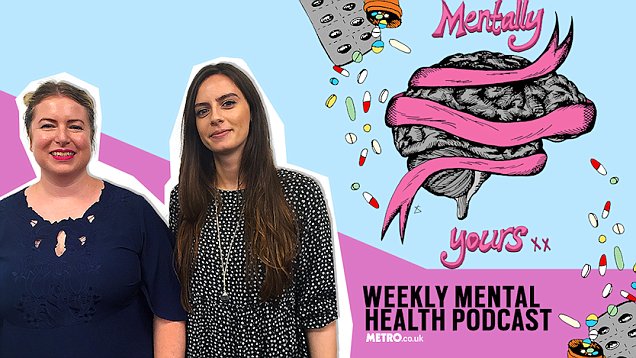
I wrote about my experience in detail in this article which I published on the Metro, and Yvette and Ellen asked me to appear on the podcast last week to delve a little deeper into the subject of wedding planning with anxiety.

Listen to the episode here!

Here’s a little excerpt:

‘I suppose everything’s just times 10. For me my anxiety is triggered by stress, particularly emotional stress, so something like planning a wedding is just a perfect storm really,’ said Abigail.

‘I have anxiety and depression and they kind of go hand in hand, and my trigger’s always stress, so I would get stressed about a tiny little thing and then that would make me anxious and the comedown from that was always depression,’ said Fiona.

Listen to the entire episode on iTunes.


‘Ask for help. I’m really bad at asking for help and even though I know that it would make it easier for me if I asked for help I still find it really, really hard. I feel a lot of pressure to do everything myself, and that’s partly the anxiety to be perfect,’ said Abigail.

‘I would say delegate but delegate wisely,’ added Fiona. ‘Delegate (tasks) to the right person so that you’re not then going to get stressed and take over and end up doing it yourself anyway.’

Listen to the entire episode on iTunes.

What did you think of the podcast? Did it help you feel less anxious about planning your own wedding?

7 reasons why you need to make an emergency self-care box

7 reasons why you need to make an emergency self-care box

I’ve had my reservations about the term self-care. It seems to be taking over the internet, forcing us to take regular bubble baths and spend a fortune in Lush products in order to maintain sanity and I’m really not feeling that way of life. Recently though, I looked bit deeper into the meaning of self-care and I had a bit of a revelation.

If you’re struggling to understand exactly what self-care is and how it should be practised, simply remove the first word and you’ll find a simpler way of looking at it. So remove the word ‘self’ from the equation, and reflect on the word ‘care’ for a moment.

What does the word ‘care’ mean to you? It makes me think of a hospital, or an old folks home. It conjures up images for good Samaritans giving out hot food to the homeless, or a mother caring for a newborn baby.

Care is all about taking steps to maintain heath, especially in those who are vulnerable. Self-care is all about applying this concept to yourself.

What does it mean to you?

Self-care is an individual thing. For you, it may very well be a bubble bath and I don’t want to take that away from you! But the reality is that it can vary greatly from person to person and change dependent on the situation.

Sometimes the time when you really need to take care of yourself is when you’re feeling at your absolute worst – maybe you’re physically exhausted or just mentally drained – and that’s when an emergency self-care box can really help

1.It’s like mental health insurance

When you’re feeling low, you might hear that nagging negative voice in the back of your mind that likes to tell you that your worthless. I get it quite regularly, and it has the potential to hinder your ability for self-care.

If you’ve taken the time to prepare a little box full of things that might make you feel better, it’s like having a box of bandages ready for when you cut yourself. It helps you heal faster.

2. It’s cheap

Are you prone to a bit of retail therapy when you feel crap? Good news then, because making this little box of self-care activities should theoretically distract you from your usual bad habits and replace them with warm and fuzzy feelings.


3. It’s creative

I’m a huge believer in creativity as a force for good in the world of well being, and the act of making your emergency self-care kit will be a project of this nature. It will give you a chance to explore the sides of your personality that come out when you feel low, and figure out how to soothe yourself through other activities.

4. It’s convenient

No more rummaging around for a face mask when you need a little pick-me-up, or building yourself up to visit the pharmacy for painkillers. Everything you need should be in your kit so that all you have to do it grab it and select what you need in that moment.


5. It’s fun to make

You can keep it simple and fill a shoe box with everything you need, or take it one step further and make it into an entire project. Go through magazines and find images and quotes that inspire you, then use them to decorate the box so that it fills you with joy whenever you look at it.

You could even ask friends and family to write positive notes that you can open up when you need them, and include photos and fragrances that evoke good memories.

6. It’s unique to you

There will be no other self-care box that meets your needs better than the one you make yourself. Fill it with your favourite smells, lotions, drinks, music and photographs to make sure that whenever you open it you feel totally at home.

7. It’s a thoughtful gift

Once you’ve mastered making one for yourself, why not try making a gift for a friend or family member? Again, this can be as creative as you like so you’re actually using it as a self-care activity for yourself too. Checking all the boxes!

My suggestions:

One of my mental health zines You Got This – both of which are filled with kind words and friendly advice on how to deal with down days.

Anything by Laura Talanti, it’s all really thoughtful and beautiful to look at

gifts for depression
These positive affirmation cards are a daily routine for me, but you could add some to your box for when you need some good vibes

Some sort of notebook, like this Five Minute Journal

What will you put in your self-care box?