
by Fiona likes to blog | Apr 21, 2017 | ANXIETY, DEPRESSION
Do you ever feel like you need a holiday just to recover from being on holiday? I get this all the time, and I realised it’s because I wasn’t setting aside time for self-care when I was away. We often feel obliged to cram in as much sight-seeing or partying as possible, instead of actually taking time to rest when we have the chance. If you’ve got a holiday coming up I suggest being mindful of a few things in order to make self-care a top priority…
Fuel your body
Although being on holiday is a great excuse to enjoy a few treats that doesn’t mean neglecting what your body really needs. I love this post from Rachael about how overeating at the weekend can make you feel terrible, and it’s exactly the same for holidays. Eat what makes you feel good (cake and chips, obvs) but also eat what makes you actually feel good (you know… the odd carrot, lettuce leaf and potato).
It’s easy to get carried away with trying everything on offer just because it’s there, but remember that self-care means listening to your body and knowing what it wants. I like to eat a big breakfast otherwise I get hangry and all of a sudden I’m ordering a burrito, fries and planning dessert before I’ve even finished lunch.
I personally find that fuelling my body early with a big bowl of porridge and fruit helps be feel satisfied and mentally ready to start the day without feeling deprived. I also like to avoid alcohol (just my preference, no judgements) and drink lots of water, eat plenty of greens and avoid too much sugar before bed.

Find comfy holiday clothes
Wearing summer outfits gives me the fear. I’m not made to exist in a hot climate, so finding clothes that are appropriate is a real struggle for me. I want to wear long, flowing skirts and little white cotton dresses but the truth is chub-rub is REAL. These thighs were not made to meet on such a regular occurrence.
As much as I’d love to look all flirty and feminine on the beach it’s just not comfortable for me. How can I be expected to catch a break when I’m physically uncomfortable? I say wear what feels right.
For me, that’s loose-fitting harem pants, leggings and big-old denim shorts. Being at ease with your physical self is SO important to allow your mind to unwind, so wear what you want and feel free.
Stay active
You should absolutely take time to catch up on some sleep when you’re on holiday. I remember when we were on our honeymoon, we didn’t make it to the breakfast buffet once the entire week and it was fabulous! Waking up naturally without an alarm is an amazing feeling, but try to stay as active as possible throughout the day to avoid any unnecessary fatigue.
Walking outside is so helpful to keep your body ticking over as well as induce those mood-boosting endorphins. It will also help you get a better sleep in the evening meaning you should naturally rise earlier the next morning.

Plan some alone time
As an introvert, I personally find a week stuck in other people’s company a little overwhelming at times. I crave downtime on my own because that’s how I recharge my batteries and find energy for the next day.
My favourite way to find alone time on holiday is to go to the gym. It’s my own space where I can reflect but still do something productive that I enjoy and I generally leave the gym feeling more energised that when I went in. Weird, right?
I know this isn’t everyone’s idea of fun though, so try and find the thing that works for you. It might be a soak in the tub, a massage or a good hour getting lost in your favourite book. Whatever works.
Have you made a self-care plan for your next holiday?

by Fiona likes to blog | Apr 3, 2017 | ANXIETY, DEPRESSION
I’ve spent many an afternoon wandering around the library. To me the library has always been a place of opportunity, and it has helped me find books that ignite new interests and explain unknown worlds to me. I’ve loved collecting books over the years, and looking back at my favourites reminds me if where I was at that point in my life, how I was feeling and what I was doing.
Having depression and anxiety means I often look for answers in the books I read. Recently I reflected on some of the books that helped me make sense of my own mental illness and it’s something that I think you might find helpful, so I’ve listed my top 3 books below.
Of course, I couldn’t write a list like this without including my own book Depression in a Digital Age. I grew up without an iPhone, used actual landlines to make calls, and didn’t have the luxury (or perhaps the curse) of Facebook during my adolescent years. But though my childhood took place in an analogue world, I found myself suffering from the same problems many young people face today; the race for perfectionism, high levels of anxiety, a fear of success.
After an unfulfilling university experience, a stressful beginning in a management career, and a severe case of impostor syndrome, I suffered a nervous breakdown in my mid-twenties. Amongst therapy and medication, it was the online community which gave me the comfort she needed to recover.
In Depression in a Digital Age, I trace my life dealing with anxiety and the subsequent depression, and how a digital life helped me find my voice.

I only finished reading this memoir last week and I actually posted a full review which you can read here. I was engrossed in this from the moment I picked it up and it’s the quickest I’ve read a book in ages.
Nikki takes us through her life story, starting with when she developed an eating disorder at eight years old to when she finally got help as an adult. During that time she was physically and sexually abused by family members, addicted to drugs and alcohol and struggled with self-harm and body dysmorphia.
As an international top model the pressure to be thin was overwhelming, and only served to exacerbate her eating disorder as well as her psychotic episodes. This painfully honest account is a testament to her strength and offers hope to anyone experiencing even the darkest of times.

I read this book back in about 2009, years before I was diagnosed with any form of mental illness. I really can’t say why I felt compelled to pick up a book about depression other than I felt I was becoming unhinged at times, and had taken to drinking during the day to relieve stress.
Sally’s book didn’t point out any glaring symptoms in myself, but I was utterly hooked by her story and how her relationship with alcohol made things so much worse. This combined with a failing marriage and a daughter to look after made for a heartbreaking tale.
I found it upsetting to read, but absolutely essential to my understanding of how powerful depression is at taking over the mind and body. She does well to describe how one cannot simply ‘shake off’ these bad feelings and get on with daily life, something that many non-sufferers could benefit from understanding.
I didn’t know until recently that Sally died from suicide last year, which makes her work even more significant and worth reading.
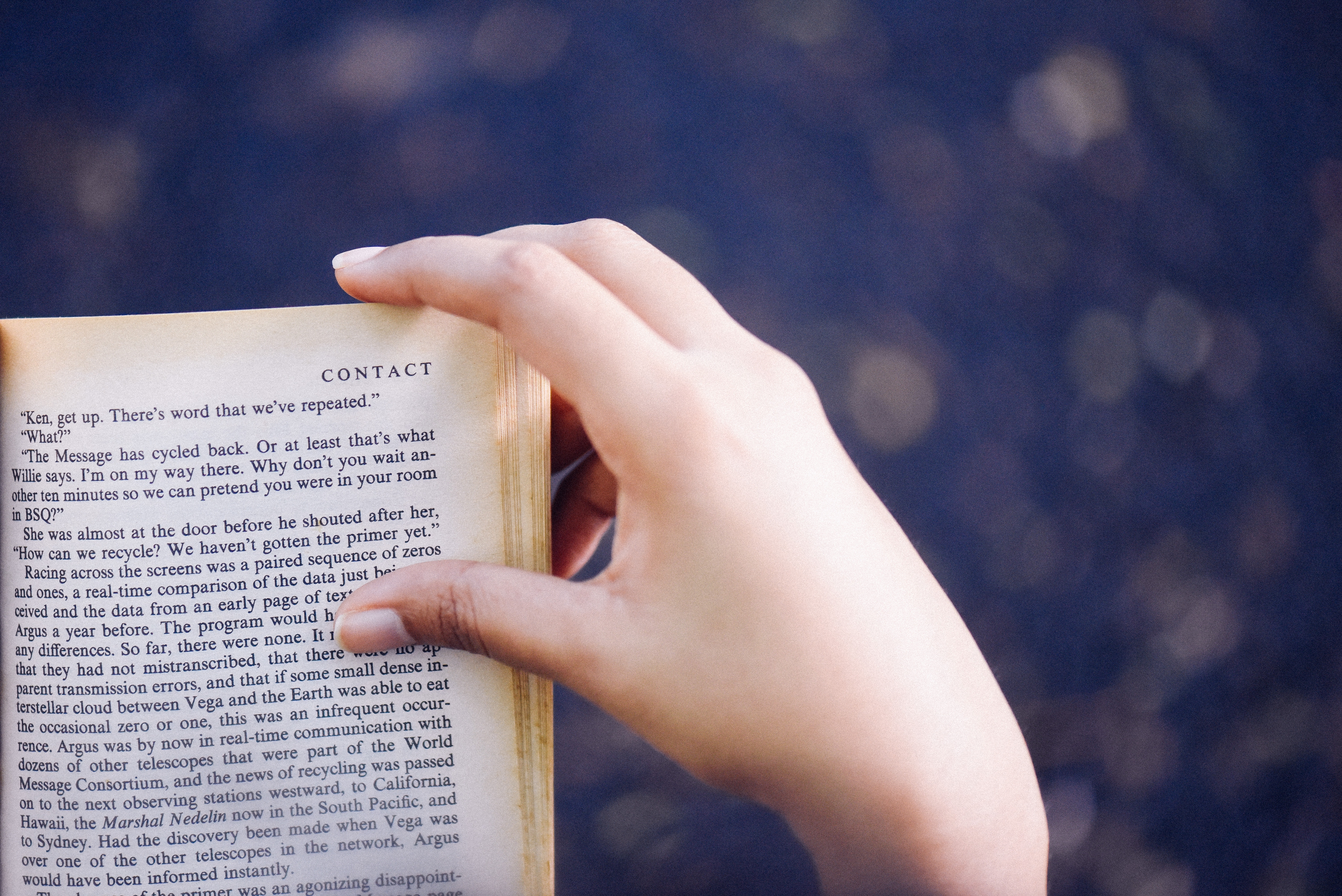
I bought this book after I started to become concerned about my eating habits. I was laying in bed one night, sobbing and feeling ashamed after another day of uncontrollable eating when I searched ‘how to stop binge eating’ on You Tube. I came across a video of someone talking about how this book changed their life, so I ordered it immediately.
Kathryn went through years of unsuccessful therapy for binge eating disorder and couldn’t seem to get it under control. The most common theory is that binge eating is a coping mechanism for some underlying psychological issue that must be unearthed in order to stop the pattern.
She spent years following the doctor’s orders, writing down and exploring all her habits and thoughts in an attempt to identify the problem. I won’t spoil the book for you but Kathryn goes on to explain how she developed her own method for stopping the illness in its tracks.
I’ve never been diagnosed with binge eating disorder because honestly, I was too scared to tell anyone about the symptoms and addictions I was developing. I believe I managed to stop the habits from forming by applying the techniques I read in this book.
It was also just incredibly comforting to read someone describe the same urges that I was experiencing, because no one really talks about binge eating openly and I really needed confirmation that there was a problem and I wasn’t just exaggerating things in my head.
What are your favourite books about mental illness?

by Fiona likes to blog | Mar 30, 2017 | DEPRESSION
Washed Away: From Darkness to Light is a Memoir by former model Nikki Dubose. She has appeared in magazines such a Maxim, Glamour, Vogue and Vanity Fair and first suffered from an eating disorder at just eight years old.
Her childhood trauma of sexual abuse led to bulimia, various drug addictions and serious mental illness in later life. Although she boasted a high-flying career in the fashion industry, at the height of her success she was experiencing intense inner turmoil which she kept hidden from the world.
Talking about one performance on the catwalk she writes;
“As my feet carry me to the edge, I hear no sound, experience no sensation. Despite the music and commotion, I am lost in a dreamland. How long have I waited to arrive in this spectacular moment? I never imagined I would feel so numb, so vacant. Dozens of cameras pop and crackle as they capture the magnificent creature before them. I perform, but inside I feel trapped, imprisoned within my mind.”
Nikki describes the terrifying ‘whispers’ she hears when she’s on stage, the voices in her head which mock her every move. When met with praise she ignores everyone and instead of celebrating with champagne and dancing, she rushes home to her apartment to be alone. She only wants one thing, and that’s to binge on – and then purge – large amounts of food.
To say Nikki came from a broken home would be kind at best. Her parents separated early on and her mother sexually abused her and treated her as a buddy; someone to show off to as she performed sex acts in online chat rooms and hooked up with strangers in bars. This is just one of several people who took advantage of her innocence from a young age.
With such a tainted childhood, it’s no surprise that Nikki went looking for love in all the wrong places. Her struggle to meet the demands of how a model should look only exacerbated her eating disorder as well as her constant self-loathing.
As I read the history of Nikki’s eating disorder it became clear that it was not only a way to stay as thin as possible for the modelling world, but a form of physical release that she couldn’t get elsewhere. Her mental illness ultimately led to the physical condition which consumed her life.
Having lived with a hatred for my own body for most of my life and dieting since aged 17, this topic really hit home for me. I’ve never been diagnosed with an eating disorder but I know I’ve teetered on the edge, and so I empathised with the daily rituals she went through to hide her unhealthy behaviours.
“I binged and threw up in the shower or in paper bags that I kept in my bedroom. I was the smart one; Evelin and Vitor had no idea, especially when I hid the vomit in the paper bags. My knuckles and lips began to bleed and scar again, but I covered them with concealer. Whenever a make-up artist raised an eyebrow at the cuts, I said that I had an autoimmune disease.”
Nikki talks to the reader as though we are her closest ally. Throughout her illness she felt unable to share her troubles with anyone, so to have her talk intimately and in great detail about the things she’s endured is a privilege.
Reading her words is like being inside Nikki’s head. Her writing style is brutally honest and disturbing at times, a testament to not only what she has endured but also how difficult it must have been for her to relive these painful memories and put them down on paper.
I had no idea what to expect going into this book. I never thought I’d finish the thing in just a few days and feel so utterly connected to someone I’d never met. Knowing Nikki’s story has reminded me why I started to write about mental illness online, even though it often leaves me feeling vulnerable to expose myself to the world.
Although Washed Away is about championing the possibility of recovery, it’s my no means a self-help book. I’m not sure the world needs another one of those anyway. Often those of us with mental illness know deep down what steps need to be taken, but we just can’t imagine having the strength carry them out.
This book proves that we are indeed strong enough, and that even the darkest of times will lead to light.
Buy Nikki’s book here
This post is sponsored and contains affiliate links

by Fiona likes to blog | Mar 15, 2017 | DEPRESSION
If your GP has put you on a waiting list to see a counsellor then you should definitely see one.
Many people brush off the notion of talking as a form of medication , and just want to take pills and power through their illness until they feel ‘normal’ again.
Medication is great. Medication can help alleviate symptoms of depression in order for you to be a little more productive, take better care of yourself and attend important appointments.
But you may find that talking about your problems is the thing you need to fully resolve any ongoing mental health problems you have. If you think it isn’t going to work for you then ask yourself; what have you got to lose?
Talking to a counsellor is a process
If you physically recoil when you think about sharing ‘feelings’ with a stranger then this will seem like an uphill struggle from the start. I didn’t want to talk about my depression. It was mine, my burden and sharing it with others didn’t feel natural or helpful.
I learned over time that sharing my burden was a gift. The best thing is that your counsellor is an outsider.
They are not a family member who thinks you’re taking life too seriously. They aren’t a friend who thinks you’ve got nothing to be sad about. They aren’t an employer who thinks you need to knuckle down and get on with it. They are an impartial person with your best interests at heart.
I found my counsellor especially helpful during the phase when I was returning to work. She was able to give me answers to some of the questions that I didn’t have myself. Should I work full time or part time? What level of responsibility should I have? She also gave me the strength to stand up to my friends and stay away from alcohol when I was feeling the urge to abuse it.
Talking to a counsellor is awkward as hell
Everyone reacts differently to awkward situations. And if sitting down to tell a complete stranger about your inner turmoil isn’t the worst kind of awkward, then I don’t know what is.
Some people laugh, others chat nervously, but I sat in silence. Going into that claustrophobic room, crippled with anxiety and depression was the absolute opposite of what I wanted to do during that period of my life.My body downright rejected it and I had to force myself to enter.
I spent most sessions staring at the floor. I avoided eye contact. I gave one word answers. I said “I’m fine” constantly, to try and fool the woman into letting me out of the painful scenario. My muscles tensed to fiercely that I was physically exhausted from every session I completed. But I completed them.

You have to commit
As difficult as my weekly meetings were, I never missed a single one. Even when I felt like it wasn’t helping, or that it was making me feel worse, I kept going. I knew that this kind of treatment was hard to come by so I didn’t want to lose my place in the programme.
I slugged it out even when I didn’t want to. Part of being depressed means that a lot of the time you don’t have control over your actions, and you might not be able to show up every week. I get it. Sometimes leaving the house just isn’t an option.
But if you can find the will to go then I urge you to do it, and do it consistently. If you show up regularly – even when you don’t want to talk – it lets your counsellor take note of your mood and your ability to cope. This is all helpful information that can be used to track your progress, even if you feel like you’re not progressing much at the time.
You need to be honest
Having a mental illness is draining. You often walk around pretending to be OK for days, weeks or months at a time because you think it’s what you’re expected to you. You tell employers you can cope with extra work, you tell friends you’re happy on a night out, and you tell your partner your just having a bad day because you haven’t been sleeping well.
It’s a vicious cycle where you use so much energy putting on a brave face for everyone that you have no strength left to truly take care of yourself.
Talking to a counsellor is an amazing opportunity to actually tell the truth. Be totally honest. Tell them that you dread getting up in the morning, you hate your job and you don’t want to socialise with anyone. Tell them you can’t find enough hours in the day to wash your hair and match up your odd socks. In fact, these small tasks are so overwhelming that you sob uncontrollably at the thought of doing them.
Nothing bad can come from opening up about these thoughts. They are more than just thoughts. They are symptoms of your illness, and once you’ve got them off your chest I guarantee you’ll feel the benefit. Trained professionals understand them in a way that your friends and family might not be able to and that is an invaluable tool in your path to recovery.
Do you have any experience with seeing a counsellor?

by Fiona likes to blog | Mar 7, 2017 | DEPRESSION
One of the most prevalent emotions that tears you up inside when you have depression is guilt.
Guilt about being sad. Guilt about letting people down. Guilt about not being good enough and guilt about always relying on others to help you get through the day.
I’ve had to rely on others for money, transport and food as well as emotional support especially in social situations where I feel very vulnerable. Not being able to go out to meet people without a chaperone is a pretty shitty feeling let me tell you. But I believe there’s no good reason why you should have to apologise for your mental illness. Here’s why…
It’s not your fault
You probably think apologising for your behaviour is the right thing to do. You’ve not been yourself, ignoring people and been a bit of a recluse in fear of upsetting anyone with your unpredictable mood swings.
It’s easy to think that people don’t want to see when you’re like that, but rest assured that it’s your mental illness talking and not the truth. When mental illness takes hold it’s so overpowering that you can’t control it. If it was a choice wouldn’t we all just shake it off and get on with life? Of course we would.
Your friends and family might not think you’re a bundle of fun when you’re going through a bad spell with your mental health, but they still love you anyway. Apologising and talking yourself down all the time is honestly just a waste of energy at this point. Energy that you need to conserve and use for more positive tasks. As much as possible, you should try and remember that your situation is not a direct result of any actions you’ve taken.

It’s more inconvenient for you than anyone else
Have you ever felt that you’ve let someone else down as a result of your mental illness? Me too.
I started a new job and on my second day I burst into tears on the way there and screamed that I couldn’t go in. It was the easiest job in the world with the friendliest people I’ve ever worked with but I just couldn’t handle it. I made my mum go in and tell them that I wouldn’t be in that day and I didn’t go back.
I later had it confirmed by a health professional that I was indeed unfit for work, but at the time I felt like a total failure and a time-waster. I’d left someone to work on their own in a situation that would’ve been incredibly stressful, but me being there in floods of tears unable to cope with my existence wouldn’t have helped the situation.
Why do you think your happiness is less important that someone else’s? If you let someone down and they’re mentally stable then they can go on with their day regardless. You, on the other hand are unable to do something because you’re unwell. You’re not fit to do some tasks at the moment and whilst that might be inconvenient for someone else for a few minutes, you’re dealing with the painful inconvenience of having a mental illness every single day. You come first.
Making other people uncomfortable or making things slightly awkward once in a while is something others will just have to deal with whilst you work hard to recover. Trust me, they can handle it.

It’s OK to be selfish
One of the reasons I got myself in a mess was because I was trying to please too many people too many times. I was scared to say no to anyone because to be honest, I didn’t realise I could. One of the best things you can do for your happiness is practise saying no more often.
I’m not talking about avoiding things that make you happy, but being confident enough to know when you’ve taken on too much. Don’t do something just to make someone else happy when you know that it’s causing you pain or making your anxious. Be honest with people. When someone is asking you do do something they’re asking you because there is more than one possible answer; make sure you choose the one that serves you.
The day I started being selfish with my time was the day I started to truly realise what I was capable of doing without putting my health at risk.
Are you going to stop apologising for your mental illness?


