
by Fiona likes to blog | Dec 16, 2016 | DEPRESSION
Like the rest of Britain I’ve spent the last week weeks commuting to work in the pitch black and complaining about the sudden drop in temperature. It’s easy to see how so many of us can start to get a little down in December. As soon as the schools go back and the nights start to draw in, we start missing the long summer evenings and notice that we’re more sluggish than we were just a few weeks ago. I find it hard to stay calm as Christmas approaches, and there are few of us that are unaffected by the relentless greyness.
It’s not surprising to learn that one in three people will be affected by Seasonal Affective Disorder – or SAD – and those winter blues become a debilitating depressive illness. Usually diagnosed after two years of more severe symptoms, SAD is far more than cravings for stodgy food, sluggishness, and wishing winter would hurry up and end.
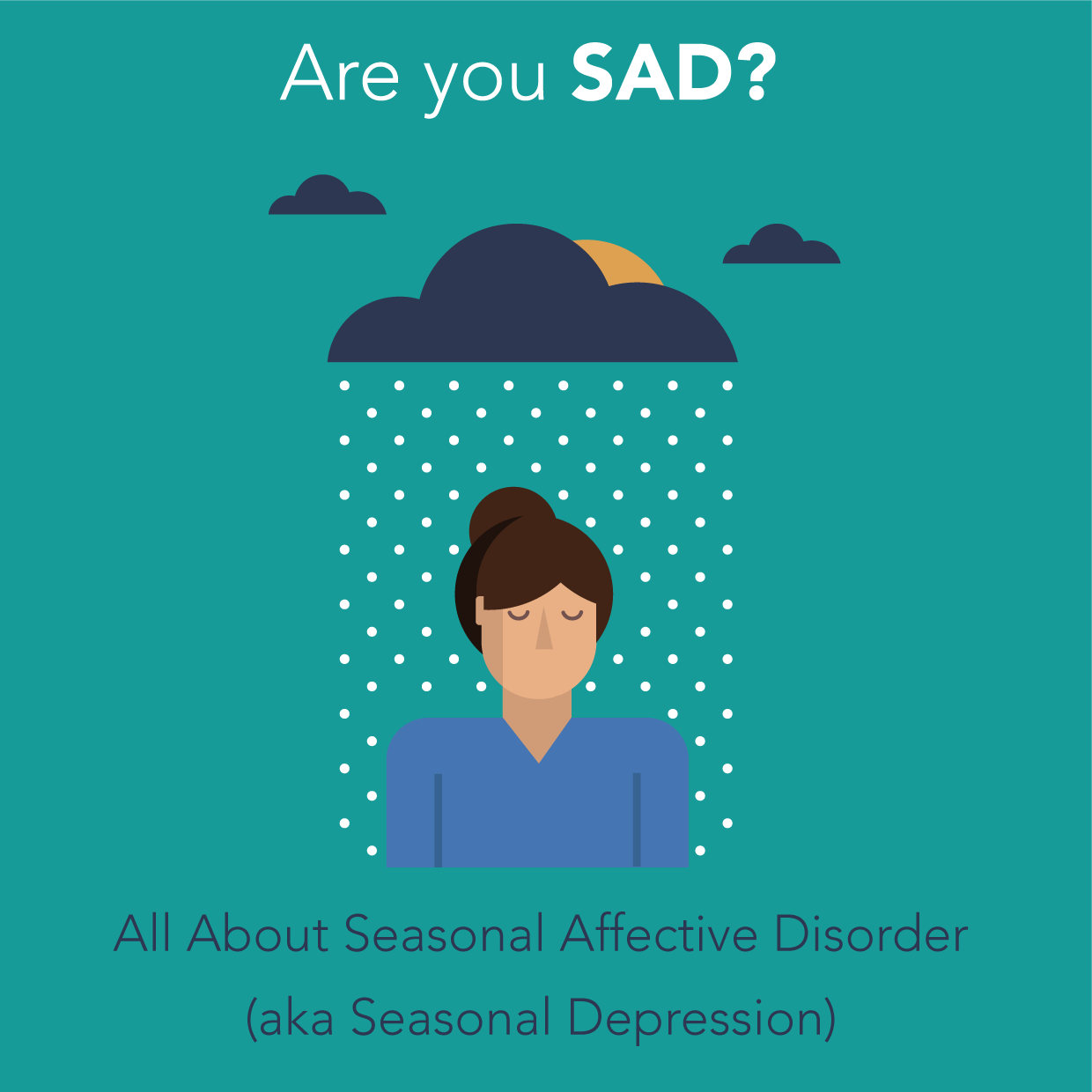
If you simply can’t get out of bed, go to work or go about your daily life then there’s a good chance that your suffering from SAD rather than just ordinary winter blues. This kind of specific winter depression is caused by sensitivity to low daylight levels and the disruption to our body clock. Our brains work overtime to produce melatonin, which regulates sleep patterns and has also been closely linked to depression. It’s also a form of depression which is more or less exclusive to the Northern Hemisphere – for example only around 1% of people in cities closer to the equator suffer from SAD.
Our body clocks are thrown out of sync by the delay in sunrise, so the obvious solution is to get as much sunlight as possible – not easy in winter without jetting off for a holiday with better weather. If only NHS prescriptions included a week in the Maldives, right? Because it’s cold, we’re also less likely to be outside as much as we are in warmer months, meaning that our daylight exposure is even less.

The best plan is to get outside as early in the day as possible to make the most of what light there is. Indoor lighting is completely ineffective, but artificial light boxes – often marketed as SAD lamps – can be extremely beneficial. These have special fluorescent tubes which mimic sunlight, and are equally useful for those who just have the winter blues.
Just half an hour early in the day can trick the body into thinking its Spring, and can break the winter depression cycle. A quick trip to the seaside might also help; research shows that the negative ions which are in higher quantities close to crashing waves may be beneficial in lifting depression.

It’s also important to keep an eye on your general health through the winter months, as symptoms you shouldn’t ignore are easy to write off as ‘just the winter blues’. If you’re worried and your symptoms aren’t normal during the colder weather, then ask your GP to refer you to the Chelsea Outpatient Centre for further investigation. Many conditions can also become much worse over the winter months, so it’s equally sensible to review treatment and care plans throughout the year to make sure that you can continue to enjoy life, whatever the weather.
If you find your anxiety is heightened over the festive period you might want to read this post on how to minimise symptoms and take care of yourself over the busy holiday season.
Sponsored content

by Fiona likes to blog | Dec 14, 2016 | ANXIETY
I’m pretty stressed sometimes. Did I pay that bill? Did I leave the oven on? When is that doctors appointment again? These are the thoughts that plague most of us throughout the day and they tend to build up and can feel a tad overwhelming at times. I’m working hard to make sure I don’t let unnecessary stress into my life as it’s a trigger for my anxiety and depression. If this sounds like you then read on for my tips for a calmer day…
Prepare the night before
I like to empty my mind in the evening by planning what I need to do the next day, and doing any preparation possible to help me feel a little more organised. For example, I like to lay out my gym clothes to make sure I get up and go work out without too much thought. I also like to make sure my dishes are done and my bathroom is relatively clean. For some reason starting the day with an organised space makes me much more relaxed from the get-go. I’ll also put any bin bags by the door so I can quickly grab them on the way out. Doing small things like packing my handbag, preparing my breakfast or laying out clean clothes are all small tricks that make my day go more smoothly.
Write a to-do list
This is pretty obvious but I’m always surprised at how many people don’t do this, especially busy people who have a lot of multitasking to do. I have an ongoing to-do list which I’m always adding things to, even if they don’t necessary need done straight away. Every evening I use this ‘master list’ to write a specific list for the next day. I prioritise what needs done first and then add anything else that I’d like to tackle, then if it doesn’t get done I can carry it over to tomorrow’s plan without too much panic.

Schedule in some down time
When I look at my to-do list it can be easy to go full steam ahead and keep going until it’s complete. I’ve learned from experience that this normally ends up with me freaking out around 4pm, struggling with a pounding headache, an empty stomach and the need to nap. For this reason I try to break up tasks with something enjoyable. For me this is often something simple like watching my favourite You Tubers for an hour or popping out for a coffee and some fresh air. I find scheduling in this time makes me more productive for the rest of the day and helps me relax in general.
Eat a good breakfast
Missing breakfast is guaranteed to stress me out, because my blood sugars will get low when I least expect it and then I start making irrational decisions based on hunger pangs. In order to avoid major mid-morning meltdowns I start my day with a protein shake or scrambled eggs on toast. This usually helps me stay satisfied and focused on whatever the day brings instead of feeling distracted by my rumbling belly. I love this post which has a few handy mood-boosting meal ideas. Don’t forget to keep an emergency snack in your handbag such as a banana or some cashew nuts, and drink plenty of water.
Exercise
Apart from writing, my other true love is exercising. I know not everyone has the same passion for working out (I will admit my passion can be absent at times too!) but I defy anyone to not feel great after a morning exercise sesh. A brisk walk with the dog or a run around the block before breakfast gives you time that no one can take away from you. It’s a special time to take a deep breath in and appreciate the day before it gets too hectic. It gets you warmed up, produces endorphins and creates that kick-ass “I can take on the world!” mindset that we all dream of having.
What helps you have a calm day?

by Fiona likes to blog | Dec 9, 2016 | BODY POSITIVITY, LIFE
One thing that went unnoticed when I was diagnosed with depression and anxiety was my fixation on food. As my condition got worse I was obsessed with fitness and eating healthily, two obsessions which are often seen positive factors in someone’s life. For this reason I’ve never had my eating problems medically diagnosed, and have struggled to get my eating habits back to what I consider normal. In the past year I’ve come on leaps in bounds in this aspect of my life, as well as working towards a more positive body image. Here’s what I’ve stopped doing in 2016…
Tracking calories
I used to have My Fitness Pal on the homepage of my phone screen so that I could input everything I ate throughout the day. Ideally, I would record all the food I was planning to eat the night before so that I could plan exactly what I would eat and what ‘treats’ I could fit in throughout the day. The problem with calorie counting for me was that eventually fitting in treats became the main goal, so I would eat very low calorie foods like salad and vegetables in order to eat a bar of chocolate straight afterwards. Fat has more calories per gram that protein or carbohydrates so I would avoid most fats to keep calories low. Little did I know that fat consumption is extremely important for maintaining a healthy body and it started to affect my hormones and brain function. Ultimately I became too focused on calories instead of the quality of the food I was eating, so I gave up.
Eating clean
No one can actually define what ‘clean eating’ is, so why the hell should I try an emulate a vague statement that so many people are hailing as the next big thing? Some people include honey, sweeteners and cereal bars and others don’t even allow the use of salt or heaven forbid, shop-bought products. They would have you grow everything from scratch in your own garden and eat it raw, whilst others are publishing books packed with ‘clean’ brownie recipes. It takes way too much brain power to figure out the rules never mind actually abide by them.
Always choosing the ‘healthy’ option
After years of reading tips on how to eat low calorie meals the go, at work or in restaurants I became a seasoned pro at selecting the ‘healthy’ option in any given scenario. This meant substituting fries for salad, bread for more salad and dessert for a cup of tea. I still try to eat a well balanced diet most of the time but when I’m in a restaurant or in a rush I don’t stress as much as I used to. I try to listen to my hunger cues and eat to satisfy those instead of making a ‘perfect’ meal.
The ‘all or nothing’ approach
I’ve had those bad days which involve eating family size boxes of biscuits, pot noodles and peanut butter straight out of the jar. I’ve even planned for those exact days after weeks of restrictive eating where I munched on only carrots and chicken to get my goal weight. I would load up on all the junk food I wanted and cram it all into one massive binge session happy in the knowledge that I would be back on my low calorie, no junk plan the next day. The guilt associated with this was extremely upsetting, as the binge never made me happy in the way I thought it would. Days later I would be sick of restricting and be planning another mammoth eating session and the cycle continued. I’m now a firm believer in “a little bit of what you fancy does you no harm”.
Eating less than 1000 calories per day
This is just stupid, and anyone who advocates this type of meal plan should be avoided like the plague.

Meticulous meal-planning
Obviously planning your meals is a great way to get organised and helps with creating shopping list and sticking to a budget. I still like to batch cook meals in the form of soups, chilli and cottage pie and have them in the freezer for when I’m in a rush or have nothing fresh in the fridge. I am however, totally over the idea of planning every single meal and snack for the entire week. A meal plan which is that detailed is perfect for someone who needs educating on portion sizes and which foods are best in a balanced diet. I feel like I know enough about food and how my body works to make those choices myself. It also means I can eat more when I’m hungry, less when I’m full and go ‘off plan’ without feeling like I’m a total failure.
Relying on caffeine
When I was creeping towards my goal weight (just writing that makes me feel slightly sick) I was at the tail end of a year-long diet which was starting to take it’s toll on me mentally and physically. I was constantly tired, hungry and cranky whilst nervously counting down the hours to my next meal. I would stay awake with black coffee and caffeinated diet sodas only to find I would crash an hour later. If it wasn’t time to eat I simple cracked open another drink and waited nervously. I dread to think what my body was doing to cope with the lack of calories and the excess caffeine. Now I have one or two coffees a week, sometimes none at all.
Cutting out carbohydrates
Not happy with cutting out fats I tried to limit my intake of carbohydrates too. I considered them ’empty calories’ as protein is supposed to help you feel satisfied for longer so I decided they weren’t worth worrying about. I would eat bolognese without the spaghetti, a bacon sandwich without the bread and roast dinner without the roast potatoes. I’ll never go back.
Exercising to compensate for over-eating
I used to exercise everyday for at least 90 minutes and up to 3 hours per day. I was so terrified of gaining weight that I would factor in extra workouts before or after a big meal to try and burn off the extra calories. This is reasonably sensible but probably not essential when my idea of a ‘big meal’ was a slice of toast. Now I exercise a few times a week and try to fit in classes like yoga to help with my mental health.
Avoiding eating out at restaurants
The prospect of eating out at restaurant was extremely stressful when I was in a severe calorie deficit. On one hand I knew it was safer to eat the food I cooked myself to know exactly what was in it, but on the other hand every fibre of my being was screaming out for a big plate of something delicious. The cravings were so intense that I would normally go but I had to know in advance exactly where we were going so that I could plan what I would eat, ideally with a look at the menu beforehand. It really took the joy out of what is supposed to be a fun, sociable experience. Nowadays I eat out 2-3 times a week and eat until I’m full with whatever I’m craving at the time.
What diet habits have you given up? Are you ready to start 2017 with the aim to love your body more?

by Fiona likes to blog | Dec 6, 2016 | DEPRESSION
“She isn’t depressed. She goes to work everyday and I see her out at the weekend”
This is the kind of thing I hear muttered again and again about people with mental health issues. Everyone says they are more ‘aware’ of mental health problems, but when push comes to shove they don’t always want to accommodate people who have real issues. Worse than that, I’ve actually heard the above phrase said by someone who has suffered from depression themselves. I find it strange that a person cannot empathise with someone else who has the same condition, but displays different symptoms. Sure, there are some symptoms that are common in everyone but others that are completely absent.
The truth is that every mental health sufferer looks and acts differently.
When I was trying to define my own mental health problems I remember my GP explaining to me that sadness is a normal human emotion, and obviously something that we all have to deal with in life. Some people will feel ‘depressed’ and although it may feel very intense, it will last a relatively short period of time and the mind can recover from the situation naturally. Other times it will be so intense that the person cannot recover alone, and will require medical attention. He made me realise that my own depression was serious, prolonged and could definitely benefit from medication to help rebalance my brain chemicals.
Identifying depression in people can be incredibly hard. So many people appear to have it ‘together’ when really underneath they’re seriously ill. I didn’t realise this until I lived with depression myself for the past four years. A few weeks after I had been diagnosed with depression I was due to go on holiday to Spain. I decided to go, as I was aware vitamin D could help lift my mood slightly, and lots of people had told me maybe a holiday was ‘just what I needed’.
The picture above, along with many others, was taken whilst we were on holiday for a week. I look pretty pleased with myself! I remember the night before this was taken I had drank too much and had a total breakdown in front of my now husband on the roof of the apartment we were staying in. I confessed how deep my negative feelings were and how I felt I would never get my life back again. My sunglasses helped conceal my puffy eyes from crying all night and having had very little sleep. I managed to drag myself out of the flat late in the afternoon to take a walk down to the beach, and I was pleased I hadn’t completely ruined the day by being a recluse which is what my instinct told me to do. It’s easy to see how people may have thought I was out having the time of my life whilst I was off sick instead of being at work, when really I was battling with a serious mental health problem.
Below is a picture of me approximately a year into my depression. I was at a friend’s birthday celebration in a venue I’d never been to, with people I’d never met. I look pretty happy right? I’ve got a cute dress on and my hair looks good, but inside I was terrified. To anyone scrolling through my Facebook feed, I’m sure it would seem like I had it all ‘together’ and certainly had no reason to take two different types of medication, see a therapist weekly and claim benefits for being unable to work. If I can go for a night out on the town surely I can get a job, right?
Well, no. This evening took weeks of preparation. I planned meticulously how I would get to and from the restaurant which required my dad driving the 40 minute journey there and back. I made sure in advance that the people I already knew would sit directly next to me and not let anyone else probe me for too long, as conversation made me anxious. I chose from the menu ahead of time because I had issues with food, and I was going through a particularly bad phase where I was restricting lots of food groups from my diet. All in all I think I was there for about two hours before I went home, mentally exhausted from the build up and execution of the whole situation. Doing things like this normally meant I was out of action for a few days after to recharge my batteries.

If you’re still struggling to see things from my point of view, this article on people with high-functioning depression explains how sufferers feel and what they wish other people could understand. Just because someone is at work doesn’t mean their feelings of depression aren’t valid. For many people a rest would actually do them good, but they feel unable to take time off because of their busy workload or they’re worried they’ll have no purpose without a job to go to. For some people work is the only distraction that helps them get through the day.
Often, going out with friends is deemed as evidence that someone ‘faking’ depression. Just because someone is smiling and having a few drinks doesn’t mean they’re not mentally ill. A key part of recovery is maintaining good relationships and being sociable now and again, the rare times that we feel up to it. If we make people feel guilty about being seen out in pubic, we encourage anti-social behaviour where vulnerable people will cut off that important contact with the outside world, which can worsen their condition.
I think a key part in improving this difficult situation is to open up the discussion with those close to you. Instead of snooping on someone’s Facebook, or judging their social calendar; why not just talk to them? Ask that person how they’re feeling, what they’re doing and how their recovery is going. Why not get an accurate insight into what’s really going on instead of assuming you know it all from a brief snapshot on the internet?
It’s a step in the right direction.

by Fiona likes to blog | Dec 2, 2016 | LIFE
Dealing with low moods and the physical effects of depression and anxiety can be a full time gig. I feel lucky that I don’t deal with my issues on a daily basis any more and I’m currently going through what I would call a ‘good spell’. I am however hyper-aware that this situation could change at any moment. Depression can appear like a dark cloud without warning and anxiety symptoms can pop up out of the blue. My way of staying on top of my moods is to allow myself a few little luxuries on the regular, as it keeps me happy and relaxed. It’s not a cure by any means but it’s what keeps me going! Here’s how I boost my mood with little luxuries…
Face mask
This is such a cliche but I can’t talk about boosting my mood without mentioning face masks. I don’t actually do them often enough, but when I do I basically use it as an excuse to do as many treatments as possible. I like to cleanse, exfoliate and then use either a moisturising or deep cleansing mask depending on how my skin is that day. I will then cleanse again before applying my favourite moisturiser and serum. I also love using the Liz Earle Superskin Concentrate oil before bed as has that soothing aromatherapy scent that gets my mind ready for sleep.
Bath bomb
I don’t make time for a bath very often as I’m definitely more of a shower-and-go kinda gal. I believe taking time to select the perfect bath bomb from Lush is a fine art, and one that should be savoured for as long as possible. I have sensitive skin so I tend to go for the simple ones like Butterbear and I also love the massage bars for soothing aching muscles.
Scented candle
OK you get the idea. I like to pamper myself in order to boost my mood! Lighting a scented candle is something I do almost every evening. I love knowing I’ve created a welcoming atmosphere for myself and any visitors and scented candles do that so well. I love sweet scents like vanilla and cinnamon, as well as fruity flavours like lemon and cherry. I’m also partial to a musky scent like Yankee Candle’s Midsummers Night.
Fresh fruit
I am pretty consistent about eating vegetables everyday but I tend to avoid buying fresh fruit because it can be so expensive. When I’m feeling low I like to treat myself to my favourite healthy snack to avoid or at least delay my urge to eat junk food. I love fresh blueberries and strawberries topped with coconut yoghurt with a drizzle of honey, or a home made fruit smoothie with oats and Greek yoghurt.

Handmade chocolates
I recently tried some handmade Belgian chocolates that my good friend bought be as a birthday present and I was blown away by the quality. I won’t be giving up my Dairy Milk anytime soon but when you want something a little special a handmade chocolate is hard to beat. If you’re ever in Glasgow make sure you hit up Kimbles in Princess Square and sample a cappuccino truffle.
Double cleanse
The feeling of being ‘clean’ is something that instantly makes me feel more alive when I’m tired and feeling like crap. Once I’ve been for a shower I like to do a double cleanse as a special treat for my skin when I’m feeling a bit rough. I remove all my make up with a cream cleanser like the Liz Earle Hot Cloth Cleanser and then the Elemis Cleansing Balm to remove any dirt that’s been left behind. Finish off with a refreshing toner and my favourite moisturiser and I generally feel a little better than I did before.
Colour refresh
When my hair colour starts to fade but I can’t afford to get it done, I often book myself in for a refreshing toner treatment. It basically acts as a semi-permanent dye to inject some life back into your colour in around 20 minutes instead of having to get a full colour which takes so much longer. My salon charges around £30 and that includes a blow dry which also means I don’t have to worry about styling my hair for the next few days!
Coffee from your favourite place
Sometimes we forget to take ourselves out for coffee. Whether it’s with a friend or alone I like to enjoy my favourite beverage – currently I’m all about the chai latte – once a week as a little pick-me-up. It gives me time to relax and watch the world go by, something I often forget to do when I have my head pointed at my phone or laptop for most of the day. I find this is particularly helpful when I’ve been writing all day and I need some time away from work.

A new planner
Nothing gets me excited quite like stationary does. The idea that this little stack of paper can hold all my grand plans and ideas makes me so very happy. I like to scribble my thoughts and ideas down in various notebooks, but at this time of year it’s a great excuse to start the hunt for a new planner for next year. I love the Brilliant Ideas Launch Pad which looks perfect for bloggers like me, and this cute little Dinosaur Diary is adorable.
Fresh bed sheets
I love nothing more than getting into a bed which has fresh sheets, so investing in a brand new set is like heaven to me! I like to have them washed and all ready so that once I hop out the bath I can just get straight into a beautiful clean bed. For me it’s the perfect end to a long day and the best way to guarantee a good night sleep.


