
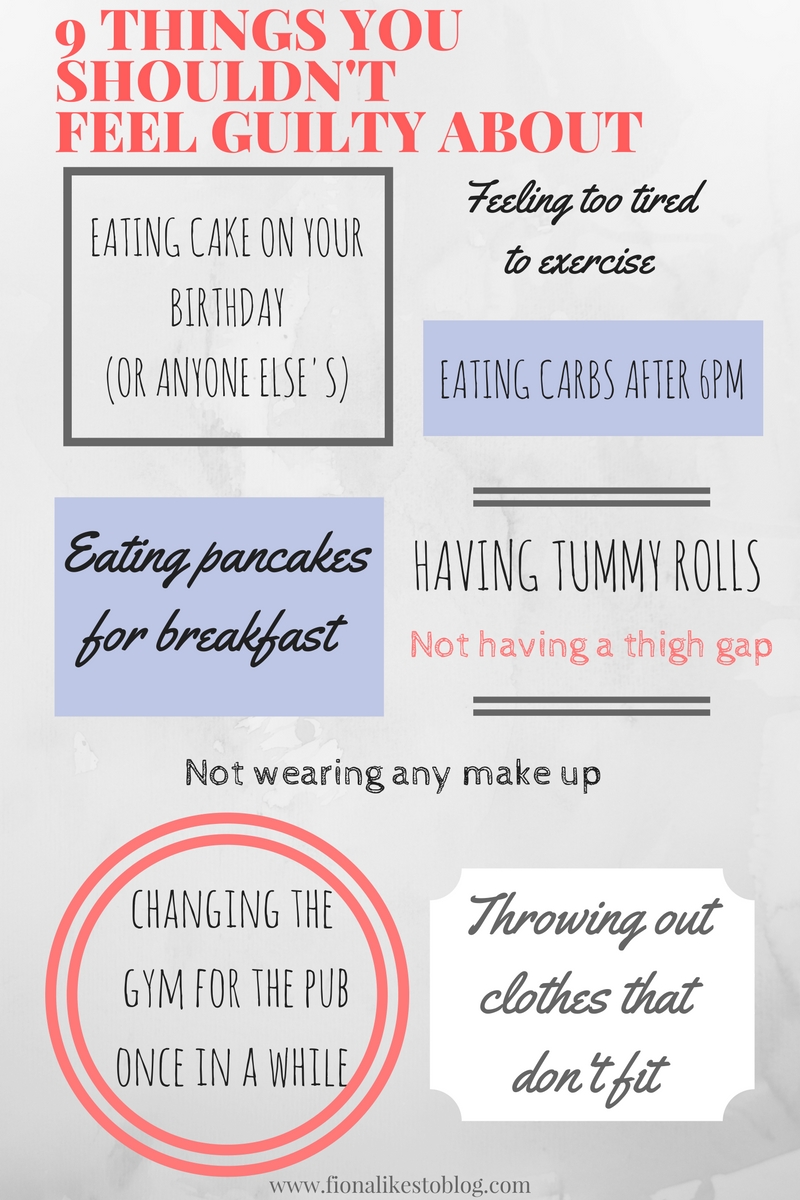
9 things you shouldn’t feel guilty about


You or someone you know is probably dealing with anxiety, depression or maybe even both. I’ve dealt with both simultaneously for the past 4 years and I’m not yet fully recovered.
I’ve come a long way since the beginning, when I was unable to work and spent every day in bed ignoring phone calls and not eating or washing. My mind was so exhausted that I needed time to recuperate, to recharge before slowly coming to terms with my illness and how it affects my day to day life.
So I wanted to talk about the physical effects of anxiety and depression, from my own experience.It’s something that no one really warned me about, even though I was diagnosed by a doctor and have received treatment for several years. I’m not a qualified mental health expert, but I have lived through it for some time, so maybe it’s of use to you or someone you know who might be suffering.
If you suffer from depression or anxiety then I’m betting you already know how much it hurts. Like, physically hurts. A lot of people don’t realise just how painful mental illness can be, and how much your body can be affected by the chemical changes going on in your brain. I mean, it makes sense. Your brain is the control centre for your entire body, so if it’s having a hard time coping then OF COURSE you’re going to see the consequences of that.
Wondering if your symptoms are normal? Here is a quick rundown of those related to depression thanks to WebMB:
I found that establishing a good self-care routine alongside medication and therapy has been a key part of my recovery. Wondering how to implement some basic self-care? Check out my post below.
If like me, you’re lucky enough to have both depression AND anxiety (#blessed) then here is some more information. Anxiety comes with a whole other set of symptoms, some of which overlap with the previous list and some of which are different. Check out the NHS website for more details and advice.
Check out my tips below on how to deal with some of the most common physical symptoms related to anxiety and depression. You got this!

I spent the first few months in bed like I said, and when I wasn’t sleeping my only interest was going to the gym. A strange response for someone previously uninterested in fitness, but for whatever reason any energy I had I poured into my daily workout. This led me to lose more weight than I ever had previously, a happy side effect as far as I was concerned even if it wasn’t for the right reasons. Not a healthy mindset I’m sure you’ll agree.
After I began taking my prescribed anti-depressants I did experience some weight gain; whether this was a sign of the beginning of recovery or the increased appetite which was described in the pill packet I’m unsure. Overall, I’ve realised that my built in response to both anxious and depressed feelings is to eat. To be honest I’m at a loss as how to shake off this coping mechanism off completely, and it’s definitely attributing to my weight gain as well as low self-esteem which can have a more negative affect on my mental health.
It’s a vicious cycle I’m caught in at the moment without any real idea how to escape it. My way of dealing with it currently is to accept that recovery is a long road, and that changes in my mind and body are to be expected. They are not good or bad, or even permanent. They just exist and will adapt as my health improves over time.

I had anxiety and depression for years before I experienced a panic attack. It wasn’t even something I worried about. I think this is partly because I was too anxious to put myself in a situation difficult enough for it to occur. I’m very wary of new places and unusual social outings and can tell what will freak me out.
This has been a bad way to handle things, because when I did pluck up the courage to do something out of my comfort zone I had a panic attack as a result. The physical symptoms I had were nausea, blurred vision, needing the toilet, feeling faint, racing heart, shortness of breath and excessive sweating. Combine this with the mental symptom of feeling like you are dying and you have pretty terrifying scenario on your hands.
I’ve done some group CBT sessions and the best advice I learned was that you should remain where you are for as long as possible, instead of following the natural urge to leave for somewhere else, somewhere ‘safer’. The panic attack is inside you, not the room, and will subside naturally once you have relaxed.
Interestingly, if you leave the location (e.g. the supermarket) you are more likely to develop an irrational fear of that place because you fear it happening again. So panic attacks lead to more panic attacks; annoying right? The more you focus on your symptoms, the harder it can be to let it pass.
I’ve heard some people say they distract their minds by counting in their heads or remembering something that takes focus like their first car registration. I was alone on a train so I just focused on taking long deep breaths, even though it felt impossible. It did eventually help and I managed to stay on board and it hasn’t affected my ability to use public transport.

When I get anxious I instantly become very self-conscious. This is especially true in social situations where I’m expected to hold a conversation for long periods of time. One of my irrational fears which stems from when I had to leave my job due to depression was that people were going to ask what I did for a living. The answer would then be “Nothing, I’m unemployed because I have depression” a phrase which I was in no way willing to say out loud.
I was so ashamed of myself that I would ask my friends to pre-warn new acquaintances about the reasons of my unemployment so that I wouldn’t have to face the horror of that conversation. Even then, I was still so self-conscious that my entire body felt frozen whilst I floated aimlessly through these social outings. Unless I was plied with alcohol (a terrible decision) I would stare at the floor, hoping no one would ask me a question. If they did I would give a brief answer before turning to my partner or friend who received the usual ‘glare’, suggesting they should hijack the conversation and take it from here.

Ideally, I would stay near the perimeter of a large group of people where I could stand rigid, jaw clenched with my tongue pushed up hard against the roof of my mouth, pretending to listen to whatever the ‘normal people’ were talking about whilst I mentally drifted in and out of the room. This muscular tension which my body seemed to create as a defence mechanism became commonplace.
The one thing that I have found consistently rewarding throughout my depression is exercise. I was the perfect outlet for me to express myself physically, use up the nervous energy that was running through me and loosen up tight muscles. In particular, Pilates, Body Balance, Yoga and Willpower & Grace have all helped me with muscle tension.
If you can afford to go for a spa day and get a massage it will help immensely. It sounds patronising to say a massage will help your depression – it won’t – but it can help soothe the physical pain whilst you continue battle with the mental symptoms.
Have you experienced any of these symptoms?


Suffering from anxiety and depression is a full-time gig. I’ve come to realise it’s the little things that add up everyday to either make or break my mood, and when I can feel my mood start to take a dip I have a few ‘go to’ habits that will often stop me from slipping into a low state of being that lasts a few days.
I have gone through various forms of medication and treatment over the past few years, and this is by no means a cure for this horrible illness. It’s simply a few pointers for when I feel that dark cloud start to appear overhead – a few things that help me day to day and you might find useful.
What are your top tips to boost your mood?

Success is a strange thing. It’s one of those terms that we tend to use to describe other people, but never ourselves. We can say we are unhappy, hard-worked, stressed and dedicated all day long in the hope that we somehow appear successful – or at the least extremely busy – to others, but to stand up and proudly say “I am successful” seems too much. Too cocky.
How dare we have the audacity to praise our own accomplishments?
Yet, isn’t it the one thing most universally desired amongst most humans? Don’t we all want to be successful at whatever is that we do? Well after years of self-doubt I’ve taken a good hard look at my humble little existence and I’ve realised that am successful. Fuck it. I am my own success story and you can be too.
I don’t mean that in a dramatic “I’ve survived a zombie apocalypse” type of scenario, or even “I’ve survived a traumatic event”, something that many people really have gone through and emerged beautifully from the wreckage. I just mean that no one has the right to judge my success without personally knowing my circumstances. I mean really knowing me.
Even if you saw my life history down on paper, you still don’t know what’s gone on inside my head all of these years; the low self-esteem, the body image issues, the problematic eating habits and social anxiety problems that have reared their ugly heads in the past few years alone. No one can possibly tell me how successful I am because they don’t know the breakthroughs I’ve had to make on my own, in my head, repeatedly every day before I could even consider tackling practical barriers like getting a god job or buying a house.
I’m not saying Poor me, quite the opposite in fact. I’m saying Yes! Go me! because I’ve began to conquer my internal struggles and that’s a success story in the making right there.
The universally recognised checklist for success is generally made up of a respected career, good income, marriage, home ownership, flashy car and maybe a couple of kids thrown in for a laugh. I have one of these things and the rest are unattainable for me at the moment so I’m just writing a new checklist. And guess what – its constantly changing.
At the moment I’m on a roll with regularly putting out blog content and getting more visitors to my site. I don’t get a lot if traffic so a successful day for me means increasing my traffic by 10% or getting my post retweeted on Twitter.
On a day when my depression has set in real deep, a home run for me is getting dressed and managing to pop to the shop for some milk. That’s reality for me, and I’ve come to terms with that. I will have days like that on a regular basis and that’s just what I have to work with to be happy.
Once it clicked that the bar was set by me – not my family, friends, employers or society – it seemed obvious that I could easily be a success in my own world. I set my own private goals and work towards smashing them.
I’m well aware that it’s been said a million times, but money doesn’t necessarily make you happy. Money is a clear motivator to work hard at something, and having extra cash makes life easier and means you can support your family. So does this mean we should continue to pursue money as the root of all happiness? I’m not convinced.
Once you’ve worked hard to achieve a salary that makes life comfortable and enjoyable, the need to continually better the number on your wage slip year on year is a trap that many people fall into because they see it as the holy grail of success. The only way to prove their worth to the world.
I’ve been on a really nice income in the past and I was incredibly unhappy for a lot of that time. For some people it brings them genuine joy and that’s fantastic, I’m glad that they know what makes them happy. I’ve realised that job satisfaction, or even just having a job that allows time for the hobbies I enjoy is where it’s at for me right now.
If I can earn enough to get by and have the time and energy to do my favourite workouts, blog every couple of days and maintain strong relationships with my husband , friends and family then that’ll do. That’ll do just nicely, thanks.
How do you define success?

I stared blankly at my to-do list. This list had been growing steadily for many months since my department had lost two members of staff and I had naively offered to pick up the extra work in a bid for praise, more money or a promotion – looking back I can’t remember exactly why I thought it was a good idea.
Working weekdays meant I had every weekend off for the first time since I was a teenager, and I tagged along to a Zumba class one Saturday morning with my mum out of sheer boredom and the hope of losing a few pounds. I had tried running and trained for 23 mile walk previously so I was surprisingly fit. As I bounced around my local sports hall in my mum’s old gym clothes I felt like I was at the weirdest, sweatiest party on a Saturday morning and although it was filled with a variety of ages and abilities I felt completely accepted as part of the team.
I joined my local gym and as the weeks went on I became more and more dependant on exercise as a form of stress-relief as well as a way to lose weight. When I was banging out burpees, grave-vines and planks no one could touch me.
I was pushing my body to do things I never thought I would be able to do – simple things like running for longer than 10 minutes and doing full press ups – and it was all my own doing. The people at work couldn’t take that away from me, it was my space and I was owning it. I looked forward to clocking out at 5.30pm so I could head to the gym and let out all my anger and frustration in a physical way. It was an exhilarating and new form of expression for me.
As I became more proficient at exercise my ability to complete my ‘to-do’ list at work was seriously waning. After some time work became overwhelming for me and I was unable to work for 6 months whilst I got my mental health back on track. I am so thankful that during that time I was still in the early stages of my fitness journey, because my love for exercising undoubtedly minimised some of the damage that could have been done by my mental state.
Exercising got me out of the house when I didn’t want to do anything at all. It made me set an alarm and get up at a certain time, have a shower afterwards and eat something substantial to keep me going until my next session. When you’re depressed these things are a daily accomplishment, and exercise seemed to kick-start that routine for me. Don’t get me wrong; there were many, many days when none of these things were accomplished but sooner or later the gym would reel me back in after a few days of endless sleeping.
It also forced my to interact with other human beings. I know, it sounds icky right, but in local gyms people actually say “Good morning!” and “Have you been to this class before? I’m new”. A lot of the time I stood right up the front of the room (where no one wants to be) because I was so focused on getting the most out of the class.
If this seems like strange behaviour for someone who was depressed and anxious, I completely agree! The only way I can explain it is by saying that I was kind of anonymous in those classes. No one knew anything about my condition, my job or my financial situation so I felt like they couldn’t judge me.
I was just that girl who showed up everyday for a workout and stood up the front like a teacher’s pet. That anonymity made me comfortable enough to make polite chitchat with complete strangers at a time when I struggled to even send a text message to my best friends.
The most rewarding thing about exercise for me has been the feeling of doing something I thought I was previously incapable of doing. I ran a 10k after years of trying to run without any success. I pushed myself further and ran a half marathon, and lets be clear I do NOT have the natural ability for endurance running!
I love lifting weights and seeing the number on the bar steadily creep up over weeks and months, or completing an extra set when you’re sure you can’t do another single rep. I started my first spin class feeling like Bambi on a bike and within 40 mins I was increasing my RPM to a respectable standard and within weeks I felt like a pro.
I don’t feel like a particularly strong-willed person, I get easily stressed and anxious but when I’m tearing it up in the gym I honestly feel like I can take on the world. I am focused, hard-working and excited there and it’s where I feel at home and that’s why I keep going back again and again.

Sleigh bells ring, are you listening?
Well I’m trying my hardest to crank up the volume of my headphones as Sia blasts from my phone into my almost burst eardrums, but unfortunately yes, I am listening to the flipping sleigh bells ring. I walk aimlessly around my local shopping centre blinded by twinkling lights, flashing Santa hats and overwhelmingly large SALE signs in every window. The scent of gingerbread lattes and overpriced perfume clings to my winter coat, reminding me that once again Christmas is imminent.
Spoiler alert; I’m not the biggest fan of this time of year. I promise I’m not about to ruin it for you by writing a lengthy blog about how it’s a waste of time and money as I shit all over your reindeer parade. I am happy that it makes other people feel warm and fuzzy enough to hang oversized socks above an open fire (I literally just realised how dangerous this is, please warn others) and I don’t want to take that away from anyone. But must I be forced to participate?
I’m well aware that there are a lot of Bah Humbug types out there squashing the dreams of small children. I’m not one of those people. I’m willing to chat about buying presents, eat a box of mince pies to myself, discuss what everyone’s plans are and what not. Most people aren’t even aware that I hate Christmas. When people ask when I’m putting my tree up I have to skirt around the issue, explaining that we binned our old one when we moved, haven’t got round to finding a new one and don’t particularly want the mess of a real one, when really all I want to say is I DON’T WANT TO PUT UP A CHRISTMAS TREE. I also don’t plan on handing out cards or singing carols round the piano. I’m not sure I can really explain why, other than the fact that joyfulness which has to be scheduled on a calendar just disnae seem right to me.
There have been of course, acceptions to the rule. Times when Christmas was “not that bad” include:

As you can see, its not that I don’t celebrate (in the loosest sense of the word – no alcohol and in bed with hot tea by midnight thankyou very much) Christmas at all . I still buy presents for my close family, eat turkey on the 25th and acknowledge that the whole thing is happening around me, but do I really have a choice? I don’t imagine my parents would be too pleased if I rang up on Christmas Eve and ducked out of plans because I forgot I had to defrost my freezer that weekend. Sorry Mum I can’t make the dinner I really need to get my eyebrows waxed and the girl I usually get is about to go on holiday so its now or never, or at least learn to style my hair to cover the top half of my face for a fortnight. There is literally no excuse that can get you out of Christmas festivities so what’s a girl to do?
Grin and bear it I guess.


