Select Page
Exciting announcement – The Positive People Podcast is available now!

Exciting announcement – The Positive People Podcast is available now!

If you follow me on Instagram then you’ll already know that I started 2019 with an exciting new project, the Positive People Podcast.

I know what you’re thinking, EVERYONE HAS A PODCAST. Granted, you are correct and I’m not going to deny that the podcast market is somewhat saturated. But personally, I am currently subscribed to 50+ podcasts and listen to hours of episodes every day so I’m hopeful that there are plenty of you folks out there who can spare an hour a week to listen to our show.

I say ‘our show’ of course because I have an amazing co-host called Amy Holland.

Amy is my internet wifey, the gal who I call when I need to talk and the person who will leave me 7 minute long voice notes on a daily basis. She too has experienced mental illness and started her own business I Can Cards as a result.

We are both so obsessed with the mental health community online and really want to help add value to the content we produce. That’s why we decided that a podcast would be the best way to deliver our message of positivity as well as highlight some of the incredible people and stories we come across every day.

We don’t really believe in the ‘think positive’ philosophy.

Instead, we think that owning all the negative aspects of life is actually key to making you feel more positive and powerful in your own skin. We say sit in the sadness when it comes, take the bad days when they come and learn from them. Do what you can and above all, show yourself some self-compassion along the way.

We’ve already got two episodes ready for you to hear and have some awesome guests lined up over the next few weeks including Hannah Fitt of the Safe Foundation, the Anti-Coach Sinead Latham, author Kirsty Hulse and fashion legend Francesca Perks.

LISTEN HERE

ALSO AVAILABLE ON iTUNES

Follow Positive People Podcast on Instagram for updates

Being offline, writing a book and eating ice cream for breakfast

Being offline, writing a book and eating ice cream for breakfast

It seems fitting that the last 12 months of my life have been bookended by two amazing – yet entirely different – holidays.

In the summer of 2017, I watched as everyone else in my workplace jetted off to various locations from Tenerife to South Wales, only to throw my hands up in the air towards the end of September and scream ‘I NEED A HOLIDAY’ in an entirely unnecessary and dramatic fashion.

I called my mum and within a few days, we had booked to go to Menorca for the last week in October, getting a bargain deal and returning home on the last flight before the island quite literally shut up shop for the year. As I write this blog post, its almost a full year later and I’m on an airplane returning from a very different trip entirely.

Fiona Thomas

We have have spent the last fortnight kangaroo spotting and beach-hopping in Melbourne, Australia, where we visited my brother and his wife. See my comedic grin above where I was snapped chilling out with my little brother in Oz.

We’ve never been keen travellers, so having two sunny trips abroad in the space of a year has felt like a real treat, but I think it’s also fair to say that I’ve felt in dire need of the true relaxation that comes with getting away from UK life, the pressures of work and the painful reliance on social media and technology on a minute by minute basis.

If you’ve read my blog before you’ll be well aware that I’ve struggled with my mental health. It’s not something that I’m ashamed of anymore, in fact, I kind of make a living out of talking about it.

Whilst I was lying poolside in Menorca last October I realised that after writing hundreds of blog posts about depression and anxiety, I was ready to embark on something new, something more exciting.

I jotted down the title Depression In A Digital Age and thought that it would make a really cool book title.

Just a few weeks before I packed my suitcase to travel down under at the end of last month, I submitted the final draft of my memoir called ‘Depression In A Digital Age’ and I now patiently await its release at the end of November.

Can a holiday really change your life?

Had you asked me that in June of 2012 I would have laughed and cried simultaneously, as I slid into my sixth week of sick leave from work with a fresh diagnosis of stress, depression and anxiety.

I had booked a week in Spain a few months beforehand and the thought of going away was filling me with dread.

As I struggled to keep my head above water and come to terms with the black cloud which followed be around on a daily basis, my mum chirped positively ‘maybe a holiday will do you good!’

In this particular case, a week in the sun was nowhere near close to the kind of self-care and medical attention needed to bring me back to life, but I can see now that in less pressing circumstances how a holiday can do wonders for the soul.

Just look at how happy I was to get my picture taken with this image of a carrot when I was in Oz! How much more proof could you need?

I’ve spent a lot of my recovery attached to my phone. As a textbook introvert, I feel at home online where I can carefully work out my anxious, complicated thoughts in a WhatsApp message or one of these lengthy blog posts.

I’ve unexpectedly connected with some of the best people in the world, making life friends who are not relegated to my DMs but have become coffee buddies, workmates and people who I call when I need to talk.

But with the online world comes the addiction and self-gratification of posting selfies (nothing wrong with that) and checking how many likes said selfie has received every 5 minutes until it reaches a number that feels good.

In the same way that my work inbox gets to an unmanageable stage a few times throughout the year, the constant ringing of smartphone notifications becomes stimulation overload to the point where I need to go cold turkey.

One of the best bits about going on holiday is selecting the books I want to read, and whilst in Australia, I read a collection of essays by Laura Jane Williams called Ice Cream For Breakfast.

It’s been on my reading list for months and I devoured it whilst we drove in between vineyards in the Yarra Valley in Australia just a few days ago.

Sometimes you need to actively seek out those magic moments. Book the holiday, schedule in the downtime and make a conscious decision to turn off your data (actual heaven) and be in the moment.

In between tasting the finest pinot noir in the world, spending two weeks with my favourite people and reflecting on the best year of my career so far I even accidentally managed to fulfill one of Laura’s best pieces of advice by literally having ice cream for breakfast.

It doesn’t get much better than that, does it?

Buy my book on Amazon!

Talking therapy – a painful step in my recovery from depression and anxiety

Talking therapy – a painful step in my recovery from depression and anxiety

It’s easy for me to sit here and tell you to get therapy.

I was lucky enough to receive counselling from the NHS after I was diagnosed with depression and anxiety, and without it I’m not sure how my recovery would have panned out. Walking into a tiny little room every week and baring my soul to a complete stranger seemed unthinkable at the time, but I knew I was lucky to be given access to the service so I always attended my appointments, even though I dreaded them.

I saw a Community Psychiatric Nurse over the course of a year and it wasn’t easy. In fact, it was really quite uncomfortable at times and having social anxiety made it even harder because my body had a physical reaction every time I walked into that room. I wanted nothing more than to run out the door and never look back, because it was a dark and difficult place to be.

I’m not telling you all this to put you off, I’m telling you because I think its important to have realistic expectations when you start to open up about your mental illness to a professional.

They are here to help you but that doesn’t mean the experience is going to be enjoyable. It’s hard work, its a grind, a long slog and along the way you’ll inevitably want to give up.

I had moments of hope. Sometimes my nurse would tell me I looked better than the week before or that I was making real progress and would be able to get back to work soon. But more often than not it was painful and drawn out. Most weeks I felt like it was a waste of time even showing up, but as the weeks and months passed by I realised that she was on my side.

I could ask her impartial opinion on things that were bothering me, like whether I should attend a friend’s birthday party even though it made me anxious or if it was OK to drink alcohol on my medication. She wasn’t giving me love and affection like my family, but she was giving me care. Professional care and help that I so desperately needed even if I didn’t want it at the time. Looking back now I can see that having that constant source of knowledge on tap every week was invaluable, and a real turning point in my recovery.

Seeing my regular doctor was all well and good, but being able to talk for longer that ten minutes with a medical professional was a tool which I really feel should be available to everyone with a mental illness.

If you’re on the fence about getting therapy then I would say give it a go. If your GP is able to offer you free access then grab it with both hands, and if you need to pay for it yourself then it’s still worth the money and an investment in your recovery that I promise will pay off in the long run.

Have you tried therapy?

Wedding planning with depression and anxiety

Wedding planning with depression and anxiety

I started planning my wedding in 2014, just two years after my initial diagnoses of depression and anxiety.

On the outside, I appeared to be quite happy and excited but truthfully I found the whole experience rather stressful. To be honest I could get stressed in an empty room and it’s definitely one of my triggers, so I try to keep it under control.

But planning a wedding is a whole new level of stress that I’d never experienced before!

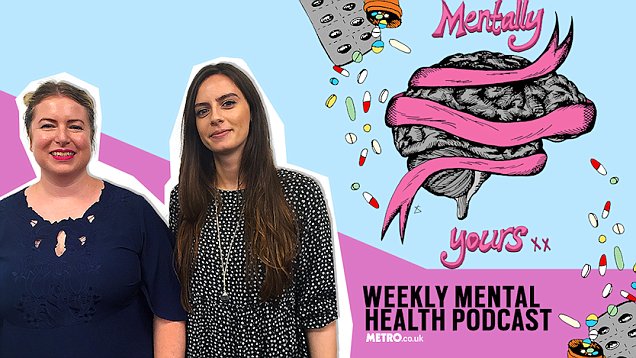
I wrote about my experience in detail in this article which I published on the Metro, and Yvette and Ellen asked me to appear on the podcast last week to delve a little deeper into the subject of wedding planning with anxiety.

Listen to the episode here!

Here’s a little excerpt:

‘I suppose everything’s just times 10. For me my anxiety is triggered by stress, particularly emotional stress, so something like planning a wedding is just a perfect storm really,’ said Abigail.

‘I have anxiety and depression and they kind of go hand in hand, and my trigger’s always stress, so I would get stressed about a tiny little thing and then that would make me anxious and the comedown from that was always depression,’ said Fiona.

Listen to the entire episode on iTunes.


‘Ask for help. I’m really bad at asking for help and even though I know that it would make it easier for me if I asked for help I still find it really, really hard. I feel a lot of pressure to do everything myself, and that’s partly the anxiety to be perfect,’ said Abigail.

‘I would say delegate but delegate wisely,’ added Fiona. ‘Delegate (tasks) to the right person so that you’re not then going to get stressed and take over and end up doing it yourself anyway.’

Listen to the entire episode on iTunes.

What did you think of the podcast? Did it help you feel less anxious about planning your own wedding?

7 reasons why you need to make an emergency self-care box

7 reasons why you need to make an emergency self-care box

I’ve had my reservations about the term self-care. It seems to be taking over the internet, forcing us to take regular bubble baths and spend a fortune in Lush products in order to maintain sanity and I’m really not feeling that way of life. Recently though, I looked bit deeper into the meaning of self-care and I had a bit of a revelation.

If you’re struggling to understand exactly what self-care is and how it should be practised, simply remove the first word and you’ll find a simpler way of looking at it. So remove the word ‘self’ from the equation, and reflect on the word ‘care’ for a moment.

What does the word ‘care’ mean to you? It makes me think of a hospital, or an old folks home. It conjures up images for good Samaritans giving out hot food to the homeless, or a mother caring for a newborn baby.

Care is all about taking steps to maintain heath, especially in those who are vulnerable. Self-care is all about applying this concept to yourself.

What does it mean to you?

Self-care is an individual thing. For you, it may very well be a bubble bath and I don’t want to take that away from you! But the reality is that it can vary greatly from person to person and change dependent on the situation.

Sometimes the time when you really need to take care of yourself is when you’re feeling at your absolute worst – maybe you’re physically exhausted or just mentally drained – and that’s when an emergency self-care box can really help

1.It’s like mental health insurance

When you’re feeling low, you might hear that nagging negative voice in the back of your mind that likes to tell you that your worthless. I get it quite regularly, and it has the potential to hinder your ability for self-care.

If you’ve taken the time to prepare a little box full of things that might make you feel better, it’s like having a box of bandages ready for when you cut yourself. It helps you heal faster.

2. It’s cheap

Are you prone to a bit of retail therapy when you feel crap? Good news then, because making this little box of self-care activities should theoretically distract you from your usual bad habits and replace them with warm and fuzzy feelings.


3. It’s creative

I’m a huge believer in creativity as a force for good in the world of well being, and the act of making your emergency self-care kit will be a project of this nature. It will give you a chance to explore the sides of your personality that come out when you feel low, and figure out how to soothe yourself through other activities.

4. It’s convenient

No more rummaging around for a face mask when you need a little pick-me-up, or building yourself up to visit the pharmacy for painkillers. Everything you need should be in your kit so that all you have to do it grab it and select what you need in that moment.


5. It’s fun to make

You can keep it simple and fill a shoe box with everything you need, or take it one step further and make it into an entire project. Go through magazines and find images and quotes that inspire you, then use them to decorate the box so that it fills you with joy whenever you look at it.

You could even ask friends and family to write positive notes that you can open up when you need them, and include photos and fragrances that evoke good memories.

6. It’s unique to you

There will be no other self-care box that meets your needs better than the one you make yourself. Fill it with your favourite smells, lotions, drinks, music and photographs to make sure that whenever you open it you feel totally at home.

7. It’s a thoughtful gift

Once you’ve mastered making one for yourself, why not try making a gift for a friend or family member? Again, this can be as creative as you like so you’re actually using it as a self-care activity for yourself too. Checking all the boxes!

My suggestions:

One of my mental health zines You Got This – both of which are filled with kind words and friendly advice on how to deal with down days.

Anything by Laura Talanti, it’s all really thoughtful and beautiful to look at

gifts for depression
These positive affirmation cards are a daily routine for me, but you could add some to your box for when you need some good vibes

Some sort of notebook, like this Five Minute Journal

What will you put in your self-care box?

Going freelance and feeling like an imposter

Going freelance and feeling like an imposter

I recently quit my job, again.

This is a cycle which has played out repeatedly over the last six years, often as a result of feeling completely overwhelmed at work to the point where my only way out is to start afresh.

I’m the queen of taking on too much. I always start a new job with the best of intentions, knowing full well that my history with depression and anxiety leaves me susceptible to stress a lot more than the average person.

The unfortunate thing is that I’m a total people-pleaser as well as a bit of a swot, so if I can take on extra responsibility at work as well as help my employer out then I’m all in. I’ll happily push myself right to the edge mental health wise in order to appear like the best worker.

It’s silly, but it’s who I am and I’m trying hard to change. I’ve been juggling my day job in a local sandwich shop alongside this blog, freelance writing and some social media management for about six months but in December 2017 it all got to be a bit much. I certainly wasn’t planning on relying solely on my freelance income this year but hey, life doesn’t go to plan sometimes.


After I quit I kept it on the down low. Looking back now, its a shame because going solo in the world of freelance is actually a big, exciting step in my career. I didn’t want to shout it from the rooftops until I’d fully digested what had actually taken place, as it all happened in a bit of a blur. After being freelance now for a whole two weeks (am I an expert yet? Hell no) I can say in all certainty that I know why I’ve been keeping it quiet. I feel like a big, stinking imposter.

It wasn’t until I was watching one of my favourite You Tubers Aine talk about living authentically in her last (very candid) video that I realised this. I’ve known about ‘imposter syndrome’ for years, and I’ve felt it at various times throughout my life. I felt it when I got invited to my first big blogging event (a Superdrug press day folks, where I got a free flu jab and a goodie bag!) and I felt it when I got my first article published on the Metro.

It’s that gut feeling you get when you think that you have absolutely no right to be doing your job, and that any minute now someone’s going to come banging on your door and asking you to hand in your name badge, screaming “who the hell do you think you are?”


The past few weeks have been a but of a roller-coaster. I’ve had to try and manage my own workload, something which can be easy when you really love what you do, but still quite difficult when there’s no one there to force you to crawl out of bed in the morning. The result is often a compromise; working in my pyjamas from under the duvet until I’ve woken up enough to hop in the shower before midday.

Does this make me an imposter? I don’t think so. I know plenty of writers and social media managers who openly talk about working from home or ‘bediting’ as I heard one You Tuber call it, so I think in that respect I’m surrounded by lots of people with a similar frame of mind. Should I be up at the crack of dawn knocking back espressos and typing up thousands of words before the sun rises? Definitely not. It I did that I’d be an imposter in my own life, and totally wired from too much coffee and not enough sleep. Not my style.

So as the first few weeks of being freelance draw to a close, do I still feel like an imposter? Hell yes! I don’t think I’ll ever fully accept that people actually want to pay me money to write, because I love it so much. I’ll probably always live with the fear of being rumbled, exposed as a fraud for all to see.

But until that moment comes, I’m getting stuff done. I’ve got my gang who support me without question. I’m hustling away quietly (yes, sometimes from my own bed) and I’ve got some really exciting projects to share with you this year. I can’t wait to get started!