
by Fiona likes to blog | Dec 28, 2016 | ANXIETY, BODY POSITIVITY, DEPRESSION, LIFE
I’ve spent years rejecting the idea that the beauty industry can have a positive affect on my mental well-being. How can a lipstick make you happy? Why are young girls caking their faces in concealer when they don’t even need it? It’s taken me until by thirties to understand how the beauty industry has shaped the thoughts I have about my own body, and how I can reclaim them and make them positive.
It helped me develop a self-care routine
I don’t believe that possessions can make you happy, and for years I refused to spend money on beauty and skincare products because I believed I didn’t need them to feel beautiful. I definitely DO NOT need them to feel beautiful; but taking care of my physical self is something that I’ve done more in 2016, and something that’s sincerely helped me feel less worthless when I’ve been going through a bout of depression.
When I spent weeks primping and preening myself for my wedding day in 2015, I remember thinking there was no way in hell I could keep up this level of attention to my body. Who has the time? When I stepped out in my wedding dress, I felt so happy with myself from the inside out, that I could finally see the value in carrying on a few of the beauty routines I have developed in the run up to the day. I don’t spend much money on make up, but I do have a favourite cleanser, serum and moisturiser that I use religiously and a few face masks that I reach for when I need that extra special care. I don’t think this is the only way to practise self-care, but for me it’s a daily addition to my coping strategies that I do without thinking and gives me a regular lift.

Make-up can help me feel confident
There’s no denying that wearing make-up can make you feel more confident. In the same way that a new haircut and your favourite dress can make you feel like you can conquer the world, I’m not ashamed to say that a smokey eye and bangin’ highlighter make me feel sassy. But I also feel confident when I DON’T wear make-up and I think that’s important.
Washing my face and slapping on some moisturiser is all I do when I’m going to the gym. I like to look in the mirror and see my true self. For me, the gym is a place for honesty. It’s where I’m alone and focused with my own thoughts, listening to and observing my body to see how far I can push myself as well as when to rest. I find it’s healthy to have time without make-up, to appreciate the impact it can make when you really want it.
I realised need representation in the media
I grew up reading the same magazines as everyone else my age – Mizz, Shout, Smash Hits, Bliss – so I believed that to be beautiful I had to be white, thin, blonde-haired and blue-eyed with big breasts. I began dieting around 15 and didn’t stop until I was approaching 30. The penny dropped for me when I saw Ashley Graham on the cover of Sport Illustrated. She’s by no means a fair representation of the millions of ‘plus-size’ (whatever that means nowadays) women who look to the media for inspiration, but for me she’s an inch closer to that dream. In that cover I saw someone with a body shape vaguely like mine, and I’d never seen that before.
That’s when I realised I’d been conditioning myself to believe that my body shape, hair and face was all wrong by consuming the images that were handed to me. Now, I actively seek out women who have bodies I can identify with and a style which I can understand. I feel You Tube is particularly helpful when it comes to the beauty aspect of this, because it’s really relatable for me to watch a woman by age talk about what skincare and make-up brands they use in their everyday lives instead of relying on magazines which are heavily biased towards advertisers.
Check out this podcast called Unsorry, in particular their recent episode talking about feeling beautiful.

by Fiona likes to blog | Dec 25, 2016 | DEPRESSION, LIFE
It’s Christmas day and everywhere, people are smiling. Children are grinning from ear to ear as they tear open their long-awaited gifts, and parents look on with pride, feeling accomplished after a long year of working hard to provide for the family. Grandparents fall asleep on the sofa whilst the dog nibbles the leftover mince pie that has fallen onto the floor. Mum finally puts her feet up after feeding the entire family without stopping for a break.
To most people Christmas conjures up similar images of warm, familiar sights involving traditions that have gone on for years with family and friends who don’t often see each other. It’s a time to put work aside and focus on relationships, socialising and eating a little too much; all in aide of the festive season.
For anyone with depression, this scenario is unlikely to create a feeling of happiness. I know it’s not my favourite holiday, that’s for sure. If you have depression I want to tell you something.
You’re not a party-pooper.
You’re not The Grinch.
You don’t need to ‘grin and bear it’ for one day of the year because let’s be honest, it spans way longer that one day and you’re expected to be in the party mood for almost an entire month without showing a sign of unhappiness. This is unrealistic and it’s cruel to expect mental health sufferers to somehow put their illness ‘on hold’ for an extended period of time.
Can you just put your nut allergy, diabetes or heart murmur on hold for Christmas day?
Can you not have an epileptic fit or have a broken leg today?
That’s how it feels to be told to ‘cheer up’ when you have depression. We cannot simply choose not to suffer today because it’s inconvenient and makes others uncomfortable. It makes us feel guilty that we can’t, but we genuinely can’t. We want to pretend with every bone in our bodies that we’re ‘OK’ but we can’t.
This is to all the people who went back to bed after opening presents. To all the people who didn’t even want any presents because they feel unworthy. To all the people who would rather skip to December 26th and avoid the big day altogether. To all the people who are crying, screaming and hurting on the ‘happiest day of the year’… I understand.
To us, making it to the end of the day is the biggest achievement we can hope for. If we manage a smile, even a fake one, then today as been a success. If we go to bed without having shed a tear today then that is progress. But if today has been sad, lonely and scary then that’s OK too, because we experience that a lot and we’re learning to cope with it. Better days will come but they doesn’t mean we don’t deserve to live through today.
Merry Christmas

by Fiona likes to blog | Dec 20, 2016 | ANXIETY, DEPRESSION
I’m currently sitting in Starbucks with a mug of tea; my humble reward for doing the thing that I hate the most. The thing that still fills me with fear every few months, even though I’ve had this debilitating illness for almost 5 years now.
I successfully attended an appointment with my GP.
I didn’t cry. I didn’t crumble. When I sat up in bed this morning thinking of ways to avoid the situation I still managed to get up and get dressed and show up. I did it.
For many people, a visit to the doctor is merely another note on the calender and nothing to get upset about. For me, it’s an ominous reminder of all my flaws and weaknesses. Whilst everyday I try to remind myself of how far I’ve come with my social anxiety, food issues, low moods and use of alcohol, there is nothing that makes me feel more of a failure than sitting in front of a stranger and asking for help.
The fear starts weeks before the appointment, knowing that the day is coming when I’ll have to use the phone. In the UK the health service is under so much pressure that the thought of just making an appointment is enough to send me spiralling. Most practices prefer the ‘on the day’ system where you phone at 8.30am and stay on hold until you’re lucky enough to speak to someone on reception, who will then assign you a slot which more than likely doesn’t suit you. If you dare to suggest another time slot then you’re made to feel as though you must not really need the appointment so generally you have to take what you get and pretend to be grateful. This often leads to more anxiety as I might have to ask for time off work to get there in time.
The whole affair makes me feel like an animal being herded to the slaughter, and all the while I’m trying not to have a panic attack because talking on the phone is one of the things that triggers my anxiety.
One of the things that really helped me when I was first seeing my GP regularly about depression was seeing the same person every time. Finding someone who I felt really empathised with my situation was a great comfort to me for years when I was feeling at my worst.
Do you know how exhausting it is having to tell someone you’ve just met about the most painful period of your life over and over again? The hardest part was knowing that the more detail I could give the better, and that meant rehashing all the gory details about how awful I felt for such a long time. After waiting for weeks to see a doctor and spill my guts about this stuff, I was often met with a blank stare and the usual “Come back and see me in a few weeks if you feel any worse”.
Since I’ve moved to Birmingham I’ve had to register with a new practise and find a new GP. I’ve been avoiding it really, but when I ran out of medication I had no choice as they won’t issue anti-depressants as a repeat prescription. I’ve seen two GPs since I’ve been here and neither of them seemed particularly kind or caring, but maybe I’m just oversensitive.
Recently I was put on a new contraceptive pill and it’s affected my mood quite dramatically. Today I had to explain to the doctor that it was making me uncomfortable because of the fact that I already have depression, and she asked me what I thought the solution was. This is probably a great technique for most people who google their symptoms before a visit and turn up with a list of what drugs they want, but for me – someone who struggles to make decisions on a daily basis – it wasn’t helpful.
I walked out with a new prescription and as I felt a sense of relief wash over me, I glanced down at the printed slip crumpled up in my hand. One month of anti-depressants. That’s just one month until the process starts again. I slipped out of the surgery with a small sense of pride and a head full of anxiety for my next visit.
How do you cope talking to your doctor about mental health?

by Fiona likes to blog | Dec 16, 2016 | DEPRESSION
Like the rest of Britain I’ve spent the last week weeks commuting to work in the pitch black and complaining about the sudden drop in temperature. It’s easy to see how so many of us can start to get a little down in December. As soon as the schools go back and the nights start to draw in, we start missing the long summer evenings and notice that we’re more sluggish than we were just a few weeks ago. I find it hard to stay calm as Christmas approaches, and there are few of us that are unaffected by the relentless greyness.
It’s not surprising to learn that one in three people will be affected by Seasonal Affective Disorder – or SAD – and those winter blues become a debilitating depressive illness. Usually diagnosed after two years of more severe symptoms, SAD is far more than cravings for stodgy food, sluggishness, and wishing winter would hurry up and end.
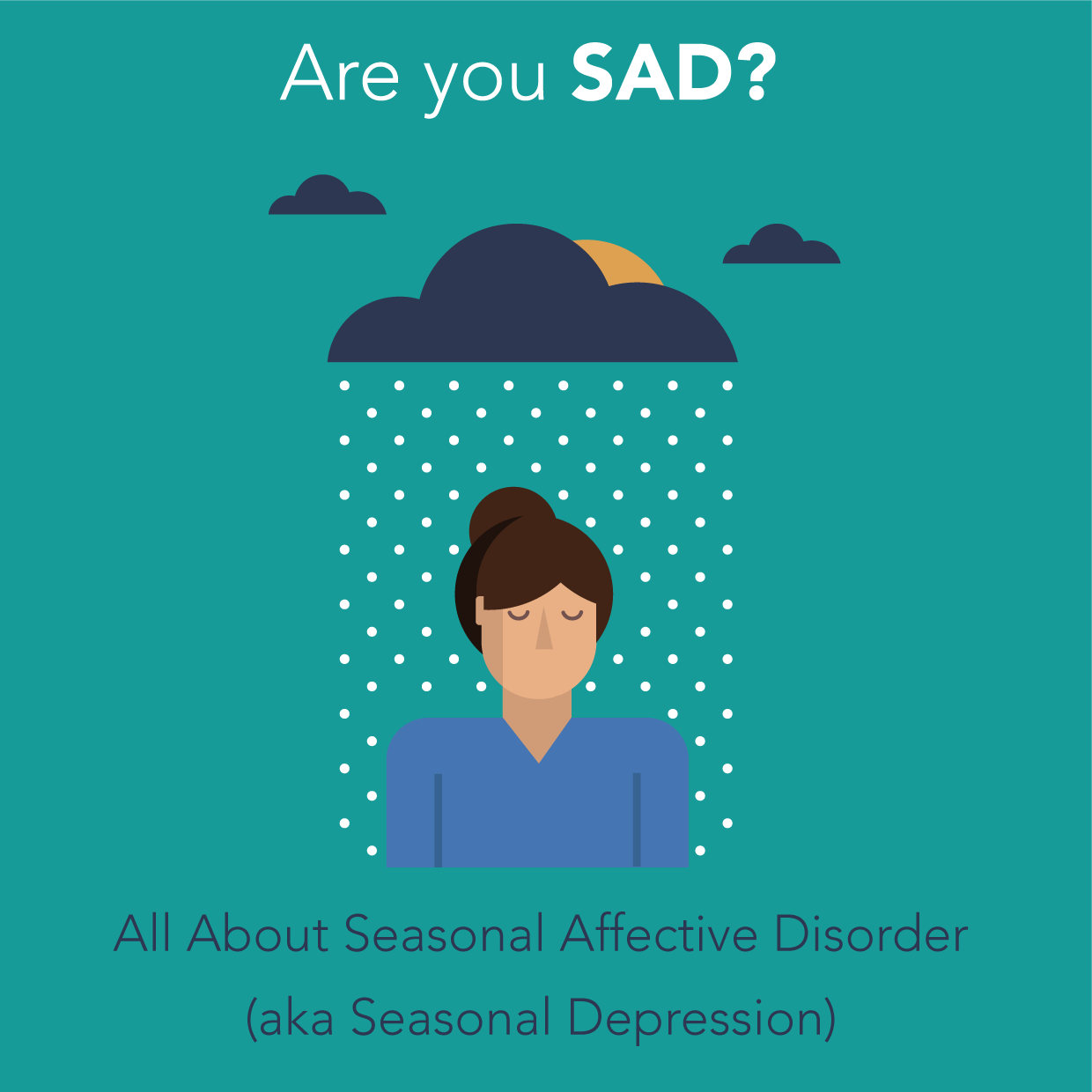
If you simply can’t get out of bed, go to work or go about your daily life then there’s a good chance that your suffering from SAD rather than just ordinary winter blues. This kind of specific winter depression is caused by sensitivity to low daylight levels and the disruption to our body clock. Our brains work overtime to produce melatonin, which regulates sleep patterns and has also been closely linked to depression. It’s also a form of depression which is more or less exclusive to the Northern Hemisphere – for example only around 1% of people in cities closer to the equator suffer from SAD.
Our body clocks are thrown out of sync by the delay in sunrise, so the obvious solution is to get as much sunlight as possible – not easy in winter without jetting off for a holiday with better weather. If only NHS prescriptions included a week in the Maldives, right? Because it’s cold, we’re also less likely to be outside as much as we are in warmer months, meaning that our daylight exposure is even less.

The best plan is to get outside as early in the day as possible to make the most of what light there is. Indoor lighting is completely ineffective, but artificial light boxes – often marketed as SAD lamps – can be extremely beneficial. These have special fluorescent tubes which mimic sunlight, and are equally useful for those who just have the winter blues.
Just half an hour early in the day can trick the body into thinking its Spring, and can break the winter depression cycle. A quick trip to the seaside might also help; research shows that the negative ions which are in higher quantities close to crashing waves may be beneficial in lifting depression.

It’s also important to keep an eye on your general health through the winter months, as symptoms you shouldn’t ignore are easy to write off as ‘just the winter blues’. If you’re worried and your symptoms aren’t normal during the colder weather, then ask your GP to refer you to the Chelsea Outpatient Centre for further investigation. Many conditions can also become much worse over the winter months, so it’s equally sensible to review treatment and care plans throughout the year to make sure that you can continue to enjoy life, whatever the weather.
If you find your anxiety is heightened over the festive period you might want to read this post on how to minimise symptoms and take care of yourself over the busy holiday season.
Sponsored content

by Fiona likes to blog | Dec 6, 2016 | DEPRESSION
“She isn’t depressed. She goes to work everyday and I see her out at the weekend”
This is the kind of thing I hear muttered again and again about people with mental health issues. Everyone says they are more ‘aware’ of mental health problems, but when push comes to shove they don’t always want to accommodate people who have real issues. Worse than that, I’ve actually heard the above phrase said by someone who has suffered from depression themselves. I find it strange that a person cannot empathise with someone else who has the same condition, but displays different symptoms. Sure, there are some symptoms that are common in everyone but others that are completely absent.
The truth is that every mental health sufferer looks and acts differently.
When I was trying to define my own mental health problems I remember my GP explaining to me that sadness is a normal human emotion, and obviously something that we all have to deal with in life. Some people will feel ‘depressed’ and although it may feel very intense, it will last a relatively short period of time and the mind can recover from the situation naturally. Other times it will be so intense that the person cannot recover alone, and will require medical attention. He made me realise that my own depression was serious, prolonged and could definitely benefit from medication to help rebalance my brain chemicals.
Identifying depression in people can be incredibly hard. So many people appear to have it ‘together’ when really underneath they’re seriously ill. I didn’t realise this until I lived with depression myself for the past four years. A few weeks after I had been diagnosed with depression I was due to go on holiday to Spain. I decided to go, as I was aware vitamin D could help lift my mood slightly, and lots of people had told me maybe a holiday was ‘just what I needed’.
The picture above, along with many others, was taken whilst we were on holiday for a week. I look pretty pleased with myself! I remember the night before this was taken I had drank too much and had a total breakdown in front of my now husband on the roof of the apartment we were staying in. I confessed how deep my negative feelings were and how I felt I would never get my life back again. My sunglasses helped conceal my puffy eyes from crying all night and having had very little sleep. I managed to drag myself out of the flat late in the afternoon to take a walk down to the beach, and I was pleased I hadn’t completely ruined the day by being a recluse which is what my instinct told me to do. It’s easy to see how people may have thought I was out having the time of my life whilst I was off sick instead of being at work, when really I was battling with a serious mental health problem.
Below is a picture of me approximately a year into my depression. I was at a friend’s birthday celebration in a venue I’d never been to, with people I’d never met. I look pretty happy right? I’ve got a cute dress on and my hair looks good, but inside I was terrified. To anyone scrolling through my Facebook feed, I’m sure it would seem like I had it all ‘together’ and certainly had no reason to take two different types of medication, see a therapist weekly and claim benefits for being unable to work. If I can go for a night out on the town surely I can get a job, right?
Well, no. This evening took weeks of preparation. I planned meticulously how I would get to and from the restaurant which required my dad driving the 40 minute journey there and back. I made sure in advance that the people I already knew would sit directly next to me and not let anyone else probe me for too long, as conversation made me anxious. I chose from the menu ahead of time because I had issues with food, and I was going through a particularly bad phase where I was restricting lots of food groups from my diet. All in all I think I was there for about two hours before I went home, mentally exhausted from the build up and execution of the whole situation. Doing things like this normally meant I was out of action for a few days after to recharge my batteries.

If you’re still struggling to see things from my point of view, this article on people with high-functioning depression explains how sufferers feel and what they wish other people could understand. Just because someone is at work doesn’t mean their feelings of depression aren’t valid. For many people a rest would actually do them good, but they feel unable to take time off because of their busy workload or they’re worried they’ll have no purpose without a job to go to. For some people work is the only distraction that helps them get through the day.
Often, going out with friends is deemed as evidence that someone ‘faking’ depression. Just because someone is smiling and having a few drinks doesn’t mean they’re not mentally ill. A key part of recovery is maintaining good relationships and being sociable now and again, the rare times that we feel up to it. If we make people feel guilty about being seen out in pubic, we encourage anti-social behaviour where vulnerable people will cut off that important contact with the outside world, which can worsen their condition.
I think a key part in improving this difficult situation is to open up the discussion with those close to you. Instead of snooping on someone’s Facebook, or judging their social calendar; why not just talk to them? Ask that person how they’re feeling, what they’re doing and how their recovery is going. Why not get an accurate insight into what’s really going on instead of assuming you know it all from a brief snapshot on the internet?
It’s a step in the right direction.


