Select Page
Mental health clothing for when you want own your illness

Mental health clothing for when you want own your illness

Mental health clothing is my jam.


You should know by now that I’m really into talking about my mental illness. In fact, I think it’s pretty darn important that we ALL talk about it. We’ve been conditioned to stay silent on the subject for so long that we now need to shout EXTRA LOUD to make sure the world hears us when we say mental illness is real, and it needs to be taken seriously.

There are many ways you can choose to wear your mental illness on your sleeve. I suggest you wear it with pride. You’re a warrior, a strong-minded individual who is not defined by your diagnosis and if you’re comfortable, I urge you to start a conversation about mental illness.

What better way to wear it than on a fricking kick-ass t-shirt?

This black t-shirt from Keep Real is subtle and so it’s perfect if you’re not confident wearing your label just yet. The Keep Real range is full of inspiring products which quietly promote emotional well being.

The ethos of ‘keeping it real’ is something I wholly subscribe to, so I adore the idea of wearing their emblem on my chest as a reminder to be honest with myself. They aim to source ethically sound materials for their clothes as well as recyclable and biodegradable packaging.
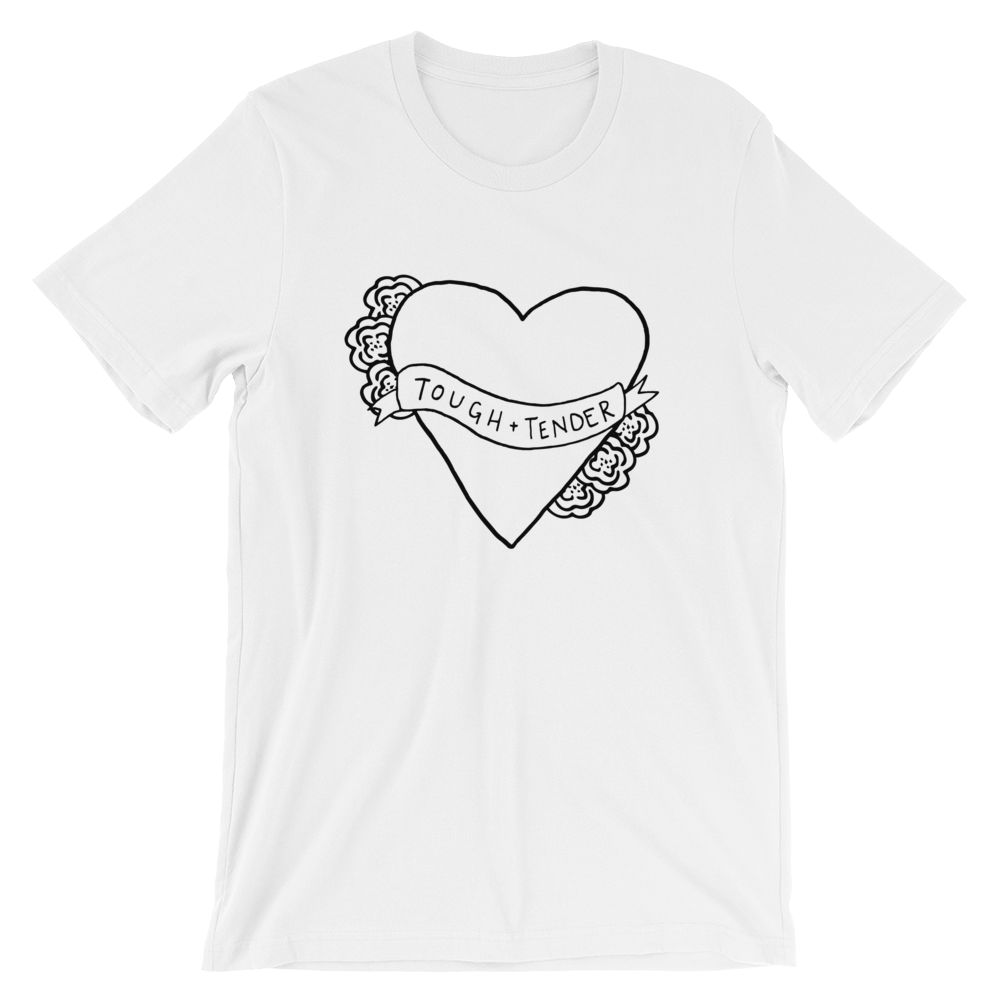
If you haven’t heard of The Crybaby Club then head over and check out their store. I found them on Instagram last year and instantly felt part of the community, so much so that I ended up writing a guest post on their blog about being an introvert in a new city.

Since then I’ve spent hours lusting over their t-shirts, pins and apparel whilst feeling uplifted by their overarching message; It’s OK to be a crybaby.

This tough and tender t-shirt is sold out at the moment but here’s my current favourite alternative!

Heads Above The Waves is a not-for-profit organisation that raises awareness of depression and self-harm in young people. They promote positive, creative ways of dealing with the bad days.

This hoodie was inspired by Alan Watts who said “I have realised that the past and future are real illusions – that they exist in the present, which is what there is and all there is”.

Hoodies are essential garments for me. Although I’m all for reclaiming my mental illness with confidence, I still have those days where I want to be enveloped in comfort. This soft hoodie is exactly what I need on those days!

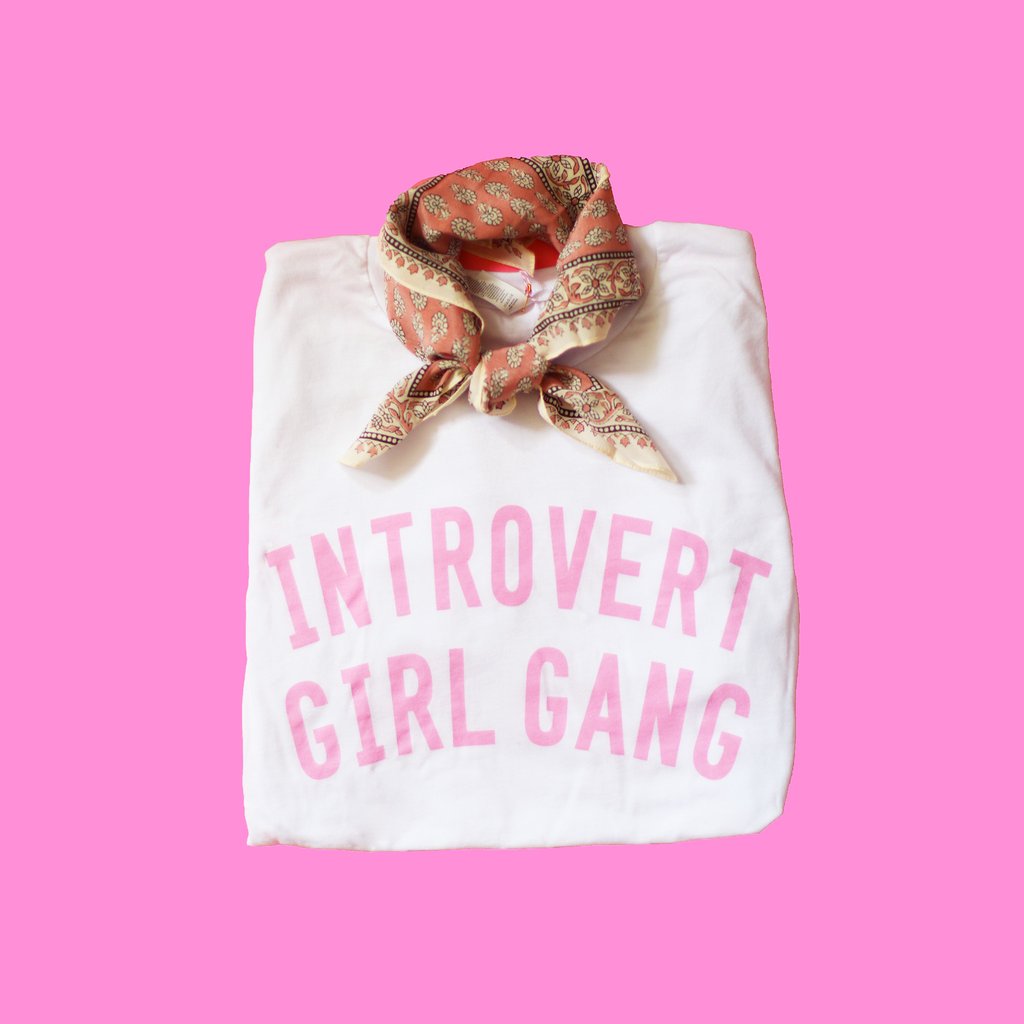
I’m always banging on about being an introvert, mainly because I only realised I was one less than a year ago. This Introvert Girl Gang t-shirt from Shop Luella number one on my wish list because I want everyone to know that I’m not rude, I’m just introverted!

Looking for specific tips on how to manage your self-care as an introvert? Check out this blog post where I explain why creativity is key and how it helped me get my self-care routine sorted out once and for all.

Wear Your Label have been flying the flag for mental illness for a few years now. Started by two friends who had their own mental health struggles, you can really feel that the creators understand how difficult it is to talk about mental illness.

I talk about negative body image a lot, and I’m still a work in progress when it comes to loving the skin I’m in. Just because you’re not fully ‘there’ with your self-love doesn’t meant you can’t still be an activist on the subject though.

I believe sometimes you just have to fake it til you make it. I’m continually ignoring the negative voices in my head and trying to amplify the positive thoughts, so have this t-shirt on hand for the bad days is a plan I need to put into action.

Model Felicity Hayward has been kicking arse in front of the camera for several years now by being bold, beautiful and proud of her body. She’s embodied her ethos in a range of t-shirts plastered with the “self love brings beauty” slogan and quirky illustration.

I love the image of hands creating a heart, because it really drives home the idea that you are in control of your own self-image. It shouldn’t be dictated by the way others see you, or how certain body types are portrayed in the media.

As long as you can learn to treat yourself with care, you’ll feel beauty from within.


Mental illness merchandise

I’m not going to lie, looking at this inspiring lot has got me more than a little bit tempted to start working on my own mental health clothing to sell online. In fact, I might just make a batch for me to wear myself! Are there any areas of mental illness that you feel are particularly marginalised and need to be put in the spotlight?

My Scottish pals will be pleased to know that there’s a new outlet for t-shirt printing in Glasgow called Printsome who have kindly sponsored this post. They offer free shipping on all orders and will print anything from 10 to 10,000 items catered to your specific needs. They also have a blimmin’ good selection of t-shirts, hoodies, bags and hats.

How will you choose to wear your mental illness? I’d love to know in the comments below!

Customer service work ruined my mental health

Customer service work ruined my mental health

UPDATE: Since writing this post I’ve successfully pivoted from hospitality into a career in freelancing. My book Out of Office: Ditch the 9-5 and Be Your Own Boss is an Amazon bestseller and the perfect guide for anyone who craves a more flexible work life. Learn more about my journey from barista to book deal in this podcast episode.

Mental health is a difficult subject in customer service. In fact it’s MORE than just difficult… it’s awkward as hell, but it shouldn’t be.

“Do we have any spare till roll downstairs in the office Boss?”

I turned to Deb, stared her straight in the eye and quietly whispered, “I haven’t got a fucking clue. I’ve got a million and one things on my to-do list today Deb and it’s NOT MY JOB to find the till roll now, is it?”

Her eyes widened and her weight slowly shifted onto her back foot as she stepped away. “Sorry, Fiona” she said.

I didn’t fly off the handle often, and Deb was one of my best workers when I was managing a big cafeteria in a well-known Scottish tourist attraction, so it’s no wonder she was taken aback when I escalated so quickly over a simple stationery related inquiry.

Over the years (13 years to be exact) I’ve held down a variety of jobs. A local bakery, late-night coffee shop, cafeteria, student lunch hotspot and sandwich deli to name a few. The tasks have often been different but the one thread so painfully piercing its way through every career move has been customer service.

The customer is always right. The phrase which gave Joe Public license to complain about everything and forced minimum wage workers to accept the inevitability of being emotionally trampled on 12 hours a day, 5 days a week.

From my first after-school job when I spent one day a week in my local cafe sweeping, mopping floors and scrubbing crusty coffee cups, I was told to be polite, courteous and to accommodate any customer requests with a smile.

When I moved to the capital city, the job of keeping customers happy became a trickier. I was bombarded with requests for very particular orders such as decaf, half-calf, extra hot, wet, frothy, dairy-free and fair-trade. These are just a few beverage related demands I encountered on an hourly basis.

The mind numbing concentration required to process these orders for umpteen hours a day was considerable. Human error always fell into the mix and meant some customers were served half-fat milk instead of full-fat. They may even have enjoyed an extra shot of caffeine on me, or a shot less if my sloppiness didn’t go in their favour.

customer service mental illness

Making chat with customers became like torture, especially when the red flags of my declining mental health began to pop up uninvited. Lying awake until 3am fantasizing about falling down the stairs and breaking a leg was the norm, as was a sudden death in the family; anything to avoid going back to the painstaking task of pretending to be happy in front from strangers.

Around the same time when till roll-gate was kicking off, I found myself unable to cope on a daily basis. I was religiously painting on a full face of designer make up, determined to appear the picture of success whilst my love for life was slowly fading into the abyss. I filled my diary up with hourly slots of management tasks e.g. order stock, check invoices, staff training, meeting with finance department, stock take. I was adding more and more skills into my repertoire and mastering none of them. Updating my CV for future employers seemed the only way to skim some minor benefits off the top of this stinking mess I’d created for myself.

The repetitive nature of the job was soul-sucking. The most difficult aspect was that the overall goal of my job (other than making money) was to keep the customer happy. I was finding this concept increasingly harder to digest as my hatred for everyone and everything became overwhelming.

Why was I such a failure? How come everyone else I knew could serve the public and not want to end their life after a day at work? I couldn’t understand. I’d worked for so long to secure a career and now the entire industry seemed off-limits to me as I despised every single milk-frothing moment of it. From the moment I swiped in, turned on the coffee machine and reset the tables to the moment I stocked up the drinks fridge and mopped that same patch of floor for the 10th time that week. Every. Single. Moment.

I looked into other jobs but I didn’t want to start again. I felt entitled to this career path that I’d forged for myself, and I wasn’t willing to hand it back. The result was a mental breakdown. There are no two ways about that. I fell apart. On the end, I felt I had to quit my job to focus on taking care of my mental health. I won’t go into that here, as I’ve written a lot about why I had to lose my career to save my mental health already. You might want to read this later to get a bit more background.

So what can you do to change it? Can you try and save your mental health before it all gets too much? I really believe you can.

Change industry if you can

I feel like anyone should have the right to do any job they’re qualified to do, regardless of their mental health. Unfortunately working in retail is a high-pressure, past-paced environment that requires employees to maintain good composure in stressful situations. Not everyone is qualified to do this to a standard that companies expect. Sorry, but that’s the truth.

On top of that, many companies are ill-equipped to deal with staff who have a mental illness which affects their ability to work. This might leave you with little support when you need it most. I’m not 100% sure what the best industry is for people with mental illness as I’m still experimenting myself, but my advice to you would be to try something new if you feel up to it. I currently divide my time between freelance writing, blogging and working part-time in a sandwich shop. It’s worth mentioning that retail and catering work is a varied industry, and so you might find one form of customer service that is slightly easier on your mental state than others.

If you’re a waitress and multi-tasking stresses you out, then maybe doing a more focused job – like checkout work – sounds more appealing to you. Maybe it’s your level of responsibility that’s making you uneasy. I spent years as a catering manager and I know I’m more comfortable in a server role, where I don’t have to worry about so many things. Check out my free mini worksheet below which will help you brainstorm some ideas for new industries you’d like to work in.

Move around

My current role has a few plus points that make is particularly good. It’s mostly takeaway food which I find easier as I only have to concentrate on one order at a time, as opposed to the panic-inducing practice of waiting 5 tables at once, taking orders, making drinks and running everything over with a smile.

I’ve found that larger organisations often have better systems in place for dealing with employees who have mental illnesses that need accommodating. With that said, some of the most sympathetic bosses I’ve had are people who own their own businesses. Sometimes having that face-to-face connection and a closer relationship with your employer will be the extra thing that helps your open up about your situation and get the assistance you need to work happily.

The point I’m trying to make is that it’s quite possible for you to continue working in customer service if you’re given the proper environment to do it in. That means the right amount of hours, enough staff to make the job enjoyable and an honest discussion with your employer about what you’re comfortable doing. Don’t underestimate the power of simply trying somewhere new.

Find an outlet

This might sound a bit vague, but I can only explain it in the way that it’s helped me in my daily life. I have this blog and I work on it everyday. I write posts, create images, design the website, send out newsletters, do live broadcasts and manage all the social media outlets that go along with it.

I spend every spare moment I have working on building this concept that I have and it gives me a reason to get up in the morning. It even makes me get up earlier than I need to just to get stuff done. I even look forward to going to work with the public now as a welcome break from staring at a computer screen. It helps me get that human contact that is so often lacking from a job which is desk-based. Working on my blog on the other hand, fills the intellectual and creative void that working in the shop can’t provide.

My other outlet is exercising. I go to the gym between 3-5 times a week and I find it’s a great physical release for emotions that I can’t express verbally. It’s great for a digital detox (leave your phone in your locker) and gives me time to think through anything that’s on my mind. A good yoga session is phenomenal at releasing tension you never even knew you had.

That’s the two hobbies that really get me motivated, and I’m rarely not in the mood to do either of those things so I feel like I’ve always got somewhere to turn when I’m frustrated after another draining day of pointless conversations with customers. I’ve even complied this list of hobbies for depression so you should check it out for some inspiration.

Flipping burgers or stacking shelves might be your day job, but it doesn’t define you. If you enjoy doing that everyday then congratulations, you’ve cracked it. Rock on. But if like me you find yourself cursing customers under your breath, hiding in the store cupboard because you’re having a panic attack or crying on the bus home because you can’t do it any more then maybe it’s time to re-evaluate your situation.

You don’t NEED to quit your job in retail to improve your mental health, but it is worth considering; could it make your life a hell of a lot easier?

How to function on little to no sleep

How to function on little to no sleep

I’m writing this after a bloody lovely night’s sleep. I drifted off quite easily at around midnight and when the alarm went off at 6am I didn’t have my usual morning thought; “Can I justify quitting my job today?”

I actually felt quite awake and ready to start the day. I know, weird right? Maybe you’re blessed with the morning motivation to get up early and bust out some yoga poses whilst the rest of us hit snooze for the ninth time, and if that’s the case then I’m truly happy for you… (I know you can sense my sarcasm so I’ll not labour this point any longer).

For the rest of us watching ‘morning routine’ videos on You Tube hoping that it will rub off on us, I say embrace your tiredness. It’s who we are now. There are however ways to cope on those days when sleep deprivation starts to get a little grating. I recently went to work on zero sleep (call it a social experiment) and have a few tricks up my sleeve on how to function when it happens you.

Vitamins

Vitamins are no substitute for a well balanced diet and exercise routine, but I like to think of my supplement intake as an insurance policy for days when I’m not feeling my best. This article from My Protein has a few interesting insights into which vitamins can specifically help with tiredness and fatigue, and includes a few of my favourites. It’s worth pointing out that many of these are available in Superdrug and they currently have a 3 for 2 offer on loads of them!

I don’t take a lot of supplements but there are a few I always have on hand. B12 is good for tiredness and injury related fatigue, and can increase stamina when taken over an extended period of time.

Many of us are Magnesium deficient and replenishing your stores can help improve the symptoms of chronic fatigue.

Without enough Zinc your cells are unable to properly utilise any other vitamins you consume, resulting in a severe energy drop. I like to take this daily.

Without Iron, your body has to work a whole lot harder to get the energy it needs, which can leave you feeling tired, weak, irritable and unable to focus. Sound familiar? 

I also have a stash of Glucose Plus C which gives you an instant hit of Vitamin C when you need it most. It comes in an easy to use powder formula which I mix into my morning smoothie.

Minimal make up

I’m all for the zero make-up look when I’m feeling fresh, but after a sleepless night I find I need a little something to brighten up my tired looking chops. Eye drops are a lifesaver for bleary eyes and these Superdrug ones are cheap and easy to get hold of.

If you fancy something a little more luxurious I also highly recommend the Liz Earle Brightening Eye Treatment for a soothing and reviving treat for tired, puffy eyes. I know it is particularly popular with contact lens wearers.

Normally I’m too groggy to fuss about with brushes and beauty blenders, and this Garner BB Cream is perfect for applying the old fashioned way with my fingers. I’ve been searching for YEARS for the perfect lightweight foundation that gives that ‘barely there’ look and feel with enough coverage to last all day. I tried loads before I finally tried this Garnier one and was so glad to find that not only is the shade (extra light) perfect for my pale complexion but the formula is quick to apply and hydrating too.

After using this I normally just go in with my favourite concealer, fill in my brows and add enough highlighter to give me that ‘I definitely slept’ glow. I find the perfect amount of highlighter for this occasion is a fair to generous amount, obviously.

morning hacks life routine tips make up hacks

Careful with caffeine

If you’re trying to function on basically zero sleep then you will no doubt be reaching for a large cup of coffee or an energy drink as soon as you start your day. However coming from a person who not only LOVES coffee but is also highly sensitive to the stuff, I urge you to choose your poison carefully.

In my experience, consuming caffeinated beverages when I’m tired does not wake me up. Yes, it makes me more alert but it does not give me more energy or make me feel more rested.

As I’ve been diagnosed with generalised anxiety disorder and have suffered from panic attacks in the past, drinking caffeine only serves to heighten the stress levels in my body at a time when it’s already struggling to function normally.

For this reason, I will always stick to decaf coffee when I’m tired. I have talked endlessly about my favourite decaf instant coffee, this Percol Columbia Instant Arabica which is HANDS DOWN the best decaf coffee I’ve ever encountered. It’s so good, I don’t even need to add milk or sugar. It’s that good.

So there we have it, my foolproof guide to acting like functioning human being when if feels physically impossible. What are your tips?

Includes PR samples

Why it’s hard to take sick days when you have depression

Why it’s hard to take sick days when you have depression

Quitting my job to recover from depression was a huge decision for me, but also one that I was confident making. I knew I needed complete rest and absolutely no stress to rebuild my life. However being unemployed brought its own problems and feelings of inadequacy, which in a funny way spurred me on to work on getting better and finding a job I could enjoy again.

Even now – years later – taking a sick day for my depression is something I really struggle with. I feel well most of the time, but when I relapse I feel like the world is coming to and end. I feel helpless and unmotivated.

It might seem clear to others looking in from the outside that a day off is the best medicine, but my train of thought is a little more difficult to navigate.


Being off sick causes feelings of guilt

When I feel a depressive episode hanging around ominously overhead, I have a bad habit of ignoring it for as long as possible. Most doctors or therapists would suggest taking a personal day – something that isn’t offered in my workplace – to nip the bad feeling in the bud by practising self-care.

Instead I normally power through the feeling of impending doom by casually throwing more stress at the situation by continuing to work, hitting the gym and working on my blog in the evening.


I inevitably burnout and need 48 hours of non-stop sleep and slothing around in dirty pyjamas, surviving purely on Hob Nobs and pizza.

Rest is essential during this period. But the problem for me is that as much as I despise going to work when I feel depressed, the feeling of being off sick is somehow marginally worse.

I feel useless. I feel like a ‘faker’. I feel like I’m being dramatic. I don’t feel like I deserve the time off. This isn’t necessarily a reflection of how others react to my mental illness, it’s really just a symptom of the illness itself.

Days off for my mental health make me feel like a failure, and don’t always make me feel better.

Depression makes me question every action I take and somehow twists it around to be a terrible decision, no matter what it is. It’s the nature of the beast.

Most employers don’t understand depression

If you think there’s no stigma around mental illness in the workplace then I’m afraid to say you’re a little naive. Even if you’re lucky enough to have a direct line manager who understands your situation and allows you time off no questions asked, you’re likely to know other people at work who are less accommodating.

People talk about me behind my back. I know they do. As much as I’d like to say that it doesn’t affect me, it does play a part in my decision to take a sick day when my depression is really bad.

I don’t want other people to think I’m lazy, even though I know I’m not. I don’t want them to think I’m faking, even though I know I’m not. I don’t want them to have to work extra hard to make up for my absence.

I don’t want to have the conversation of “how are you feeling?” once I return to work. I just don’t. I want to go to work and forget about my mental illness as much as possible.

So sometimes, going to work feeling awful is just an easier option.

It costs money

We all know that out health should be a priority. Does that stop us from drinking to excess every weekend? No. Does it stop us from stuffing our faces with sweets and popcorn at the cinema? No. Does is stop us from lying horizontal for six hours whilst we binge watch Netlfix? Absolutely not.

So when comes to taking sick days, sometimes money takes priority over more my mental health. That doesn’t mean I always value money over my health, but some days I just need the god damn money. I’ve got shit to do.

Maybe I’ve got a friend’s birthday coming up or a Father’s Day gift to buy. Maybe I ripped a hole in my work trousers and I need to buy a new pair.

As much as I’d love to take a personal day to get the rest I need and stop my symptoms getting worse, sometimes going to work and collecting a wage at the end of the week is the main priority.

Maybe things will change in the future and it’ll get easier for me to take rest when I need it, but for now it’s a tricky balancing act of many factors which are always changing.

Have you found it difficult to take sick days?

Check the facts here.