Select Page
3 ways to build a regular writing habit

3 ways to build a regular writing habit

It’s a question I get asked at the end of pretty much every workshop I run: “What’s the key to building a regular writing habit?” It seems like a pretty common issue among the writer community – consistent writing practice. After listening to world-renowned authors on writing podcasts talk about their struggles with this too, I realised it isn’t just those of us who are new to writing either!

And I have learned over the years that there’s only a few things that help me stick to writing regularly. I’m going to share them with you so that you don’t have to spend hours berating yourself for not keeping up with the mad routine you’ve set yourself up with.

Read on to find out my 3 steps that keep my writing practice on track.

What are the benefits of having a regular writing habit?

I bet you’ve heard this numerous times from the likes of literary legends such as Margaret Atwood, Elizabeth Gilbert and Chimamanda Ngozie Adiche…but the way to get something written—and to improve— is to write regularly. Take it from me, your writing motivation will never be constant—so your routine really needs to be!

Developing a regular writing habit will support you in feeling in control of your writing process. You might know that I have anxiety issues, so having a daily journaling session keeps me grounded while also giving me a sense of accomplishment. Your practice might not be journaling, it might be a little challenge you set yourself (a daily haiku or 5 lines of your book – whatever!) but having a little ritual is so beneficial!

And when you’ve got a regular writing habit you’re less likely to get hit by writer’s block. Because you’re writing. Every day! It might not be direct writing on your specific project, but you’ll never be “stuck”.
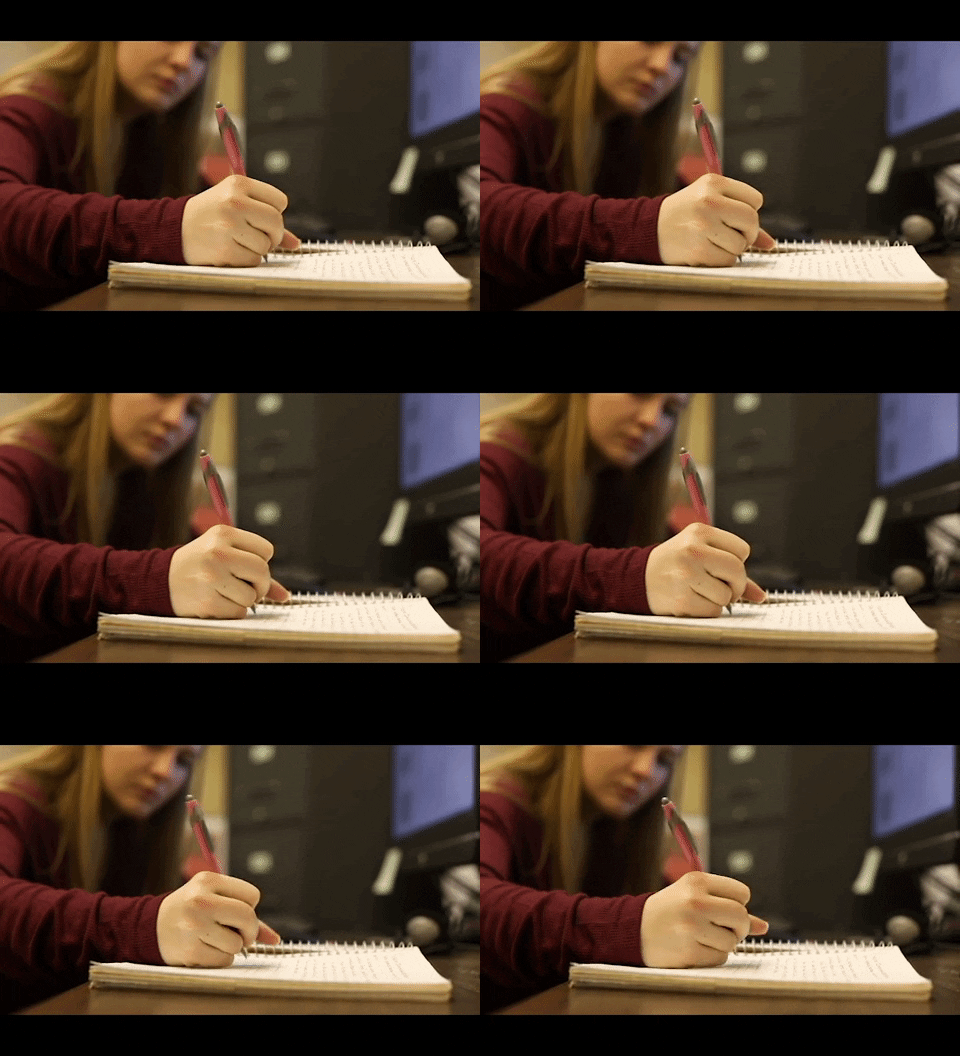
So how can I do that exactly?

It’s not necessarily about giving yourself strict guidelines. For me, it’s all about recognising what works and what doesn’t work. What I love and what I hate. For example, I am not really a morning person, so it’d be a daft idea for me to decide that 6am is the time I set aside for regular writing sessions. For you, though, it might be the perfect time! No writer is the same.

I’ve developed a few steps that help me stick to my regular writing habits and will share them with you now!

Step 1: Keep it simple

The key to building a regular writing habit is EASE! Make it as simple and easy to keep up as possible. Try not to overcomplicate your regular writing practice. It’s exactly what it says it is: practice. And just like a stage rehearsal or a practice training run, it’s going to be a bit messy. But it’s not for anyone else, so switch off that perfectionist nonsense right now!

Simplify your writing practice so that you ease into these habits. Sit in the same comfy spot to write and try to maintain a level of “tidy”. Don’t over plan, stick to the basics. Block out a set amount of uninterrupted time and go for it. If you’re doing an early morning session, have everything laid out ready the night before—pen, notebook, water—and get those pages written! Don’t forget to check out my resources page to get access to free writing prompts.

Step 2: Realistic expectations

A mistake writers make (including myself!) is setting your own expectations too high. “Today I’m going to write the first 6 chapters of my book!” Or “I’m going to get up at 5am and write for 3 hours”.  These aren’t helpful and when we don’t achieve them, we tend to feel down. Have minimal expectations of yourself and don’t set a really high word count target for yourself. The simple act of a daily or regular writing practice is enough to keep you moving and motivated.

If you haven’t yet tried morning pages, give it a go. This low expectation method is especially useful for developing your solid writing habit. It seems to work for so many other writers, why not try it too? Basically, you write three pages each morning—by hand if you can or on your device if not. It’s for your eyes only, so it doesn’t have to be pretty—JUST WRITE!

You can use journal prompts to support this practice if you struggle, and this also takes off the pressure of the dreaded BLANK PAGE. But by giving yourself something to write every single day, you’re essentially giving your creative muscles a stretch and warm-up. You’ve prepped for all the fab stuff brewing to flow!

Watch this if you want more inspo on building a regular writing habit.

Step 3: Get some accountability

We all know that creative people, like me and you, are the kings and queens of procrastination. Tell me you haven’t lost hours of your writing time down Internet rabbit holes, doing chores instead, or suddenly finding time to call your aunt about that thing…?! And it’s not about deadlines because actually I find that those make my procrastination worse. So we need to have someone to report to, someone to hold us accountable, or we will never do anything!

Whether that’s a friend or a book coach, a local writing group or a coworking buddy on the internet, it helps to have someone asking you how it is going. You can tell them your targets for the week or month and ask them to check in with you on the reg. And if you’re looking for some accountability and additional support, check out my online writing courses.

Hopefully these tips will help you with building a regular writing habit so that you can achieve your writing goals!

Good luck and don’t forget that you can join in the community chat over on Instagram where me and other creatives hang out and discuss our writing dilemmas! Share your tips for creating a regular writing routine below, your ideas might make someone’s day or even fuel their creative fire to get writing! Go go go!

How to live your best freelance life

How to live your best freelance life

April’s a big old month for the Out of Office podcast. My airwaves-generated baby, my child, turned one on 16th April. It’s been an entire year since I started the podcast. And we’re still in a pandemic. But let’s focus on the former, more celebratory news, shall we?

I started Out of Office with the aim of supporting not just people already on their freelance journeys, but particularly the freelance life contemplators, or the ‘I’m-pretty-sure-freelance-is-a-pipe-dream’ dreamers. I want to demystify the freelance life, offer no-BS advice and share both the highs – and lows – that come with hitting out of office for good, so you’re prepared to make your business a success.

So, in keeping with that purpose, here’s the no-BS advice on how to live your best freelance life:

Episode 21: Strategies for coping with stress, depression and anxiety

Has the pandemic impacted your mental health? Is that a silly question?

Pandemic life has well and truly impacted my mental health over the last 12 months, so I’ve shared what I’ve been doing to manage the symptoms of stress, depression and anxiety recently.

If you need urgent support call the Samaritans for free on 116 123 24 anytime or for less urgent support email jo@samaritains.org and they will respond within 24 hours.

LISTEN HERE

Episode 22: Falling in love with freelancing again

What do you do as a freelancer when you fall out of love with the freelance life? When it feels like s*** is hitting the fan, it can be, honestly, terrifying. But I’m here to show you it’s possible to get back on track and fall back in love with the freelance life again.

I’ve had periods in my life as a freelancer where I’ve felt a bit stuck and I’ve questioned if I was really on the right path. Last year, when I lost my biggest client, I was forced to reevaluate what I wanted out of my business and it changed my entire approach.

Over on the podcast, I share five things that helped me fall back in love with my business again.

LISTEN HERE

Episode 23: Using your blog to get more clients 

Blogging is what started my freelance career so I felt it only made sense to share my thoughts on how it can help you in your business journey.

You can use your blog as a place to talk about subjects that you’re scared to post about on social media as well as a tool to demonstrate your abilities as a freelancer.

Catch the attention of a prospective client on your irresistible blog and they’re sold.

LISTEN HERE

Episode 24: Growing your online platform

On the most recent episode of the Out of Office podcast, I share tried and tested ways to grow your platform online to boost your freelance business. Get ready to create content that attracts more clients!

Here’s to another 12 months of Out of Office being in our lives!

LISTEN HERE

Pick up my book – Out of Office: Ditch the 9-5 and Be Your Own Boss

4 freelance myths debunked

4 freelance myths debunked

Thinking about going freelance but sick of people spreading myths to try and put you off? You’ve come to the right place.

Not only did I write the book on how to get started, but I believe that being self-employed can transform your life for the better. But not everyone you speak to about setting up a business will share your (and my) enthusiasm.

So I beg you, please be careful who you confide in before making the leap and consider these freelance myths below. People will generally speak from their own experience and as a result, will have a positive or negative bias towards self-employment as a whole.

If you seek advice from your uncle who set up his own business and went bankrupt, he’ll probably tell you to steer clear. Your friend who’s had a stable council job for fifteen years with regular promotions and a generous benefits package probably thinks you’re mad for even considering giving up your salary.

Similarly, though, if you live in a social media bubble and surround yourself with entrepreneurs who say they make a six-figure income and work a mere two hours per day (ha!) you might get the wrong idea.

Everyone has an opinion on freelancing and it’s up to you to figure out if it’s right for you. You should definitely discuss the decision with friends and family, but be prepared for them to say one or all of the following:

Freelance myth #1: It’s too risky

In the beginning, yes, it’s pretty risky to go freelance, and so you probably shouldn’t make the leap until you’ve got some savings in the bank and a few regular clients on your books. If you went freelance without any skills, experience or means of income, then, yep, that’s pretty fucking risky.

But an established freelancer? Well, they’ve got several clients, and are potentially working on multiple projects at once. Because they work on an hourly or day rate, they are more affordable for businesses that only need workers for a short period of time. They aren’t pigeon-holed by job title and can normally accept a range of jobs that match up with their wide range of skills.

For example, I could help you plan your social media content, edit your podcast and write blog posts. I can also pitch stories to magazines, run writing courses and give motivational mental health talks. So if suddenly no one is making podcasts or using social media anymore, I can turn to copywriting to make up for the lack of income. I have my fingers in many, many pies and there will always be scope to pivot as and when required.

If you work in a company role and all of a sudden everything goes tits up (in the way that the wedding industry or hospitality has been impacted due to the pandemic), then you might be in trouble. Having different strands of income that you can pull on as circumstances change makes freelancing a dream for stability. You just have to work hard in the beginning to build up your skills and your client base to see the long-term benefits.

Freelance myth #2: You need to hire a team

The beauty of being freelance is that you can dictate how your business is run. If you don’t want the stress of managing employees and having enough money to pay their wages, then you don’t need to. You can outsource work to other freelancers on a project-by-project basis and then go back to being a company of one as soon as the work is done or things quieten down.

Success doesn’t depend on expansion. You can create a manageable, steady flow of work (and income) based on your own abilities if you find the right clients and price yourself appropriately. A team of one is arguably more sustainable as there are fewer overheads involved. If you thrive as an independent worker, then lean into that. I personally love nothing more than sitting at home in my pants while having a personal development meeting with, well, myself. I always get good feedback in those meetings.

Freelance myth #3: You need a business plan

Err, no. If you’re going to the bank for a loan then sure, they’ll probably want to see a business plan, but lots of online lenders don’t ask for one. I wouldn’t even recommend thinking about taking out a loan to start a business unless it’s absolutely necessary (say you literally need a particular piece of kit or software to do the job), and even then I think it’s more sensible to be patient and save up a pot of cash while working a regular job.

A business plan is a nice idea, but I think too many people think that it guarantees the success of your business. It doesn’t. If I had written a business plan when I first went freelance I would never have planned to do much of the work that pays my bills nowadays. I had a plan of sorts, but not an official strategy document based on market research and financial forecasts.

Being reactive is just as important as being proactive because it means when opportunities pop up you’re flexible and open to changing your trajectory. I started off trying to make money through sponsored content on my blog, but after a few months, I was encouraged to pitch feature ideas to an online newspaper. Getting into journalism wasn’t part of my ‘plan’, but when it cropped up as a potential earner, I gave it a bash. I wasn’t restricted by a framework that I’d created to make me feel like I had my shit together. In fact, my shit was all over the shop, and as a result, I ended up fulfilling a lifelong dream of mine by writing for major publications and getting two book deals.

Freelance myth #4: You’ll never make it

This freelance myth really hurts. If you have an inkling of a feeling about setting up your own business, it can take years to simply convince yourself that you’ve got what it takes. Or, more accurately, that you’ve even got the right to dream big. Because many of us take such a beating from life in the form of abusive partners, pessimistic frenemies and over-protective parents, we think we are rubbish humans who must settle for Just A Job. There is nothing wrong with having Just A Job if that’s what really makes you happy.

I had Just A Job back in 2013 when I was recovering from a mental breakdown. There are times to be passionate about your career goals and there are times to simply bring home the bacon. I had been off sick with depression for almost a year, regularly unable to face daily tasks such as showering or popping to the corner shop. So the thought of going back to the job I’d had previously – running a business, managing a team, dealing with budgets and staff training – was too much to handle.

I had to go back to basics if I wanted to return to the world of work, so that’s what I did. I worked a part-time job as a waitress in a family-run café and it had no prospects. No likelihood of a pay rise or promotion. Was I hopping out of bed every morning, excited to serve lattes and toasted teacakes to local OAPs? No, but it was what I needed at the time: a simple vocation to build my confidence up.

Listen to my podcast episode about side hustling below


Lots of other people have Just A Job because it funds other passions in life, like paddleboarding, knitting pyjamas for goats or bowling three times a week. That’s fine. It’s more than fine – it’s excellent. But if you’re working Just A Job and it’s sucking your soul and you’re wondering if there’s a chance that you could be happy at work, don’t let the negative voices (internal or external) tell you that work is supposed to make you miserable. We all have bad days. But I refuse to believe that anyone should accept unhappiness at work as the norm. It sounds really dramatic to say this, but you only have one life.

Do you want to spend it doing something that you’ve settled for? Or do you want to look back and know that at the very least you gave this freelancing thing a bash?

Did I miss out any freelance myths? Share yours in the comments below.

Find out more about my book ‘Out of Office: Ditch the 9-5 and Be Your Own Boss’


Do freelancers need insurance?

Do freelancers need insurance?

Freelance insurance is something that I always knew existed but didn’t really want to think about.

“Freelancing is fun!” I thought, “it’s freeing!” – I don’t want to get bogged down in paperwork! But the harsh truth is that I was underprepared for the risks and responsibilities that come with running a business.

I know I personally didn’t consider getting insurance until I started writing my book Out of Office. It’s not legally required, so I just put it off, thinking that it wasn’t essential and probably too expensive.

I know that insurance gets a bad name because it’s literally capitalising on fear, but I can honestly say that now I’ve signed up I’m genuinely quite happy to pay £15(ish) for the peace of mind I have right now. Here’s a quick rundown of what you need to know about the types of insurance available for freelancers:

Professional Indemnity Insurance

This covers you against the business risk of causing financial loss to your client through your own negligence.

I spoke to Robert Hartley, who is one of the co-founders of Dinghy, an insurance company specialising in policies for freelancers, and he gave me an example of why you might need professional indemnity cover:

Imagine you were a graphic designer and you’ve created a logo for a client and a year later a larger company says that your design breaches their trademark. They’ve also got the funds to take legal action. You could be held accountable for this and need to pay for lawyers and damages.

‘You get your logo design put on your website, printed in a magazine, make loads of banners, and then suddenly someone says you’ve breached their trademark and you owe them £10,000. It’s the designer of the logo who would need to pay this compensation,’ says Robert. ‘Something like this is an honest mistake. You didn’t deliberately rip off this logo design and so professional indemnity cover will pay the compensation.’

Bear in mind, though, that this is only relevant when there has been some sort of financial loss. It can’t be a client saying that they just don’t like the logo!

Public Liability Insurance

This offers protection against injury to other people or their belongings. It doesn’t need to be a client; it can be anyone in the public who isn’t you as long as it happens when you are working.

Perfect for freelancers like me who work in public spaces like cafés, co-working spaces and libraries and live in fear of dropping a scalding hot chai latte over a stranger’s laptop.

Equipment Insurance

Things like your laptop might be covered under your home insurance, but that’s not always the case, so check with your existing policy to find out where you stand.

It’s also worth noting that your home insurance might not cover items when you are using them outside of the house and some policies totally exclude business items anyway. I personally have worldwide cover on business equipment so that if my laptop ever breaks or is stolen, I can get a replacement ASAP.

Cyber insurance

This is something that I don’t have, but might be worth considering if you handle a lot of customer data.

‘Say you visit a website and you accidentally download a ransomware virus and get an email saying you need to pay £500 or all the information on your computer will be deleted,’ says Robert. ‘The insurance company would help with that. If you hold a lot of customer data like addresses or bank details then you would want that protection.’

Income Protection

For most freelancers, loss of income is a major concern. This type of insurance helps by providing you with an income in the event that you are unable to work due to long-term sickness or as a result of an accident. Policies will provide you with a percentage of your gross income for a set time or until retirement, depending on the terms.

How much does it cost?

There’s no set rate for insurance policies as it depends on the cover you need as well as what kind of work you do. I currently pay about £15 a month for professional indemnity, public liability and equipment insurance, so that gives you an idea of what to expect.

Bonus tip: Look out for freelance specific insurers like Dinghy. They offer added benefits like Freelancer Assist, which gives you access to 24/7 helplines for legal matters, tax investigations and counselling. Dingy also has a team of experts on-hand who will chase up late payments (over £200) on your behalf.

For more tips on going freelance listen to the Out ot Office podcast or pick up my book.

Out of Office shortlisted in the Business Book Awards 2021

Out of Office shortlisted in the Business Book Awards 2021

I’m pretty chuffed to announce I’ve been shortlisted for an award (!!) for my book, Out of Office: Ditch the 9-5 and Be Your Own Boss – can I get a whoop whoop?

Taking place at a fancy virtual awards ceremony on Tuesday 25th May, The Business Book Awards 2021 celebrates thought-leadership in business. The very fact I’m shortlisted as a thought-leader is enough to quite literally rock my world, and to have Out of Office recognised as an industry-approved guide for freelancers to help you navigate the highs and lows of quitting the office for good means so much.

I’m nominated alongside some stellar books in the ‘Start up/Scale up’ category, and you can find Out of Office sitting comfortably alongside the likes of Boss It: Control Your Time, Your Income and Your Life by Carl Reader and Investor Ready: The guide for start-ups on getting investors to say YES by Julie Barber. Quite the bookshelf, if I do say so myself.

The Business Book Awards 2021 celebrates the industry-leading tomes that inspire the business world each year. Recognising books that have shaped understanding on all aspects of the business world – to name but a few: sales & marketing; HR & management; diversity, inclusion & equality; change & sustainability – it’s an honour to be amongst such wonderful company.

Joining me (in my pjs, on Zoom, most likely) and the nominated authors on the fancy awards evening in May will be an incredible judging panel that includes leaders in business and the most in-the-know in publishing. Head Judge, Alison Jones, is the founder of Practical Inspiration Publishing and author of This Book Means Business. She has 25 years of experience in the publishing and business industries, and has joined forces with a roster of other incredible leaders in the business world to judge yours truly. It’s set to be an exciting night.

See you at the virtual awards ceremony on Tuesday 25th May 2021!

Fancy writing your own business book? Listen to this episode of the Out of Office podcast.