
by Fiona likes to blog | Sep 23, 2021 | Freelance
Are you wondering how to set your freelance rates? Struggling to navigate the world of hourly rates, day rates, retainer packages and the rest? I hear ya. Figuring out how much to charge for your services is a complicated topic and everyone has an opinion.
Hourly rates
When I first started charging an hourly rate, I didn’t think very much of myself. I’d been making sandwiches for a living for a few years and scraping by on £7 per hour and free food and coffees to make the day feel a little less dreary. So when I had to come up with a figure to charge for my services, I didn’t feel worthy of asking for very much at all. I charged £10 per hour.
Several years later I upped that to £20 per hour, and I’ve increased it yet again since then. I did some research into what other people were charging and also thought about how much I would realistically like to earn every month.
Watch this Instagram video to learn more tips on how to set your freelance rates.
Say for example you want to earn £3,000 per month. Great, now how many hours would you like to work in that month? If the answer is 120 hours (thirty hours per week), then you would need to charge £25 per hour. (Bear in mind that this is all before tax, so you would lose a certain percentage of this to the government.)
Consider your capacity
Instead of working backward thinking about hours worked, maybe consider how many days you would like to work, or how many clients you can comfortably work with, or how many products you would need to sell to make up that income.
Remember that just because the typical working week consists of five days this doesn’t necessarily mean you can dedicate five days to doing paid work. You’ll need time to do the work that doesn’t pay (in a direct sense anyway) such as sending invoices, implementing marketing campaigns, meeting with potential clients, etc.

As a rule of thumb, I would assume that at least one day a week will be required for various freelancer-related tasks and then take it from there.
Do your research
TIP: Talk to other freelancers and ask if they would give you a ballpark figure about what they charge. Do this with lots of people, not just one or two, because the chances are that they could be under or over-charging for their services! When I increased my rates recently, I asked for input in a freelancer Facebook group and people were more than happy to tell me their hourly rate.
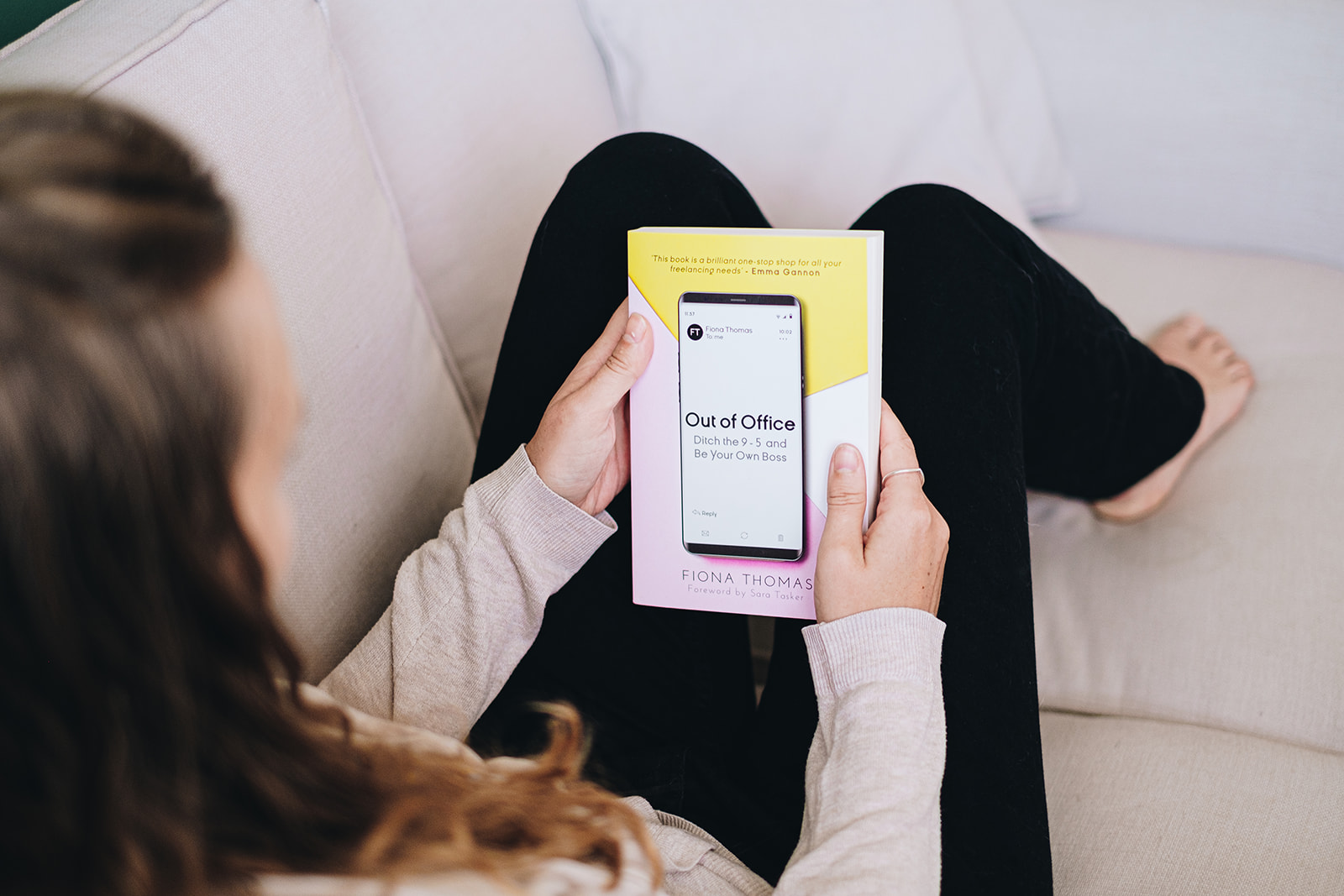
Learn more from my book Out of Office: Ditch the 9-5 and Be Your Own Boss.

by Fiona likes to blog | Aug 19, 2021 | Freelance
On any given day, I can have a different opinion on whether it is ever OK to work for free – as it’s a complex, nuanced subject. I know that sentence doesn’t help you in the slightest – but hear me out. I promise I’ll offer some actually useful tips if you keep reading. Whether you’re starting a side hustle or a full-time freelancer, the expectation of working for free is something that you need to be prepared for.
This blog post is based on the Out of Office podcast episode: Is it ever OK to work for free?
How many freelancers work for free?
Half of all freelancers have been asked to work for free. Forty-three percent of all freelancers have completed a job without pay. And, there’s an ongoing joke in the freelance world that you can’t pay your bills with ‘exposure’. Gloomy stuff, right?
But: is it ever OK to work for free? And what value can working for free give you that will actually improve your business, aside from its financials? Call this blog post your guide to answering the ever-unanswerable question.
via GIPHY
In my book Out of Office, the no-nonsense guide for those contemplating freelance life and those already on the freelancing journey, I interviewed Digital Marketing Coach, Alice Benham. I knew she had some interesting thoughts on working for free and she gave me these nuggets of wisdom:
“Putting a monetary value on your work can have a direct impact on the quality of the work’s outcome. Any clients that have paid full price for my services have a better attitude. All my ‘bad clients’ have been ones that have got my services at a discounted rate, or for free.
“I think it says a lot about someone’s attitude when they’re willing to pay for a service. I have such a better relationship with every single one of my paid clients, because I know they are paying a price that’s genuinely fair for what my time is worth – and they know the value they’re getting.”
Choosing to work for free is a privilege
I have also experienced the horrors that can come with deciding to work for free; sometimes a client expects you to even get out of pocket to achieve the end result. So, rule number one when it comes to deciding whether you should indeed work for nada is to make sure you’re getting something out of it – even if it’s not money.
When choosing to work for free, it’s both a personal choice and a privilege. There’s no one answer because it depends on your mission and your current financial situation. In the early days, I did sometimes work for free, because I had a stable income in another job so I knew I could work for nothing and still pay the bills at the end of the month.
You just run the risk of a client perpetuating the idea that freelancers are less ‘valuable’ than employees – which is completely untrue. Even now, long into my freelance career, I still get asked to work for free. There’s a brash, no f***s given approach some employers have – that ‘expectation’ to sometimes work for free never goes away in the freelance industry, unfortunately.
But, sometimes, you can play the game to your own advantage.
via GIPHY
So, is there ever any value in working for free?
- Consider saying yes: if there’s a clear benefit you’ll receive that isn’t financial. For example, you might be asked to speak on a panel for free, as I have often done, and the audience you’ll reach may be much bigger than your own, and you’ll have the chance to speak about something that’s close to your heart. When I was promoting my book, Out of Office, my marketing strategy included reaching communities of side hustlers, business owners and freelancers at events for free because I knew that by sharing my knowledge with them, I had a chance to capture their attention, and, in turn, get them to buy my book. I was working for free, but I was making valuable connections and getting something out of it in the long-term.
- Consider saying yes: if you’re raising your profile by working for free. Value doesn’t exist just in monetary form – oh no. If you’re appearing as a guest on a monetised podcast, you’re working for free. But the ‘exposure’ (the dreaded word) could actually be valuable for you in this instance.
- Consider saying yes: if you’re building valuable networking connections. For example, if you’re a photographer, you could offer a free shoot to an activist whose mission you admire, or you could reach out to a digital marketer and for a shoot, you, in turn, get to build your portfolio and secure some banging marketing tips. If you offer people work for free, you never know: they might just turn into paying clients.
- Consider saying yes: if you want to build experience in something you’re not an expert in, yet. Reach out to people – offer your services for free – build up that portfolio that then attracts paying clients. You’ll see the results pay off.
- Consider saying yes: if it helps you build your confidence. I did this with public speaking. I wanted to be a better public speaker, and I wanted to learn in a pressure-off way. By taking free gigs, I didn’t feel that pressure to perform perfectly, because I was doing a client a favour. In turn, my confidence was built up from those free gigs, and then I started getting booked for paid work.
via GIPHY
When to say no to working for free
- Consider saying no: if it’s a BIG project, with multiple people working on it, that are all getting paid. Question why the company can afford to pay them, and not you, and get answers from the employer. If it’s down to differing levels of experience, and you’re not quite experienced enough, work out how much the opportunity is worth it for you before saying yes.
- Consider saying no: if you already have a busy work schedule. If free work is pushing you into burnout territory, that’s not the time to be picking more up.
- Consider saying no: if the opportunity gives you NO benefit. If you feel the company is taking advantage – perhaps they’re making you write for free, but they then won’t link to your website in exchange – question why you’re doing this. If you’re not wanting to be affiliated with their brand, necessarily, don’t bother picking up the opportunity.
- Consider saying no: if the client looks like they definitely have the budget to be paying you, but just aren’t coughing up. If there’s no money being offered, you have nothing to lose, so always ask if there’s a budget available. Often, it’s awful, but companies will let free work go ahead if you don’t ask for your worth. If you ask, they might magically have a budget available. Surprise, surprise.
- Consider saying no: if they’re not clear on exactly what the work is that you’ll deliver. Always ensure your contract sets out your terms, and be clear that if you’re writing one blog post for free, that’s all you’re doing for free. If they then ask you for more rounds of amends than you agreed to, or they’re trying to get you to work on the SEO for their website, be clear that that will incur a fee.
So, there you have it.
Yes, it’s a personal decision. Yes, a lot of it is based on privilege.
But it’s always important to stick to your gut and know your worth. Hopefully, this blog post has helped with that a little – and remember, if you get an offer to work for free, you don’t have to say yes straight away. Sit with it, work out what’s in it for you, and don’t be scared to challenge your potential client on their proposition. You’ve got this.
If you want to know more about setting your rates, handling awkward freelance conversations, and living your best out of office life get a copy of my book Out of Office now.

by Fiona likes to blog | Jul 20, 2021 | ANXIETY, WRITING
Oooof this self-doubt malarkey is a total ratbag, right? I’d bet my last Rolo that you’ve asked yourself at least once “When will I stop doubting myself as a writer?!” It’s something that pops up in conversation with the writers on my course, as well as in the comments on my insta posts.
It’s something that I’m still in a constant struggle with – even though I’m a published author, writing journalistic pieces and a prolific blogger! It can really hold people back from going for their dreams, but also in the every day as a writer or creative. In short – self-doubt sucks.
So how do we go about overcoming self-doubt as a writer? I wanted to share some ways I deal with it and how I have overcome it to get published and start to believe in myself.
How do you know if what you’ve got is self-doubt?
Self-doubt is the mental habit of questioning your own judgment or worth. So you know those moments when that voice in your head creeps in after you’ve achieved something? THAT. When I was sending my pitches to editors and publishers, I’d feel super pleased with my work and then freak out the second I hit send. “What if they hate it?” “Why did I think I can do this?” “Who do I think I am?” “I don’t even have a degree in writing! What am I doing?!” And this is soooooo common!
Sometimes the worries we have stem from childhood issues around dependence, other times it’s from stress. But it doesn’t matter where it comes from, because it’s how we deal with it that is important.
No (wo)man is an island
Firstly, it’s important to remember that every writer has these feelings. From Huxley to Hemmingway, Shakespeare to Shelley and beyond: you are not alone. Have you got a community of writers to turn to when those horrible voices (you know the ones, whispering to you that you suck) creep in? Reach out to them and have a chat about ways you can remind each other how awesome you are. Who could be your go-to pal for a motivational high-five?

Have a break
Taking a break from writing is often necessary when you hit these moments of self-doubt. Go and do something completely different! Have a bath and listen to your favourite book. Crank up the radio and dance around the kitchen. Head out for a walk and listen to a podcast. Choose something that’ll boost your endorphins and make you smile.
And this also means giving yourself a break from the mean voice. Switch that mofo off. You’re going to have setbacks. Every writer I know has them. Part of the journey of being a writer is that things don’t always go according to plan and you have to be ready for that. It doesn’t mean you’re a shit writer. It means you’re developing your skills, and honing your craft.

Read more
I’ve heard this time and time again from other published writers and freelance writers, but they all say that to be a better writer you’ve got to read more! And it’s definitely true! Diversify your bookshelf and start to read authors who you might not normally choose. Pick up books from genres you’re unfamiliar or uncomfortable with. Challenge yourself to read a book a month. And keep a diary of what you’re reading to refer back to.

If you’re finding it tricky to squeeze into your busy schedule, try listening to books instead. Audiobooks are a great way of absorbing information and new vocabulary without the hassle of lugging a tome around with you. I know some people think of it as “cheating” but it’s really not, and it can often give you a new perspective on a character or plot line. This is because the narrator puts emphasis in a different place to how you did, or you’re paying more attention than when you were speed-reading it before.
And remember that you could be reading instead of scrolling. I guarantee if you set yourself social media limits on your phone, and force yourself to pick up a book instead, you’ll have read a few books in no time at all. This isn’t meant to sound preachy but, as someone that is prone to doom scrolling, choosing to read instead has been a game changer. It’s revolutionised my writing and been amazing for my mental health!
However and whatever you choose to read, I urge you to do it more!
Write more
“Well, duh, that’s what I’m stuck on!” I hear you say. Wait for it…I’m not saying it won’t be hard to write. But maybe you’re stuck because the writing you’re choosing to dwell on is actually tricky. So instead of struggling with that blinking cursor on a blank page, putting up with that nagging voice telling you how sh*t you are, why not journal instead? I put new journal prompts on my Instagram grid all the time, so go get some ideas there!
Building a regular writing habit is the key to overcoming both self-doubt and writer’s block (so intrinsically linked!). I’ve written a post about how you can develop a writing routine that will keep you motivated and help keep those creative juices flowing.
And if that’s not enough, you can join one of my online writing courses to help get your writing project off the ground. The accountability really helps!
Kick self-doubt to the kerb with evidence!
Keep a file of positive feedback – from clients, friends, colleagues, editors! Loads of people I know do this. Someone I know keeps screenshots of nice comments on her posts in a folder called “I am awesome”, another has a scrap book of brilliant things she’s done and prints out any testimonials to put in there too. You can do it however you like, but the idea is that when that self-doubt voice shows up then you hit them with the evidence.
Dazzle the doom with your glorious proof: “See, I’m not useless!” “Katie thinks my article is the best thing since sliced bread.” “5 ***** and more if she could – no losers here!” The neural pathways are trained to pick out the negative, so you really do need to hammer it home with the positive evidence and praise to drown out the teeniest negative voice.
For more tips on writing and mental health, subscribe to my podcast, “Out of Office,” and download my FREE Ebook “Journal Prompts to Build Creative Confidence“. And don’t forget to come and join my creative community on Instagram, where I share tonnes of advice and ideas for overcoming issues like self-doubt, procrastination and lack of motivation!

by Fiona likes to blog | Jul 14, 2021 | Freelance, WRITING
‘How to pitch to publications’ is a juicy topic. It can also feel overwhelming to even begin typing out the first pitch email to an editor when you’re just starting out. But – great news: you don’t have to have done a degree in journalism or have even gone to university to become a published writer.
I would know.My degree was in music, I worked for years in hospitality, and now I’m a freelance writer. I’ve been published for national publications such as Grazia, Metro, Reader’s Digest and The iPaper hundreds of times. And all it took was passion and practice.
For years, writing was my hobby. One day, I responded to a call-out on Twitter from an editor looking for pitches. I just decided to bloody well go for it, and my pitch got accepted. So, I kind of got published by accident.From then, I honed my skill as a writer and pitcher – and today, I’m typing away to answer your frequent FAQs on exactly how to pitch to publications, drawing on my now extensive experience over the many years I’ve been doing this.
Before we crack on with your questions, you should head over to my resources page and download the pitching checklist. It’s great to have on hand when you’re crafting every single pitch. Also, I offer 1-1 mentoring calls as well, where I can run over pitches with you, answer your specific questions in detail and have a good old chinwag about the freelance writer life.

Where do you even start with pitching?!
Well, this is a biggie. From my experience, the best place to start is as simple as this: the writing. Don’t start by thinking about making money; don’t start by thinking of that byline. Start by practising to become a better writer. If you haven’t got a blog, start one. Start writing articles you’d like to see published; write about the topics you’re interested in as if you’ve already been commissioned by your favourite editor.
Next, read – LOTS. Look at magazines, digital articles, newspapers. Analyse journalists’ intros, where they decide to put in quotes, what the word count of pieces typically are, how they’ve crafted the headline and narrowed down that razor-sharp angle. Another great thing to do is look at what’s trending, or analyse current headlines, and then decide what your stance would be on the subject. How would you write about that? Then write about it for your blog.
It’s a whole lot of preparation before you get to the pitching stage – but that’s good. The last thing you want is to send a great idea, get commissioned and then panic because you haven’t had enough time to hone your own writing. And learning how to press ‘publish’ on your own work eliminates that imposter-fuelled fear of seeing your work out there in the world. Before you know it, you’ll be ready to pitch.
LISTEN TO MY PODCAST EPISODE ALL ABOUT PITCHING TO PUBLICATIONS

What do you include in that first email to an editor?
If you’re cold pitching, you do need to introduce who you are – but it’s not as important as you might think it is. Editors get pitches from writers they’ve never worked with all the time, so that’s okay.
Make sure your email exudes quiet confidence: you need to show them you deserve to be in their inbox. Never send an email just introducing yourself and asking if they’re looking for stories: that’s a big no no. Editors are very, very busy people and they won’t have time to deal with that kind of request. You’ve got to give them something they want. Which is a great story idea.
The first time you pitch, you’ve got to make sure you’ve spent a lot of time thinking about your idea. Do some research; find some case studies. When you pitch to an editor, they’ve got the choice of choosing you (who they don’t know from Adam), a staffer that already works at the publication, or another freelancer they’ve worked with before. The others have an advantage over you, and they’re definitely looking like the most risk-free options for the editor, so you’ve got to make sure you can prove why you’re the person to write the piece.
If you have lived experience of the topic you’re pitching, show that. If you don’t have personal experience, do thorough research and make it clear you already have some killer stats or case studies the editor might not have easy, instant access to.
How do you choose which publications to pitch to?
If you pitch to publications you already read, you’re in a great position because you know the kinds of articles they want. However, the disadvantage is you might be a little too close to the subject matter. If you’re, say, the target reader of Cosmopolitan Magazine, chances are the kind of articles you’ll want to pitch have already been covered by the popular title lots and lots of times before. There aren’t really any new stories, always just new angles. And often, with massive titles, every angle has already been covered.
If you decide to cast your net wider and pitch to niche publications, this can be great, because you have a chance to really get deep into your subject matter. I regularly write for Happiful Magazine, the mental health publication, and whilst I adore writing for them, you have to think long and hard about your angle, because every single article in the 12 issues a year is about mental health. A lot of ground has been covered. You basically have to find a niche way to write about a niche subject. Makes sense. But once you get in the groove, this can be the most fun and rewarding work.
If you want to write an article for a publication you don’t personally read, you often find you can tweak the kind of topics you’re interested in to work them for a new audience. For example, I wrote a piece on death positivity, a topic regularly covered by publications with younger audiences such as Refinery29, but for Reader’s Digest, whose target audience is over 50s. Whilst this conversation was being somewhat normalised amongst younger generations, the over 50s were new to it. Rethink your angles and you’ll be surprised with the material you can get.
What are some great pitch email tips?
- Estimate the word count of your piece, and let an editor know in your pitch email. Literally go onto the publication’s website, copy and paste an article into Word, and see how many words it is. Then ensure you stick to the same format yourself – it’ll make you look like you know exactly what you’re doing (even if you don’t feel that way at the time!)
- Make sure the publication hasn’t already covered the angle you want to write. There’s no bigger faux pas than pitching something that’s already been covered.
- Follow your go-to editors on Twitter. Get a feel for their personality; for the kinds of articles they like to commission.
- Why not try pegging your articles to a certain awareness day or holiday? If it’s trending, editors want to get it out there, quick. Whether that be Mental Health Awareness Week, or Valentine’s Day, or a news story everyone’s talking about, ensuring your pitch is timely makes it irresistible for the commissioning editor.
Well, I told you it was going to be juicy! If you want to find out more about how to pitch to publications book a 1-1 mentoring session with me and we can have a good old chat.

by Fiona likes to blog | Jul 12, 2021 | Freelance, PODCAST
There are some cracking podcasts for freelancers available online nowadays, but there are sooooo many! How do you know which ones to listen to first? Some are just sales tools and boring self-promotion for marketers or coaches, and others are genuinely helpful with golden tips and amazing advice.
So which are the best podcasts for freelancers? If you’re new to freelancing it’s always super helpful to hear how other people started out, and if you’ve been a freelancer for years it’s nice to know you’re not alone!
Here are my top 5 podcasts for freelancers:
I know, I know! I’m a tad biased, but I think my own podcast about freelance life is pretty bloody awesome. So I’m putting it on this list in case you’ve not had a chance to listen yet! I started the Out of Office Podcast as an accompaniment to my book. You’ll find that I share a lot of my own freelance journey which resonates with lots of freelancers. And I know the podcast and the book have helped a large number of people make the leap from employed to fulltime freelancing!
Since I started recording, I’ve had tonnes of DMs from total strangers telling me how it’s inspired break free from the corporate shackles or to set up as a freelancer on the side. I don’t shy away from difficult topics, like depression and anxiety, and I think you’ll find the tips I share helpful.
Obviously I had to include this as the ultimate of freelancer podcasts, by the multi-hyphenate queen herself, Emma Gannon. This podcast is so good! Emma covers so many topics and speaks to some truly phenomenal humans on Ctrl Alt Delete, from Elizabeth Day and Dawn O’Porter to Joe Lycett and Gillian Anderson.
I love the breadth of her chats with brilliant people covering work, wellbeing & creativity, starting with some questions about work or whatever they might be promoting and then meandering into a whole other – often unexpected – world!

This one is an essential listen for business owners and creatives, with gorgeous deep dive conversations going into the realms of why we do what we do, and the highs and lows on the journey! Ruth Poundwhite interviews the likes of Ravideep Kaur, me, Rabya Lomas and Ray Dodd about our creative lives, and the philosophies and inspiration behind our businesses.
I love hearing how other freelancers fit everything in and use their freedom to create the kind of lives they want. It’s inspiring to know that there IS another way! The way that she focuses on how we’re all connected with each other as humans living life and doing business in a creative way is life-affirming. One to listen to when you’re craving deeper conversations.

Marketing pro Alice Benham hosts this podcast for freelancers and I love it! She speaks with such honesty and openness about her own journey, the highs and lows of running a business, as well as interviewing a variety of freelancers from different industries.
It shines a light on the unspoken parts of being a business owner. Be a fly on the wall for her chats with fellow entrepreneurs and go behind the scenes where they confess their mishaps (I know it’s always reassuring to hear these!). It’s fun, easy to listen to and will give you hope for your business or freelancing life!

This is one I love to listen to when I’m out and about or feeling like I need a sense of community! It’s a podcast for female business owners who want “to work FOR themselves not BY themselves”!
She speaks with lots of women about all things entrepreneurship. The shenanigans that come with running your own business are covered in her chats and of course the trials and tribulations of working from home! It’s given me some great tips about how to stay motivated and on task!

I hope you’ve enjoyed reading about my 5 best podcasts for freelancers and that they give you some listening inspiration!
If you have any podcasts you love that I’ve missed leave a comment below. I’m always on the lookout for new listens! And if you get a chance to have a listen to these, let me know and don’t forget to leave these awesome podcasters reviews! Every little helps and all that, eh?!
You can find me hanging out on Instagram here. Come and say hello! And don’t forget to take a peek at my FREE resources for freelancers.
And if you haven’t nabbed a copy of my book, Out of Office, yet it’s an absolute must for freelancers – especially if you’re new to it all!


