Select Page
Depression, recovery and why relapse feels painfully good

Depression, recovery and why relapse feels painfully good

Recovery from depression is an uphill struggle.

I was diagnosed in 2012 and I still to this day class myself as depressed, because relapse is always just around the corner. I know I’m a total downer, right? Well believe it or not, I don’t go around introducing myself as such. “Hi I’m Fiona, and I’m depressed!” isn’t a good conversation starter.

When I’m not writing I spend my days working part-time in a customer service job where I smile constantly at strangers, although I’m mostly faking a cheerful misdemeanour because it’s kind of expected. That’s what recovery is for me – a string of events where I pretend to be one way when I really feel another.

I’ve had various conversations over the years with people who’ve told me to “think positive” and although I believe depression requires very serious medical attention, I do think there is a degree of mind-trickery involved. I’ve spent a lot time in front of the mirror telling myself to get a grip to avoid relapse.

This isn’t what people with depression need to hear by the way, so don’t go saying that to anyone who suffers from a mental illness. But I think I’m allowed to say it to myself now and again, because during recovery there was a large stretch of time where I felt obliged to take control of my life.

It’s a very grey area. It’s a type of limbo where I felt like I was floating aimlessly with my head just above the waves, waiting to be either washed ashore to safety or yanked to the bottom of the seabed at any minute.

On the good days, I make it to the shore and I’m climbing up that hill at a mile a minute. My motivation is unstoppable and I honestly question if I was ever really depressed at all (oh, hi there imposter syndrome).

I climb and climb, trying not to look back and if I do it’s because I’m being reflective and learning from my mistakes. I get to a small peak and take a rest, enjoy the view and shout to others, “Come up, the view is beautiful from up here!”

But sometimes when I’ve been climbing for weeks, maybe even months, I look up and realise that I’m in exactly the same spot as before. I haven’t moved an inch but somehow I’m exhausted from going through the motions. The motions of merely looking like I’m going somewhere.

I’m following my own advice; exercising regularly, eating right, talking to people when I don’t feel like it and pushing through awkward situations for the greater good. I’m taking on extra shifts at work to pay the bills and blogging for free into the night because it might turn into a paid job one day.

It’s in these moments that I look back down into the valley and I see comfort. The thought of just sliding down that hill into a deep, dark depression is so tempting. Relapse is familiar. It’s a warm, soft blanket which envelops me and promises to silence the noise of the outside world. It gives me permission to say “I’m done”, and let someone else bear the load of my lifeless corpse for a while. It lets me give up on this fight which seems to always end with me face-down on the ground, bleeding out and gasping for air.

So when I say a relapse feels painfully good, know that I am not lying. I am not saying it for attention. I’ve been trying to form this feeling into a blog post for over a year and only just felt confident enough to write it, because I know that there’s a truth to what I’m experiencing that others need to hear.

You’re not alone.

For more honest thoughts on depression and recovery read my post on the Metro website (which you can read here)

Why your ‘New Year’ self-care routine needs to start today

Why your ‘New Year’ self-care routine needs to start today

Look let’s not beat around the bush. Christmas is coming. Depending on when your reading this, it may be nearer than you’d like to admit.

As I’m writing this in October, I’m aware that many of you are December Deniers. You’re refusing to accept that the festive season is imminent, soaking up the the thick stench of Autumn and bathing in pumpkin spice lattes with Hocus Pocus playing on repeat in the background. I feel you.

I’m all about that Autumnal life. I live for that sweet season where it’s too warm to wear my Practical Coat but cold enough to buy new scarves, hats and boots. But here’s the thing – Jon Snow was right and Winter is coming.

I’ve written at length before about coping with Seasonal Affective Disorder over the colder months, as well as my general disdain for Christmas in general, but I can’t avoid that December is on the cards.

So what do those of us with anxiety do when something is worrying us? We prepare, goddammit and we prepare WELL. Say what you will about my mental illness but I really know myself, so now is the time for my ultimate self-care protocol to come into full effect.

We all know that January is all about a ‘new you’ (I can smell the bullshit diet books already) but I have a plan. I want to take all the sadness and disappointment that comes in the new year and I want to deal with it now, before it becomes overwhelming.

Dealing with things before they get out of hand is becoming my thing. I just set up a Facebook group called Get Stuff Done with Depression (if you have depression or even just feel unmotivated you should definitely check it out) which is really flourishing.

I realised that I’ve been heading towards this big mental barrier which occurs in December and January so I wanted to get organised. So that’s what we’ve been doing. I’ve created a Get Organised in October challenge which offers a tip every day of the month to help me and my group get on top of things. It includes everything from savings plans, to emails, to clearing out the cupboard under the sink. The best part is, we’re dealing with it before it gets out of hand.

Then I was invited to the Superdrug Christmas event where they showcased some of the new products they’ll be releasing for Christmas, and I just had to share the best ones with you. This is not sponsored, and I honestly hadn’t planned on doing a blog post about the event but I was just SO blown away by what they had on offer that I felt obliged to share it with you.

So here are some of this ways I’ll be taking care of myself in the lead up to Christmas to ensure I have a mentally stable holiday:

Take dem vitamins

I’m proud to say I’ve been following a plant based diet since January this year, but the one thing I’ve noticed is that my hair hasn’t been as healthy as it used to be. Maybe it’s the lack of animal products, or stress (or a combination of both) but it’s been starting to get me down. When I was offered these Hairburst Chewable Vitamins I was so chuffed, cause it’s really exactly what I’ve been looking for. Hopefully by January the breakage will have calmed down and I will be feeling a bit better about my hair.

Famous for nursing even the worst hangover, these Blackcurrant flavoured Vitamin C effervescent tablets are xx flavour and are a great little pick me up for those days when you’re low on energy. I’ll be knocking these back with my hair supplements and my usual daily dose of b12.

Treat those feet

It’s funny how in summer feet are out main priority (sandals don’t get much of an outing in the UK) and when Christmas comes we forget all about them. These treatment socks are doused in moisturiser and promise to keep your tootsies in tip top condition. Perfect for the party season too.

Flu jab

It’s bad enough if you suffer with mental illness over winter but to be struck down with flu as well is a total downer. It’s exhausting and can really have a knock-on affect to your mood if it takes a while to shift. That’s why I opted for the flu jab from Superdrug. Although it’s not guaranteed to stop you getting the flu it does help protect against the strains which are most likely to take hold this winter. I didn’t even know you could get the flu jab in Superdrug stores so check out if your local one offers it here.

Spruce up your make up bag

Now is the perfect time to invest in updating your make up bag before you blow your next pay check on Christmas presents for everyone else. I love the B. range which is exclusive to Superdrige and the Revolution range is always a favourite of mine. Did you know you can get E.L.F make up in Superdrug now too? It’s so reasonable and great for updating your colour range every season.

Time for a holiday?

If possible, schedule a little break away before the Christmas madness starts. I’m lucky enough to be having a week in the sun in October and I think it’s really going to help me through the winter months. Maybe get a long weekend away in a hotel or even stay with a friend to get a change of scenery. A walk along the beach even on a cold day does a lot for my mental well  being so I’m really looking forward to soaking up some rays this month.

Are you prioritising your self-care routine this Winter?

Boost your mood with these powerful feel good fragrances

Boost your mood with these powerful feel good fragrances

Gardens make me emotional

The smell of freshly cut grass instantly transports me to the seaside caravan park where I spent the sunshine of my youth. My family spent every summer there soaking up the Scottish sun (there seemed to be more sunshine back then) in front of their compact two bedroom van.

My grandparents watched on whilst my brothers and I cooled off in the world’s smallest paddling pool. The caravan park was filled with house-proud residents, so most afternoons were spent trimming hedges and perfectly pruning plants.

My other set of grandparents were keen gardeners and grew flowers and tended to a huge vegetable patch. The warming, earthy scent of a greenhouse is still so comforting to me, that I often find myself wandering around the Botanical Gardens in search of ‘home’. When I feel lost and emotionally spent the temperature, moist air and smell of greenery fills my heart with something powerful. It’s a sentimental feeling both sad and happy at the same time.

So how can we control our moods with fragrance?

The power of fragrance is something that we all succumb to, and is all part of the subconscious mental connected we have to specific scents. Neuroscientist Rachel Herz says that attaching meaning to an odor is what actually gives it personal significance and leads to the forming of nerve connections linking to our emotions.

Herz says the capacities for both smell and emotion are rooted in the same network of brain structures, the limbic system. The olfactory center also interacts directly with the hippocampus, a brain area involved in the formation of new memories. “No other senses have this kind of deep access,” Herz says.

This means we can use smells to our advantage, and people have even used their sense of smell to help with sitting tests or remembering certain facts.


I’ve used smells to help me remember a loved one, like I spoke about earlier. I can enter a greenhouse, or even just smell the vine on a fresh tomato and I’ll remember my grandpa. Like every other 90s kid I can take one whiff of The Body Shop White Musk and remember every school disco I ever attended in excruciating detail.

According to psychologists you can also use your sense of smell to help create a calming atmosphere. Pick a memorable odour, then pair that with a relaxing meditation session and after repeated use, the odour itself will enduce a relaxed state, even when you don’t have time to meditate – Psychology Today.

Fragrance is part of our identity

For most people the fragrance we use isn’t just a scent to throw on before we leave the house, it’s about making a statement about how we feel or want to be perceived. They evoke memories, give us confidence, make us feel sexy, calm or even sleepy.

Various research has documented the relationship between fragrance and our mood with some changing our mind-set positively. Together with the help of The Fragrance Shop, I’ve identified some of the most powerful feel good fragrances which can help boot your mood.

Bergamot

Bergamot is an essential oil with renowned properties for lifting your mood, reducing anxious thoughts and feelings to leave you feeling calmer. Once used this cleansing scent will leave you feeling awake and refreshed. This is perfect for helping you wind down after a stressful day or before heading into a big meeting.

Jasmine

Extracted from the Jasmine flower, this scent has been shown to boost productivity and focus, whilst also having a positive impact on your mood. Great for late night study sessions or doing something complicated (IKEA flat pack anyone?)

Lavender 

Exposure to lavender scent can decrease heart rate. Use the scent for unwinding at bedtime, suggests Avery Gilbert, a sensory psychologist in Montclair, New Jersey. Or take several whiffs to recharge yourself during work breaks. Japanese researchers find that the practice helps prevent an afternoon slump in concentration. I personally love to use a lavender spray on my pillow before bedtime as a signal to my brain that it’s time to switch off.

Limonene

Limonene is an ingredient which is found in the peels of lemon and other citrus fruits. Citrus scents are known to help to promote concentration and have calming and clarifying properties. These scents also help when people are feeling angry, anxious or run down. I like to incorporate this into my showering or evening fragrance routine when I’ve been working overtime or doing a lot of heavy lifting at the gym.

Mixed Floral Fragrance

Research has proven that a mixed-floral fragrance makes people learn faster than in a fragrance free zone. I can’t say I’ve had any personal experience of this but I have always gravitated towards a floral fragrance as my everyday scent. It’s one of those little daily rituals that helps me feel more ‘me’.

Crisp Apple

Extracted from apples, this scent can help to reduce headache symptoms as well as help to shorten migraine episodes. Perfect for tension headaches and other stress related symptoms. Apple odor also helps to control feelings of anxiety during stressful moments and helps us to feel calm.

My favourite feel good fragrances

Monsoon Rose Gold

This sophisticated scent opens with juicy top notes of citrus, rich floral heart notes and decadent woods which combine to create a feminine and sensual scent. It has notes of lemon, fresh mandarin and of course opulent rose. To me this is a classic fragrance, with those familiar rich vanilla, musk and amber notes to give it a truly unforgettable signature. The packaging is lovely and compact, with the beautiful rose gold detailing which it totally my thang.

Missguided Babe Power

Continuing on with the rose gold packaging, this Missguided scent is designed to evoke a feeling of strength, confidence and femininity. The box even comes with 10 Babe Power commandments which I think it actually pretty cute. I do LOVE my positive affirmations! The scent is as feminine as you’d expect it to be, and the perfect night out fragrance for me.

It bursts with zesty grapefruit and sour cherry, sharpened with crisp apple and pink pepper. At its heart, orange blossom is accentuated with soft peony and jasmine for a succulent signature; while vanilla, creamy musk, playful candy floss and amber crystals combine to leave a provocative lasting impression.

Accessorize Lovelily

This one is definitely the most subtle fragrance I’ve used of late. Normally one to enjoy a bubblegum sweet scent, this opens with juicy top notes of raspberry and orange, invigorated with a zesty accord of bergamot. At its heart Muguet (lily of the valley) combined with Jasmine add a fresh and floral depth. Perfect for an understated everyday perfume, Lovelily will help calm and soothe your mind whilst giving you a little boost when your need it.

What’s your favourite feel good fragrance?

Contains PR samples

Fighting ‘the big sad’ one scribble at a time

Fighting ‘the big sad’ one scribble at a time

I spend a lot of time scrolling. Instagram is where I mentally tune out, and instead mindlessly absorb visual data with varying rates of success.

I drool over vegan milkshakes which overflow sensually from bubbling mason jars, and peer curiously into the homes of people I’ll never meet. But when I found this illustration of two nimble little fingers tentatively checking for a pulse I had to click through and see where exactly they were born.

It was only then I learned about The Feels Club. I consumed every image and went full ham on a ‘liking’ marathon, completing my record-breaking sesh with a fangirl email to the account owner Chloe to ask for more details. Here’s what I discovered.

Who are ya?
Chloe Webb, aged 24 based in Central Coast NSW, Australia.

Did you always knew you wanted to be an artist?
It’s all still very new for me and I’m still constantly learning how to navigate the process of being an artist. Even just adjusting to the term “artist” itself is an ongoing process. And I think that has a lot to do with the fact that art was never something I ever saw myself pursuing, it was just this quiet thing I did when I was alone. Up until the point where it spoke to me so loudly, I could no longer ignore it.

As cliche as it sounds, art and being an artist was something that found me. It began to speak to me a whole lot louder in 2015 when I had been going through a pretty turbulent time with my mental health. In 2016 I became acutely aware that I wasn’t the only one going through the motions of mental illness and it shook me. Suddenly I saw the ugly, abrupt and heartbreaking veracity of depression’s toll first hand.

Everything spoke louder then. And it shook me, wide awake. I found myself taking pen to paper more than ever and I just knew I had to try to use my art for good. To let people know that it is entirely OK not always be entirely OK.

What is “The Feels Club” and what does it mean to you?

The name The Feels Club was my way of maintaining the purpose and honesty of the story behind it, but kind of making it a little more gentle and soft. I’ve always been cautious of the language of mental health and how it’s labelled, and I guess that’s just part of my own personal coping mechanism.

But also I find in doing so I can dis-empower the terms and turn it to something a little lighter and brighter, something that unites people. And speaking about it now wholeheartedly what The Feels Club is about. And the fact people can connect with it, that means everything me.

In your bio you describe yourself as ‘scribbling through the feels’. What’s the relationship like between your creativity and mental health?

I often describe depression and anxiety as being my invisible enormities. When I fall into a low and it happens, art and living creatively is how I pick myself back up again, because when I allow myself to take up the space between an inky pen and paper, I know for certain that there are bigger enormities inside of me, enormities that are so much bigger than anxiety and so much brighter than depression.

Do you find it hard to open up and be vulnerable in your artwork?

Absolutely. But I’ll always push myself to do it. Because there is an ugly stigma that exists around mental health and it must be dissolved.
Everyday at least 6 Australians take their own lives and 30 Australians attempt. Suicide is the leading cause of death for young people aged between 15-25… this is an issue too big to continue sweeping under the rug, because quite frankly we’ve ran out of rugs big enough.

Lots of my readers suffer from mental illness and are looking for tips on how to manage their symptoms. Do you have any advice?
I know all too well how absurd these next words will appear, but JOURNAL. Write it all down. My eyes basically rolled so far back in my head that I saw stars when I this was first suggested to me.

But with some hesitation I gave it go and I never looked back. The thing is with mental illness, the most common thing the people will say is “I’m here if you ever need to talk” and don’t get me wrong I’ll never take for granted the beauty of that offer. But more often than not, when you’re in the baffling thick of the big sad (another term I’ve found to dis-empower the beast) chances are you’re already feeling heavy and speaking that weight can sometimes be a gnawing mission within itself .

That’s where journaling made all the difference for me. Not only did it let me get it all out but it also allowed me to move past that guilty feeling when trying to actually talk about my feelings with actual humans. Writing in a book might feel small, when your feels are so big. But the process and practice of letting yourself let it all out is a huge step.

The best thing that I’ve found through blogging is an online community of like minded people. Have you found a similar support network through your art?

My goodness, yes, more than I ever could have imagined! There are so many extraordinary people out there sharing their stories and journeys. And more importantly they’re listening all the same. It’s such a comforting refresh. It makes me believe that bloody stigma doesn’t stand a chance.

How does social media and working online play into your mental health? Is it hard to disconnect?

I’m so glad you asked this question! It can be, for sure. Especially when I first began The Feels Club. I was feeling so nervous and passionate about doing it ,that I wound up in a feverish rush to make it all happen at once. I’d spend full days online trying to kick things into gear and just be left feeling so drained afterwards because a) Not only had I forgotten to eat but I’d actually forgotten there was an entire outside world. And b) the results were not instant.

These days I operate on a bit of a schedule to allow me some disconnect and so not to disregard my routine. Which has helped me view it differently – I can still be impassioned and driven without neglecting myself and my own self care. And I’m much more patient with just letting it be and letting things happen organically. It’s whole lot nicer that way!

How do you de-stress/unwind?
Apart from art and writing… I’m lucky enough to live on a pretty magnificent piece of coastline, so the ocean is never far. Which is ultimate for me because slipping into the sea whatever the weather and getting all salty is just such a magic cleanse for me.

I also started Yoga last year, which was another thing I initially rolled my eyes at. But now I try to practice 1-2 times a day and while I’m still very much a beginner the results are pretty powerful.

What are you looking forward to for the rest of 2017

Making and releasing new art. Taking the leap of putting my writings and poetry into the world. Returning to the workforce and saving some funds for a bit of travel. Accepting love and giving love a little bigger. Smashing that damn stigma and just flowing with the journey wherever it leads me!

Overcoming social anxiety – a five step guide

Overcoming social anxiety – a five step guide

Contains affiliate links

A few weeks ago I booked tickets to a free event at the BBC Academy in Birmingham. The thought of getting to hear my girl crush Emma Gannon chair a panel about social media was exciting enough, but getting to go for free was the icing on the cake.

In the lead up to the event I spoke to some fellow bloggers I’d met online and arranged to meet them beforehand. We swapped information via Facebook and met up on the afternoon of the event and spent the rest of the day together.

Although admittedly we didn’t actually get much time to chat on the day it was still nice to put faces to names that I’ve been speaking to on Twitter for months. All in all, it was a successful day. You might say I sound a normal person in a social situation, certainly nothing to write home about, eh?

Flashback to July 2012 and I remember standing barefoot in my friend’s kitchen, in tears. We had decided to cook a roast dinner and at the last minute she had invited a few others round to join us. Although at first I nodded in agreement, inside my stomach was churning at the thought of talking to these people I’d never met before.

I stood there mindlessly peeling carrots for a few minutes before the anxiety induced flight or fight response kicked in big time. I stuffed my feet into my trainers, grabbed my bag and ran out the front door with one arm in my denim jacket. I shouted “sorry” from the bottom of the steps and legged it to the train station.

This was just one of maybe fifty scenarios which ended in a similar fashion. Social situations were simply not on my ‘can do’ list for about five years. So how did I transform myself from a socially anxious shell into a flourishing social butterfly? Here are the basics….

1. Self-reflection

The first step is to stand back and take a look at the current state of affairs. Granted this may be difficult to do as you’re probably knee-deep in your own mental illness, and so self-reflection is something you probably don’t want to do. You might even avoid thinking about all of your negative behaviours because it might be a trigger for a depressive episode. I get it.

This is a learning curve and you can’t start on the self-reflection part until you’re really ready. For me this meant a few months of letting my medication kick in before I could honestly take stock of my own behaviours. As soon I was out of the darkest part of my depression I felt stronger and able to change my ways. It’s hard, so don’t be afraid to acknowledge that you need more time to recover before you start this next stage.

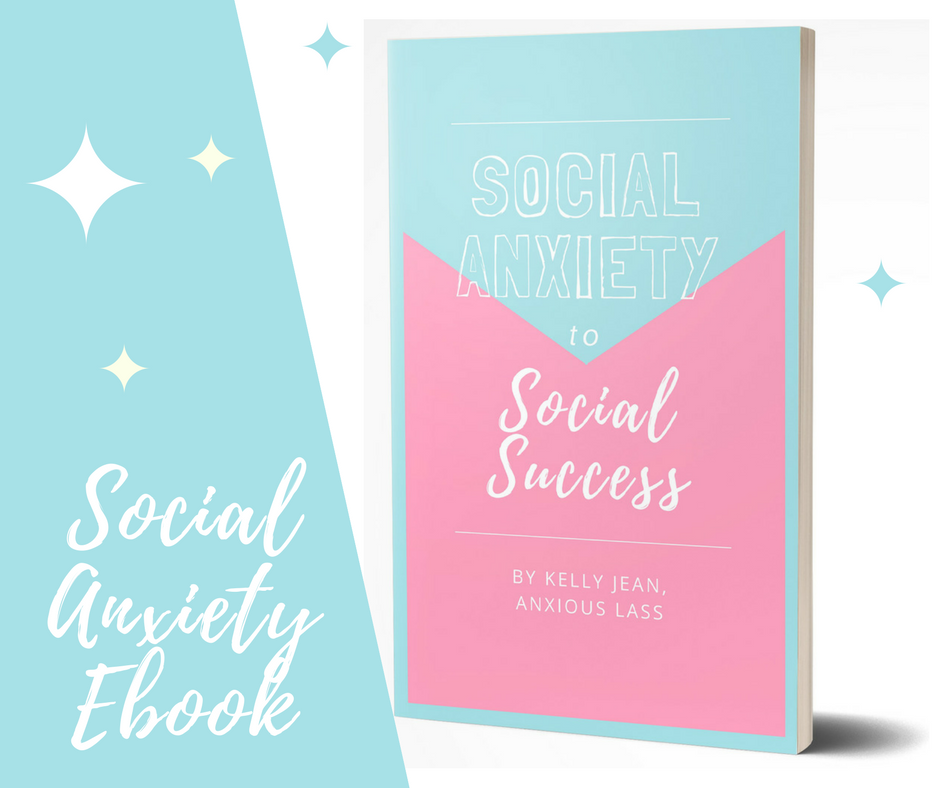
When you’re ready, it’s time to identify your safety behaviours. I recently learnt about these from my friend Kelly’s book Social Anxiety to Social Success. She explains that safety behaviours are things that you do because you think they will help you cope better in a social situation. It makes you feel less anxious at the time but it doesn’t actually help you in the long term.

You need to identify your safety behaviours and figure out how to stop them. From going though Kelly’s book and using the worksheets provided I figured out that my safety behaviours are overeating, avoiding eye contact, chewing my lip, picking the skin around my nails and refusing to talk.

2. Journaling

I frickin’ LOVE journaling. This blog is effectively my diary and I use it as a emotional outlet almost everyday. I find it’s good to start writing without a particular topic in mind as it allows my mind to wander, find what’s bothering me and dig around to unearth the root of what’s going on.

It’s amazing how quickly I can figure out what’s making me anxious once I put pen to paper. You can use journaling as a way to record when your feel anxious, describe your symptoms and what’s worrying you. Sometimes it takes a few days or even weeks before you can look back and connect the dots between life events and anxious feelings.

In Kelly’s book she’s actually put together a great worksheet which helps you create a list of scenarios which make you feel anxious. She then guides you through them helping you figure out which ones to tackle first. There’s no obligation to jump in feet first – quite the opposite actually – and she’s so good at explaining how to carry out all the small steps to take action against social anxiety. It’s made me realise that there are still a few social scenarios that I’ve been avoiding and now I feel equipped to take them on!

3. Exposure therapy

You’ve probably heard of exposure therapy before, but don’t worry it’s not as scary as it sounds. I’ve actually been using it without the help of a professional and had great results. In fact I didn’t ever realise I was doing it, until I did a short CBT course and was taught what exposure therapy entails.

Exposure therapy means doing the thing which makes you anxious. Wait! I promise it’s not torture! Say you were anxious about going to the supermarket. You wouldn’t just walk straight in and try and act calm and collected. You gradually build up your exposure to the situation by taking small steps.

Maybe one week you drive into the car park every day and stay for a minute longer each day. After a week maybe you can walk up to the front door. You repeat that several times until your anxiety decreases. After a while you’ll be able to walk inside, then after that you’ll be able to walk around for a few minutes. Over time you’ll be able to add on steps bit by bit, and ease yourself into the situation over time.

I’ve been implementing exposure therapy myself and using Kelly’s book as a structured guide for some situations which I’ve found particularly difficult. Kelly does the hard work for you by breaking it down into specific examples and helping you create a plan to conquer your fear one step at a time in bite-size chunks.


4. Track your progress

I’ve already mentioned that Kelly’s book has loads of worksheets including a monthly anxiety tracker so this helps you identify any progress you’ve made, highlight any negative thoughts and compare them month by month. You could also do this with a bullet journal or a mood tracker but Kelly’s book is particularly well laid out and super simple to use.

Tracking your progress is important to make sure that you’re continuing to work in baby steps (it’s easy to get carried away once you see you’re headed in the right direction!) and also to see how far you’ve come. This weekend I had to cancel plans because my anxiety was particularly bad, but it doesn’t mean I’m a failure. When I look back at all the progress I’ve made in the last few years I’m so proud of myself, and taking a social rain-check now and again is totally normal and actually a sign that I know my limits.

5. Create a support network

Having someone to talk to about these things has been a major factor in my recovery from social anxiety. It can feel so isolating to only talk to a doctor every few months, and although my friends are caring they just don’t understand social anxiety because they’ve never experienced it themselves. My mates are all really sociable and outgoing, so they can’t comprehend feeling awkward on a night out or struggling with meeting new people.

That’s why having a community online has been a huge help to me. I talk to people on Twitter, Instagram and Facebook everyday and I always respond to emails so feel free to chat to me online! I’m also part of several Facebook groups which provide a private space to talk about depression and anxiety with other people who are going through the exact same issues as I am.

If you haven’t already, talk to your GP about getting on the waiting list to see a counsellor and make sure your friends and family are aware of your situation. Creating a network of lots of people you can reach out to when you’re struggling is key.

So there are my five key steps to managing social anxiety. It’s not a quick fix, but it’s totally do-able especially if you have all the resources and support that I’ve mentioned. Kelly’s book Social Anxiety to Social Success is available to buy online now. You can buy it here (affiliate link)