by Fiona likes to blog | Apr 25, 2020 | Freelance, PODCAST
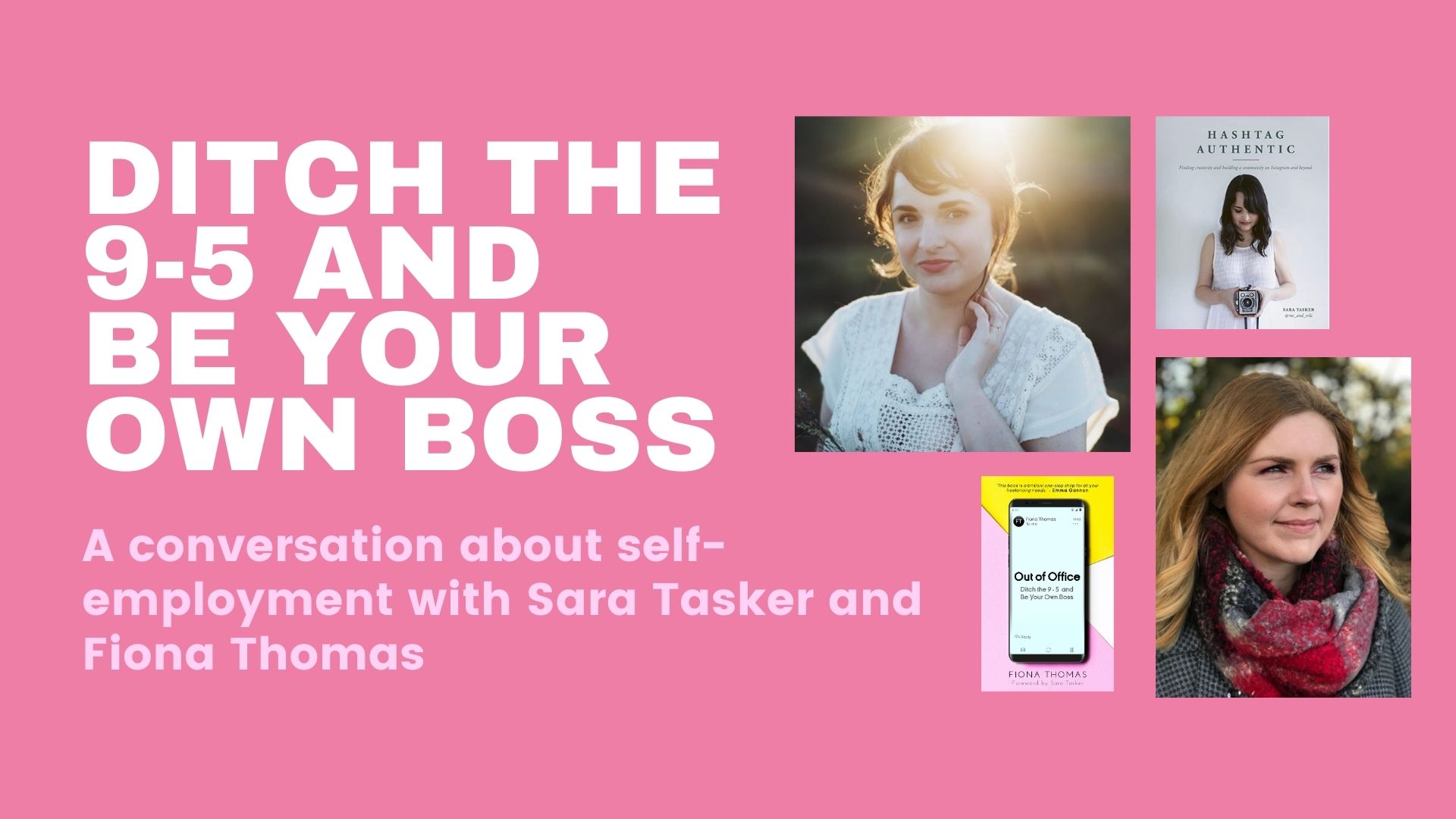
I’m thrilled to be able to announce (finally!!) that my second book Out of Office will be published on October 1st 2020.
There have been huge changes in the publishing world this year, and in response to that my publication date has been slightly delayed. But in a strange turn of events, this means that the eBook of Out of Office will be available sooner than we first thought! So if like me, you’re a Kindle user, you can be one of the first people to get your hands on the book on June 17th.
I’ve been working hard on this book since 2018. I submitted the proposal the day after my first book was published, which is a testament to how much writing consumes my daily thoughts. And my chronic obsession with work, but I’ll let you read more about that in the book….
This book is the straight-talking, no-gloss life raft that I would have so happily clung to in those turbulent first years
– Sara Tasker, entrepreneur and author of HASHTAG AUTHENTIC
More about Out of Office
This no-nonsense guide addresses the questions that people might feel too embarrassed to ask about going freelance … like how to raise an invoice, submit a tax return, claim expenses, network, and use social media. I also discuss why working from home is proven to have a positive impact on productivity and mental health, and why so many women are making the leap into freelancing out of necessity.
Filled with must-have information, helpful check-ins, and a strong focus on understanding the whys just as much as the hows, Out of Office will help you dive into freelance life and push you to the next level, while making sure you’re taking time to reflect on your business and state of mind.
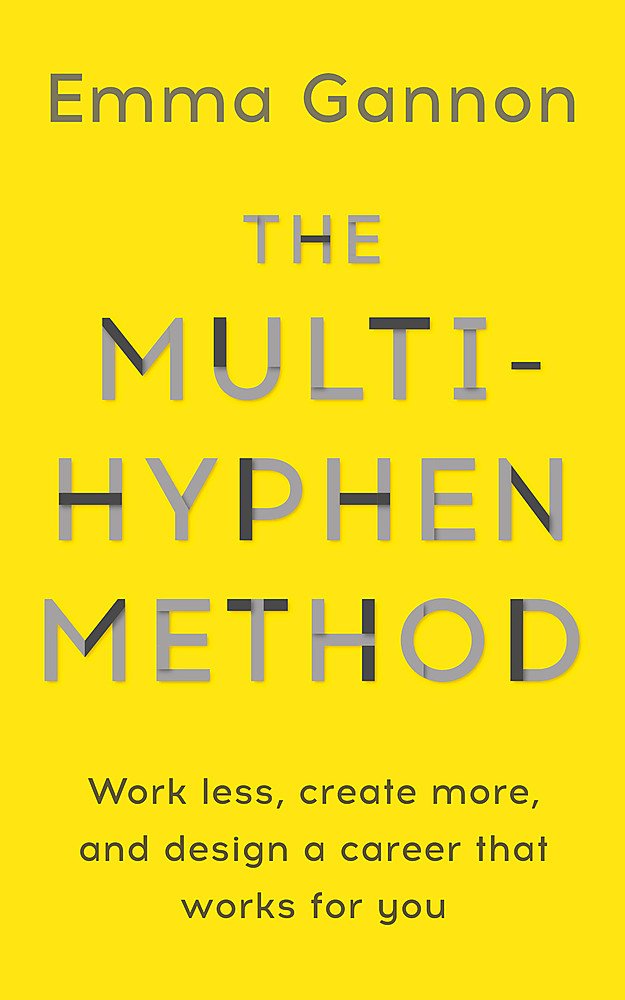
This book is a brilliant one-stop-shop for all your freelancing needs
– Emma Gannon, Sunday Times Bestselling author of THE MULTI-HYPHEN METHOD
One thing that has warmed my ice-cold heart is the support of other freelancers whilst working on the book. Not only have I been bombarded with words of encouragement from friends and colleagues, but I was also granted the privilege of interviewing some of my favourite freelancers. In the book, you’ll find anecdotes and advice from the likes of Poorna Bell, Alice Benham, Vix Meldrew, Julia Day and Sara Tasker. What a gift!
I’ve also been working on the Out of Office podcast (launching Aril 29th) because I wouldn’t be living my true Millenial life if I wasn’t recording my thoughts on tape and broadcasting them to the nation. I’ve secured a sponsor for the podcast and I’ve been condensing some of my most helpful advice into a monthly column for them. You can read the first one here.
That’s all for now. Come say hi on Instagram to stay up to date with book-related stuff and get behind-the-scenes content (mostly footage of me drinking Irn Bru and doing home workouts, ENJOY!)


by Fiona likes to blog | Sep 3, 2019 | Freelance
Are you wondering if you have the skills to become freelance? I hear ya. It’s pretty scary to think about going self-employed if you don’t have any experience (or clients).
It can cause a confidence crisis. A confidence crisis can be linked to a lack of skills, but often, this just the fear talking and not actually representative of your ability to get the job done.
You probably do have the skills but you’re just afraid. Afraid of failing. I have a degree in Commercial Music which I sailed through when I lived in Scotland. Shout out to Scotland for those paid-for university fees. (Click here for embarrassing uni pics!)
I say sailed through, because I really did. I chose to study music, not because I was incredibly talented on the flute or had perfect pitch when I belted out an aria, but because I listened to a Red Hot Chilli Peppers album the summer before and it made me feel cool. I felt accepted. I felt seen (yes, by a group of middle-aged American men, the heart wants what it wants).
I connected with music as an angst-ridden teenager and decided I wanted a career in the industry. Big mistake! It turns out – unsurprisingly – that to get ahead in the music business you need a deep-rooted passion for well, err, music. The kind of passion that sees you jamming with strangers into the middle of the night or squashing into sticky-floored bars listening to dodgy open mic sets, or listening to the entire Bob Dylan back-catalogue in chronological order for nothing other than ENJOYMENT
For the record, I tried really hard to like Bob Dylan. I just didn’t have it in me.

Even without a natural passion for music running through my veins, without that drive that true musicians have or that keen ear that talent scouts have I still managed to pass every single exam. It dawned on me the other day that on paper I am fully qualified to work in the music industry, yet in real life, I possess zero skills of that nature.
Not all skills are created equal
Yet here I am as an author, journalist and generally-will-write-for-money freelancer. Had I tried to apply for a job at a newspaper or a copywriting agency when I started out my CV would’ve been trashed. I knew that if I wanted to become a professional writer I had two options.
I could go back to university and do a degree in English or journalism, or I could start freelance writing. I chose the latter. I didn’t have the level of skills required to get a job so I simply started practising. I got my first paying gig writing about video marketing — of all things — and I still have that client to this day.
I had no formal training other than a few creative writing classes that I did in the evenings after I graduated.
But guess what? Sometimes you don’t need training.
Having a degree in a particular subject doesn’t always mean that you’re qualified, its actually doing the work that proves your abilities. Passion always trumps grades. Unless you’re like a surgeon (I mean, if you want to cut people open you should probably learn how to do that shit professionally) or legally requires a qualification (like you know, lawyers and therapists and such like) then there’s nothing wrong with dipping your toe in the water and seeing how things turn out.

I wasn’t trained in designing t-shirts but I gave it a go, set up an Etsy shop and after six months realised that it was far too much hard work. I’m pretty fucking stoked I didn’t waste money doing some online course on how to set up an online t-shirt store because although it might have been more successful, I’m pretty sure I still would’ve jacked it in after I’d had some hands-on experience with the day-to-day running of things.
Sometimes, there’s nothing to beat just doing the thing and seeing what happens. And I think that you know this is true, but you’re using lack of training (or confidence in your abilities) as a valid reason to avoid doing the thing. Well, that just won’t wash with me. Because unless you’re an untrained dentist trying to pull over-grown molars out of someone’s face then I don’t believe you. Amy Poehler, goddess full of feminine wisdom, puts it better than I ever could when she wrote in her book Yes, Please:
“You do it because the doing of it is the thing. The doing is the thing. The talking and worrying and thinking is not the thing.”

by Fiona likes to blog | Jul 18, 2019 | Freelance
Oh hey, so you want to get more freelance clients? I feel you. But the honest truth is that those blog posts titled ‘How To Get More Clients NOW’ are bullshitting you. They’re taking you for a mug….and I know you’re no mug.
Whether you’re a freelance writer, coach, graphic designer, cleaner, hairdresser or a PT one thing is (hopefully) true. Your services are worth paying for. So you WILL gain more clients. But lets be realistic. The best freelance jobs are the ones worth waiting for. Get rich quick schemes do not work.
So put in the work NOW with these 10 small, simple steps and over time you’ll get something better than instant clients. You’ll get high paying clients who come back again and again to your business.
Let’s get started shall we?
Talk to other freelancers
You might think that you need to keep your cards close to your chest when it comes to other freelancers. They’re stiff competition for potential work, right? Well, not necessary. Talking to other freelancers and sharing your knowledge can be beneficial in the longterm.
I’m known within some circles as a real Pinterest expert. I’ve offered lots of free advice to other freelancers about how to use the platform with their own clients and as a result, I’ve also received referrals and gone on to get paid work showing small businesses how to utilise Pinterest.
Most freelancers have an area of expertise or a few key areas where they thrive. Good freelancers know when to say no to work as well, either because they’re too busy or don’t have the right skills to get the job done. If I was in that position, I’d want to be able to recommend someone I know to help the client out and I would absolutely point them in the direction of a friendly freelancer who I know can deliver.

Brag to attract more clients
Going back to the Pinterest thing… I realised a few years ago that it’s a real polarising topic. People either get it or they don’t, and I like to think that I’m one of the people who get it.
That doesn’t make me better than anyone else (if anything it’s a bit geeky and very niche) but it does give me a skill worth bragging about. I always forget to mention that it’s one of my talents (yes, I’m calling expert Pinning a talent) but as soon as I do mention it to clients or in a group networking event there are always people looking to learn more.
Get comfortable with bragging. Share your knowledge whether it’s in a blog post or on Instagram. Did you just get 1000 likes on your latest post? Brag! Just received a 5 star Etsy review? Brag!
Take business cards everywhere
You might think that business cards are outdated but I personally find them invaluable. When you meet new people you inevitably end up talking about what you do for a living and guess what, everyone you speak to is a potential client.
Whether it’s your hairdresser, your vet or someone you get talking to at the bus stop you never know who is looking for your kind of services. And relying on them to remember your name and find your contact details online is just a risk that isn’t worth taking.
It’s always nice to ask “would you like my contact details?” as it sounds a bit less sales than “here’s my card”.

Make it easy for people to enquire
Like I just mentioned, people are unlikely to put in a lot of effort to find your contact details. People are lazy. We expect things to be digitally handed to us on a plate, so make it so.
Go through all your social media platforms and your website and look at it from an outsiders perspective.
Does your website have a contact form? Is it in a prominent place?
I think contact pages need to be part of your main menu, and other info like links to your Instagram and Twitter profiles should be easy to find too. I make my email address VERY easy to find. It’s in my Twitter bio and linked up to my Instagram account so if anyone wants to contact me its easy AF.
Oh whilst you’re here. My email address is fiona@fionalikestoblog.com. See? Easy. Freelance clients some say hello!
Create a rate sheet
You never know when someone is going to appear in your inbox asking for your services (hopefully more frequently if you’ve followed steps three and four) and it’s a real-time suck typing out your fees and packages every time.
It’s also hard to remember exactly all the services you do offer (remember my Pinterest blind spot?) so spend some time creating a PDF document that details everything you do.
If you don’t have set rates and work on a project by project basis, consider simply stating your day rate or give examples of previous projects you’ve worked on along with a price range (e.g. packages start at £300, or prices generally range between £300-800) to at least give people an idea of what to expect.
This is also great to have on hand for those freelance clients who enquire about something small (say a one-off copywriting task) but you spot a need in their business for something different (ongoing content creation)

Offer free training
Work for free? WTF?
I truly believe that you can’t expect people to pay for your services until you prove your abilities. Free taster training sessions are a great way to do this!
My friend Kirsty employed this technique when she started her new business, offering a selected amount of free workshops in exchange for recommendations and testimonials. It works, especially if you target people who are in control of spending whether it’s as part of a company or within their own small business.
Offer free advice/support
This is a notch down from free training and doesn’t take quite so much time. Be on hand to offer little tidbits of advice here and there, in DMs, blog posts or recorded webinars. It could even be a friend or family member who needs help in an area that you’re really experienced in. Prove your abilities to future freelance clients and make sure that they know you’re worth paying for.
Free discovery call
This is something that I see a lot of coaches offering and I think it works. They offer a no-obligation phone call or video chat to see what the client is looking for, and also to set realistic expectations of what they can offer as a coach.
This gives both parties a chance to see what the relationship will be like before committing to anything 100%. I’ve made that leap from email to phone call with potential clients and it’s pretty much always led to paid work.
Emails are easily ignored. The back and forth of questions and answers can drag on for weeks – if not months – and might come to a halt for many unknown reasons. But get someone on the phone? It’s your chance to shine, convey enthusiasm and inject your personality into the mix.
I do a lot of general writing which has no connection to my mental health work, but as soon as I mention my book to prospective clients it almost always seals the deal. People are intrigued to learn that I write about a subject with such passion and my sensitivity and thoughtfulness adds depth to my character. It builds a genuine connection that just isn’t possible via email.

Offer paid training
If you’re already getting high-paying freelance clients then chances are you’re an expert at something. It could be screen-printing, ceramics, public speaking, branding or email marketing. There are always going to be people who would rather learn your skills that pay for your services, so why not indulge them?
One of the things I get asked most frequently is how to pitch to magazines, so I decided that instead of telling people for free I should charge for the service. So from time to time, I will offer a Skype training session on this very topic. I also offer training sessions on Instagram and Pinterest, things that some people can learn naturally but there are always people out there who haven’t got a clue how to start.
Chase up warm leads
Remember that person who emailed you about some work three months ago? Send them a follow-up email to check-in. What about your mum’s mate who said she might have some work for you? Find out her number and give her a ring.
That networking event that your friend always says is amazing? GO.
If you think long and hard about it you have some warm leads in your inbox, on your phone or within your social circles somewhere. It’s just a matter of ignoring the inner voice that keeps saying ‘aah its a dead end there’s no point’ and ploughing on regardless. Make that rates and services PDF that I spoke about earlier and send it out to your entire email list (assuming that you are GDPR compliant, obvs) and include your friends and family too.
How have you found more freelance clients? Let me know in the comments below!