Select Page
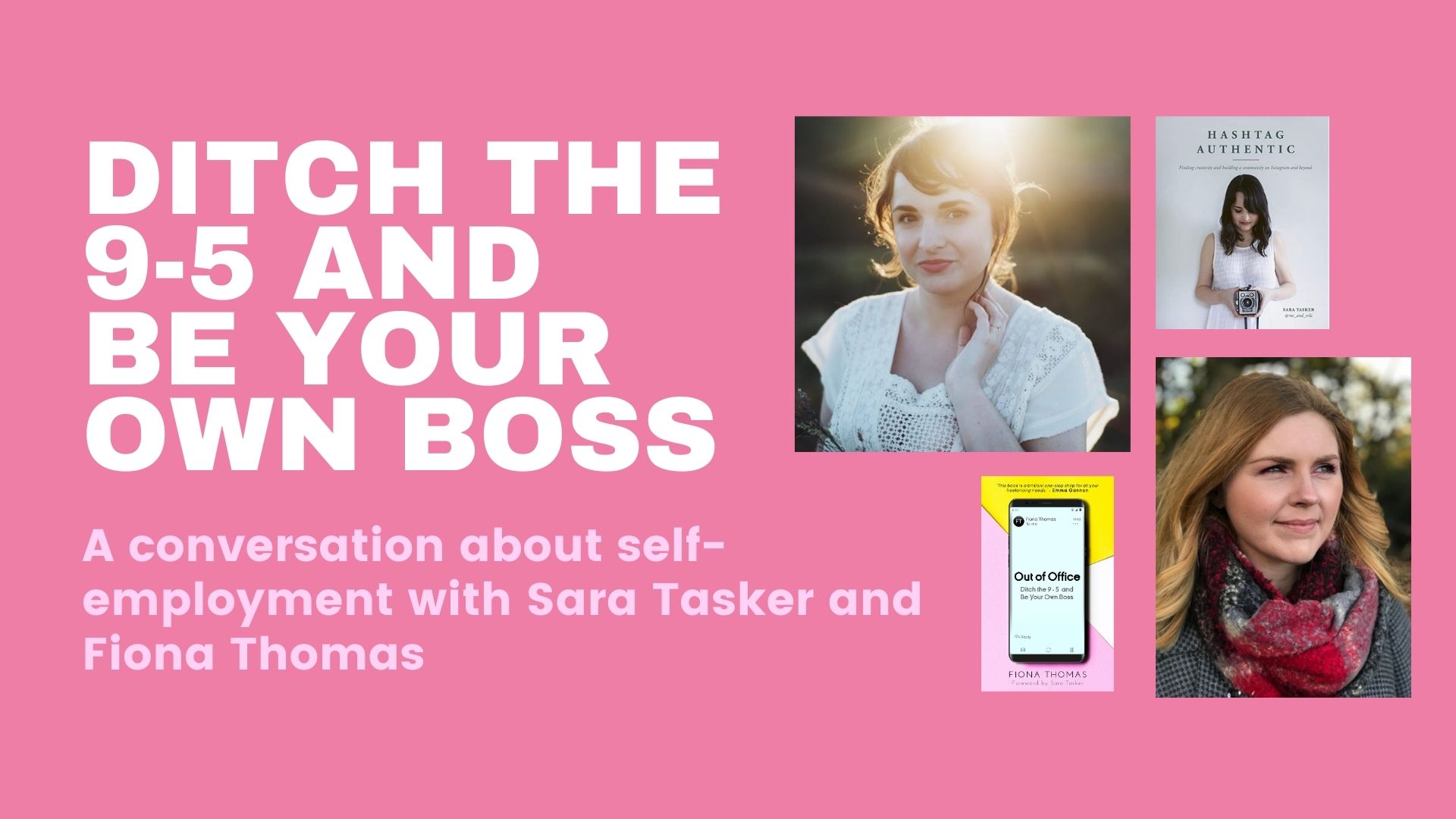
Join me and Sara Tasker to celebrate the launch of my new book ‘Out of Office’

Join me and Sara Tasker to celebrate the launch of my new book ‘Out of Office’


Have you ever wanted to start your own business? Has working from home given you a taste for freelancing?


Join me and my very special guest for an evening of honest conversation where you’ll learn what to expect from the world of self-employment. To celebrate the launch of Out of Office, I’m hosting a virtual launch with the lovely Sara Tasker.

Together, we will delve into our own experiences with traditional employment versus the world of freelancing, to answer the question – should you ditch the 9-5 and be your own boss?

I’m obviously pretty gutted that we can’t have a real life book launch. I was very much looking forward to picking out an outfit, hugging all my friends and signing real books in Waterstones like I did for my first book. But I’ll be honest, there’s an undeniable perk of getting to celebrate publication day at home sat in my comfies!


Snap a ticket up here, for the event that takes place on Thursday 1st October at 6pm.
 

More about us:

Sara Tasker is part writer, part photographer, part coach. Her bestselling book Hashtag Authentic distills everything she’s learned from running her hugely successful Instagram account (@meandorla) and encourages everyone to live a more creative life.

Fiona Thomas is a mental health writer and two-time author. Her new book Out of Office: Ditch the 9-5 and Be Your Own Boss offers a practical guide for freelancers.

Branding for freelancers: A beginner’s guide

Branding for freelancers: A beginner’s guide

To celebrate that fact that the Out of Office eBook is out now, I wanted to write a blog post that explores one aspect of freelancing that I think often gets overlooked: branding.

So what is branding? I’m certainly no expert, but it’s something that I learn more about everyday, and I think that every freelancer is ultimately an expert in their own brand because they know it like the back of their hand. Even if they don’t realise it!

I used to think it was just all about graphic design. You know, having a snazzy logo and some pretty colours and fonts on your website. Shout out to Nikki who designed my logos though! But what I’ve learned through my own personal experience (and mistakes) is that it’s so much more than that, which quite frankly means it takes a lot of work and it’s something that is constantly evolving as your business grows.

As author Seth Godin neatly puts it:

“A brand is the set of expectations, memories, stories and relationships that, taken together, account for a consumer’s decision to choose one product or service over another”

Nowhere in that quote does he mention the word logo or font, does he? So let’s break it down into expectations, memories, stories and relationships and think about how you can translate that to the online world. 

This blog post was inspired by my podcast episode around the same topic. Listen to the audio below!

Expectations

If you’ve got your branding right, then your audience will come to expect certain things from you. They might expect a newsletter to drop into their inbox once a week, they might expect you to reply to their DM on Instagram or they might expect you to be completely honest about how you review a product on your blog. It’s up to you to set these expectations and then, make sure you deliver. 

For example, I recently launched my first creative writing course. I know that there’s now an expectation from my audience that I should be an excellent writer. I have to prove to my audience that I know my stuff, so I’m taking real care over all the written content I post online. I’ve upped my game on my website, Instagram captions and my newsletters because you know what? I’m a damn good writer and I want that to be crystal clear! I want my writing to be a prominent part of my brand, because I love what I do and I want to be considered an expert in my field.

Take someone like Sara Tasker. Her brand is built on beautiful photography – she’s literally written a book about it and runs an Instagram retreat training others too. As a follower of hers, I’ve come to expect high-quality photography from her brand. If she posted a grainy image of a sloppy sandwich on her grid my world would be shook. I would be genuinely concerned that someone had hacked into Sara’s account because my expectations of what she posts online are so specific. 

Memories 

What memories do people have of you? Take your clients for example, when they signed up to work with you did you send them a thank you card? Or maybe a little care package with some sweets or a cute postcard? (Alice Benham is famous for this!) Giving people these positive memories of you is all part of your brand.

I know a lot of people have fond memories of me going to my local duck pond and checking in on my feathery friends. And of course, some of you will remember when I was gifted a giant rubber duck mask and took to dancing around in it with a glass of wine. These are fun (weird) memories that I’m happy for people to associate with me because I want to make people laugh, and I want my brand to feel a bit daft.

Relationships

This is I think, an easy and underutilised way to build a brand. The way you interact with people online is an opportunity to implant yourself in someone’s mind as a positive force. If someone asks you for advice, give it to them. If someone compliments you, accept it and return the gesture. If you get on really well with certain people online, share their content and big them up to your audience. Bringing all those positive vibes to the table gives off all the right energy and I promise you’ll get it back in droves. 

Stories

I recently read The Science of Storytelling by Will Storr, which encapsulates everything he’s learned from neuroscience about how to write a novel. But so many of the points he makes apply to storytelling in general. One of the most important things he talks about is that when we read a novel we’re always chasing the answer to a question. That question is always about the protagonist, and the question is: who are they? 

Books often revolve around the main character making some moral decision, and the reason we keep reading is to get some sort of resolution. Do they get the girl? Do they find the thing they’re searching for? Do they leave home or decide to stay? Do they sacrifice something for the greater good?

The reason we get so invested in these stories is because we see ourselves in these characters and we can identify with them and their journey. Even anti-heroes like Walter White in Breaking Bad play to our wants and desires, because we get to live vicariously through their story, acting out our natural tendencies to break the rules and live life on the edge. 

Think about your brand like an extended novel, where you’re the central character. The more you can let people in on your personal story, the more people will identify with you, and naturally they’ll want to follow you along to find out what the resolution is. That’s why sharing behind the scenes details are such a powerful way to engage your audience. Take them along for the ride as you embark on new adventures whether that’s finding an accountant, learning a new piece of software or writing a book. People will love it.

To learn more about building your freelance business, read my book Out of Office: Ditch the 9-5 and Be Your Own Boss.

5 of the best books for freelancers

5 of the best books for freelancers

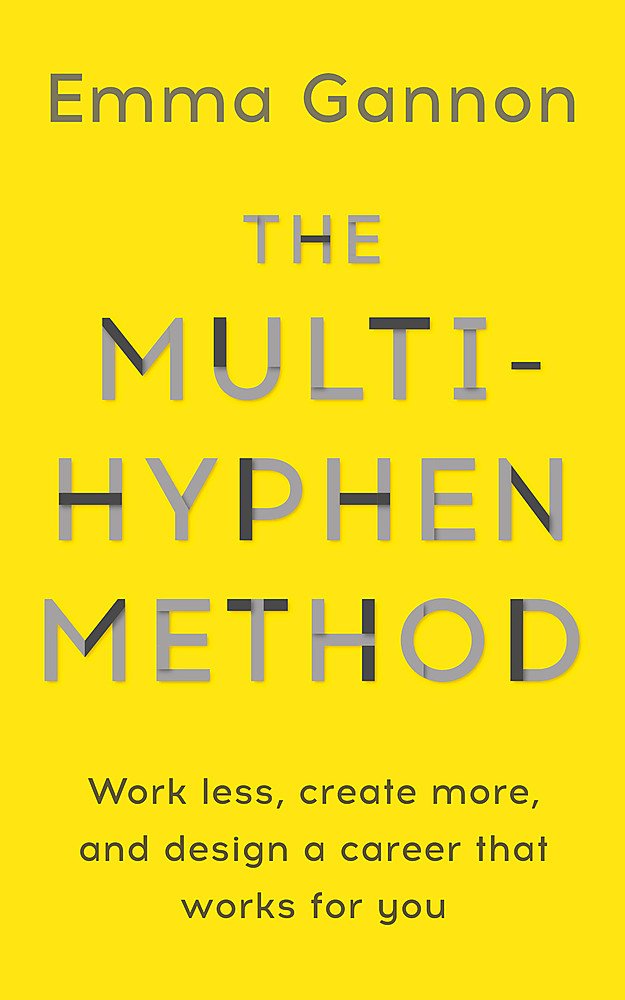
1. The Multi-Hyphen Method by Emma Gannon

Although this book isn’t written exclusively for freelancers, it’s certainly a permission slip for anyone who is thinking about making the leap.

Emma Gannon talks alot about the rise of the side hustle and why everyone should have one, even if it’s just for fun.

I read this a few years ago before I had fully considered becoming a full-time freelance writer and it gave me a friendly nudge in the right direction. If I hadn’t read this book, I may never have dared to dream that starting my own business was even possible.

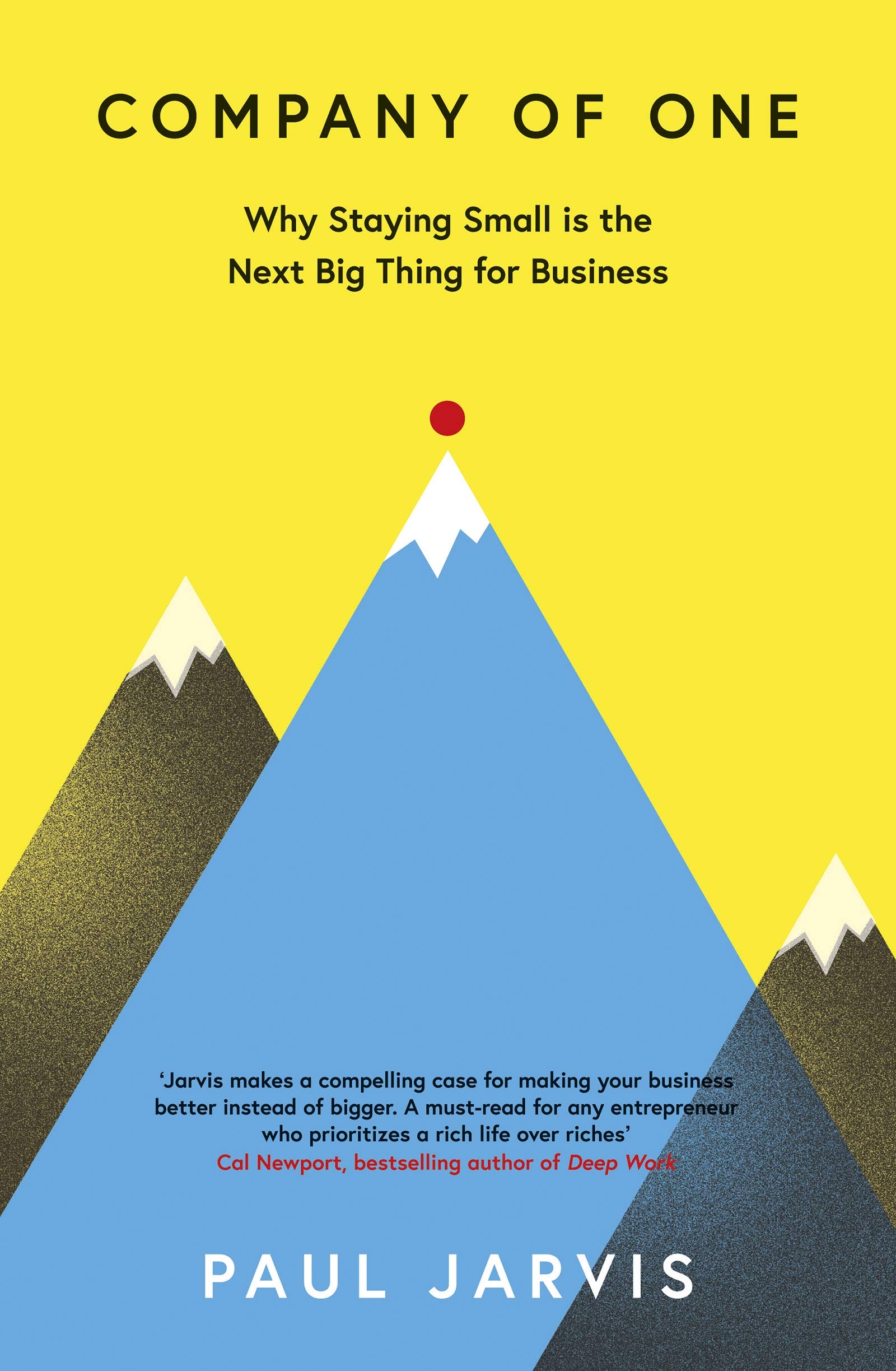
2. Company of One by Paul Jarvis

I’m only halfway through this book but I wanted to include it because I already feel like it’s shifted my mindset as a freelancer.

When you’ve been freelancing for a few years it can be easy to fall into the trap of thinking that you need to become a brand or a limited company to create a sustainable business model. This book refutes that idea, stating that staying solo is a sensible way to maintain flexibility as a freelancer.

If you dream of setting up multiple offices or managing a team then this book isn’t for you. But if, like me, you want to learn how to grow a business whilst working alone then this will definitely provide you with some helpful advice.

3. Hype Yourself by Lucy Werner

Outsourcing to a PR agency just isn’t an option for most freelancers.

Luckily, Lucy Werner has distilled her years of knowledge into a book which means that you won’t have to.

This book is incredibly practical, so prepare to fill a notebook as you work through the exercises and create to-do lists, boiler plates and lists of content ideas to promote yourself without ever needing to hire a professional.

4. Book Yourself Solid by Michael Port

The thing I loved about this book was the focus on figuring out the clients you want to work with. As a freelancer, I spent the first few years of my career saying yes to every and any piece of work that drifted my way. But Port encourages you to go through your current client list and be honest about who your enjoy working with and who you don’t.

He suggests culling the dud clients, which I’ve actually done. I’m not saying it was easy (farewell, steady income!) but it kick-started a whole new phase in my business where I’ve started tailoring my packages and marketing to attract the right people. The result? I’ve completely fallen in love with my work again.

5. Out of Office by Fiona Thomas

In my book about freelancing, I wanted to hold my hands up and admit that I don’t know everything.

But that’s kind of the point. If I can make a go of freelancing whilst flying by the seat of my pants, then you can too.

For example, I didn’t have business insurance until I was halfway through writing Out of Office, and I only fully committed after interviewing Dinghy about how their services worked. I address all the questions that you’ve been too scared to ask (can you claim coffee as a business expense?) and all the ones you didn’t think you’d ever have to (how do you cope with burnout?).

If you want even more behind-the-scenes tips on living the Out of Office life don’t forget to listen to my podcast.

What are your favourite books about freelancing? Let me know in the comments below!

Episode 4: How to deal with a confidence crisis

Episode 4: How to deal with a confidence crisis

In this episode, I want to talk about confidence.


I’m recording this from my living room, I’m on my own, and that’s what most days look like for me as a freelancer, I write for a living whilst sat in front of a computer screen.


So you might be fooled into thinking that my job doesn’t require the same level of confidence as, say, a group fitness instructor who has to learn a routine and then perform it in front of an audience without making any mistakes.


But every freelancer needs to have confidence in both themselves and the work that they do, because it’s a fundamental part of making your business a success.

And when I talk about confidence I don’t just mean the ability to talk in front of a crowd, or pitch your services to a client, or do Zumba class without tripping over… I mean inner confidence in what you’re doing and why you’re doing it.


SHOW NOTES

Thanks again to Dinghy for sponsoring this episode and definitely check out their insurance services which are specifically designed for freelancers.

Don’t forget to subscribe for more episodes and leave a review saying how much you love me. I like getting compliments ok?

My book comes out Oct 1st 2020, eBook available June 17th

Check out my sponsor

Follow me on Instagram

Music by Dano Songs

Episode 4: How to deal with a confidence crisis

Episode 3: Finding direction when you hate your job

I wanted this episode of Out of Office to really speak to people who are feeling a bit lost. Because I think we’re all been there right? We’ve all been in those types of jobs where you’re constantly watching the clock from 9.01am, you’ve eaten your lunch by 10am just out of pure boredom, and maybe the work you’re doing is unfulfilling or you just don’t give a shit about the stuff you’re responsible for. I felt like that quite honestly, most of my life until I was thirty years old.

I won’t go into too much depth about my history here but basically, I was always creative as a child. Writing stories, drawing, drama club. Singing and acting. Playing the piano. I loved music and ended up studying music at university. Then reality hit and I realised that working in the music industry just wasn’t a passion of mine so I graduated uni and took a promotion at the cafe I had been working in when I was a student. I then spent the next 5 or 6 years in various management roles in the catering industry. I didn’t hate my life but I was very unhappy, anxious and stressed for the majority of my working day and my life in general.

This episode delves into why I went freelance and how you can figure out what passions you might be able to follow in self-employment. I’ve also got Ali from The Positive Planner sharing her thoughts on the power of journaling when it comes to figuring out your career path.


SHOW NOTES

Thanks again to Dinghy for sponsoring this episode and definitely check out their insurance services which are specifically designed for freelancers.

Don’t forget to subscribe for more episodes and leave a review saying how much you love me. I like getting compliments ok?

My book comes out Oct 1st 2020, eBook available June 17th

Check out my sponsor

Happiful article on Rust Out

Follow The Positive Planner

Follow me on Instagram

Music by Dano Songs

Government support advice from Underpinned