Select Page
Fighting ‘the big sad’ one scribble at a time

Fighting ‘the big sad’ one scribble at a time

I spend a lot of time scrolling. Instagram is where I mentally tune out, and instead mindlessly absorb visual data with varying rates of success.

I drool over vegan milkshakes which overflow sensually from bubbling mason jars, and peer curiously into the homes of people I’ll never meet. But when I found this illustration of two nimble little fingers tentatively checking for a pulse I had to click through and see where exactly they were born.

It was only then I learned about The Feels Club. I consumed every image and went full ham on a ‘liking’ marathon, completing my record-breaking sesh with a fangirl email to the account owner Chloe to ask for more details. Here’s what I discovered.

Who are ya?
Chloe Webb, aged 24 based in Central Coast NSW, Australia.

Did you always knew you wanted to be an artist?
It’s all still very new for me and I’m still constantly learning how to navigate the process of being an artist. Even just adjusting to the term “artist” itself is an ongoing process. And I think that has a lot to do with the fact that art was never something I ever saw myself pursuing, it was just this quiet thing I did when I was alone. Up until the point where it spoke to me so loudly, I could no longer ignore it.

As cliche as it sounds, art and being an artist was something that found me. It began to speak to me a whole lot louder in 2015 when I had been going through a pretty turbulent time with my mental health. In 2016 I became acutely aware that I wasn’t the only one going through the motions of mental illness and it shook me. Suddenly I saw the ugly, abrupt and heartbreaking veracity of depression’s toll first hand.

Everything spoke louder then. And it shook me, wide awake. I found myself taking pen to paper more than ever and I just knew I had to try to use my art for good. To let people know that it is entirely OK not always be entirely OK.

What is “The Feels Club” and what does it mean to you?

The name The Feels Club was my way of maintaining the purpose and honesty of the story behind it, but kind of making it a little more gentle and soft. I’ve always been cautious of the language of mental health and how it’s labelled, and I guess that’s just part of my own personal coping mechanism.

But also I find in doing so I can dis-empower the terms and turn it to something a little lighter and brighter, something that unites people. And speaking about it now wholeheartedly what The Feels Club is about. And the fact people can connect with it, that means everything me.

In your bio you describe yourself as ‘scribbling through the feels’. What’s the relationship like between your creativity and mental health?

I often describe depression and anxiety as being my invisible enormities. When I fall into a low and it happens, art and living creatively is how I pick myself back up again, because when I allow myself to take up the space between an inky pen and paper, I know for certain that there are bigger enormities inside of me, enormities that are so much bigger than anxiety and so much brighter than depression.

Do you find it hard to open up and be vulnerable in your artwork?

Absolutely. But I’ll always push myself to do it. Because there is an ugly stigma that exists around mental health and it must be dissolved.
Everyday at least 6 Australians take their own lives and 30 Australians attempt. Suicide is the leading cause of death for young people aged between 15-25… this is an issue too big to continue sweeping under the rug, because quite frankly we’ve ran out of rugs big enough.

Lots of my readers suffer from mental illness and are looking for tips on how to manage their symptoms. Do you have any advice?
I know all too well how absurd these next words will appear, but JOURNAL. Write it all down. My eyes basically rolled so far back in my head that I saw stars when I this was first suggested to me.

But with some hesitation I gave it go and I never looked back. The thing is with mental illness, the most common thing the people will say is “I’m here if you ever need to talk” and don’t get me wrong I’ll never take for granted the beauty of that offer. But more often than not, when you’re in the baffling thick of the big sad (another term I’ve found to dis-empower the beast) chances are you’re already feeling heavy and speaking that weight can sometimes be a gnawing mission within itself .

That’s where journaling made all the difference for me. Not only did it let me get it all out but it also allowed me to move past that guilty feeling when trying to actually talk about my feelings with actual humans. Writing in a book might feel small, when your feels are so big. But the process and practice of letting yourself let it all out is a huge step.

The best thing that I’ve found through blogging is an online community of like minded people. Have you found a similar support network through your art?

My goodness, yes, more than I ever could have imagined! There are so many extraordinary people out there sharing their stories and journeys. And more importantly they’re listening all the same. It’s such a comforting refresh. It makes me believe that bloody stigma doesn’t stand a chance.

How does social media and working online play into your mental health? Is it hard to disconnect?

I’m so glad you asked this question! It can be, for sure. Especially when I first began The Feels Club. I was feeling so nervous and passionate about doing it ,that I wound up in a feverish rush to make it all happen at once. I’d spend full days online trying to kick things into gear and just be left feeling so drained afterwards because a) Not only had I forgotten to eat but I’d actually forgotten there was an entire outside world. And b) the results were not instant.

These days I operate on a bit of a schedule to allow me some disconnect and so not to disregard my routine. Which has helped me view it differently – I can still be impassioned and driven without neglecting myself and my own self care. And I’m much more patient with just letting it be and letting things happen organically. It’s whole lot nicer that way!

How do you de-stress/unwind?
Apart from art and writing… I’m lucky enough to live on a pretty magnificent piece of coastline, so the ocean is never far. Which is ultimate for me because slipping into the sea whatever the weather and getting all salty is just such a magic cleanse for me.

I also started Yoga last year, which was another thing I initially rolled my eyes at. But now I try to practice 1-2 times a day and while I’m still very much a beginner the results are pretty powerful.

What are you looking forward to for the rest of 2017

Making and releasing new art. Taking the leap of putting my writings and poetry into the world. Returning to the workforce and saving some funds for a bit of travel. Accepting love and giving love a little bigger. Smashing that damn stigma and just flowing with the journey wherever it leads me!

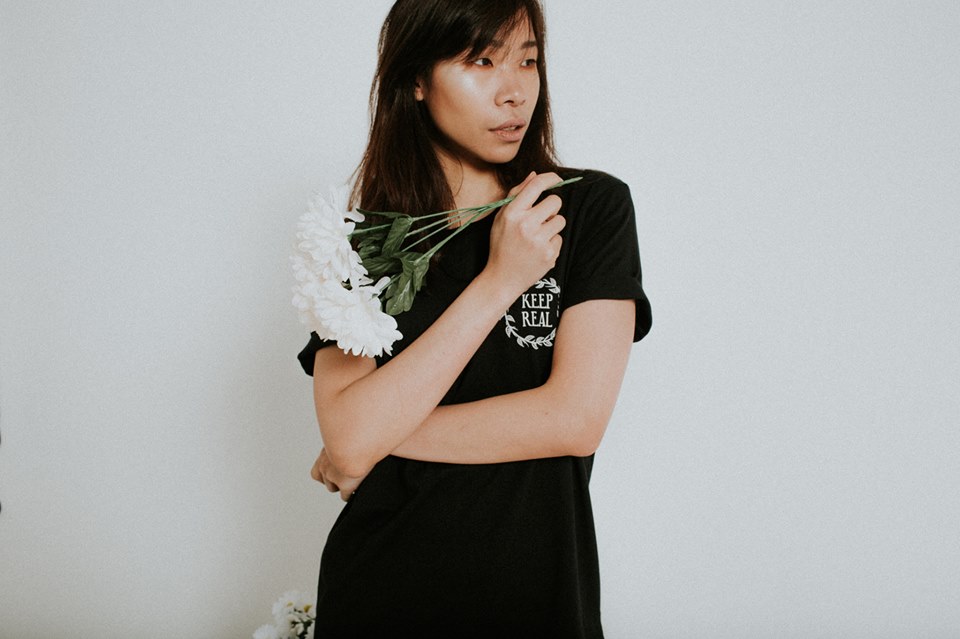
Mental health clothing for when you want own your illness

Mental health clothing for when you want own your illness

Mental health clothing is my jam.


You should know by now that I’m really into talking about my mental illness. In fact, I think it’s pretty darn important that we ALL talk about it. We’ve been conditioned to stay silent on the subject for so long that we now need to shout EXTRA LOUD to make sure the world hears us when we say mental illness is real, and it needs to be taken seriously.

There are many ways you can choose to wear your mental illness on your sleeve. I suggest you wear it with pride. You’re a warrior, a strong-minded individual who is not defined by your diagnosis and if you’re comfortable, I urge you to start a conversation about mental illness.

What better way to wear it than on a fricking kick-ass t-shirt?

This black t-shirt from Keep Real is subtle and so it’s perfect if you’re not confident wearing your label just yet. The Keep Real range is full of inspiring products which quietly promote emotional well being.

The ethos of ‘keeping it real’ is something I wholly subscribe to, so I adore the idea of wearing their emblem on my chest as a reminder to be honest with myself. They aim to source ethically sound materials for their clothes as well as recyclable and biodegradable packaging.

If you haven’t heard of The Crybaby Club then head over and check out their store. I found them on Instagram last year and instantly felt part of the community, so much so that I ended up writing a guest post on their blog about being an introvert in a new city.

Since then I’ve spent hours lusting over their t-shirts, pins and apparel whilst feeling uplifted by their overarching message; It’s OK to be a crybaby.

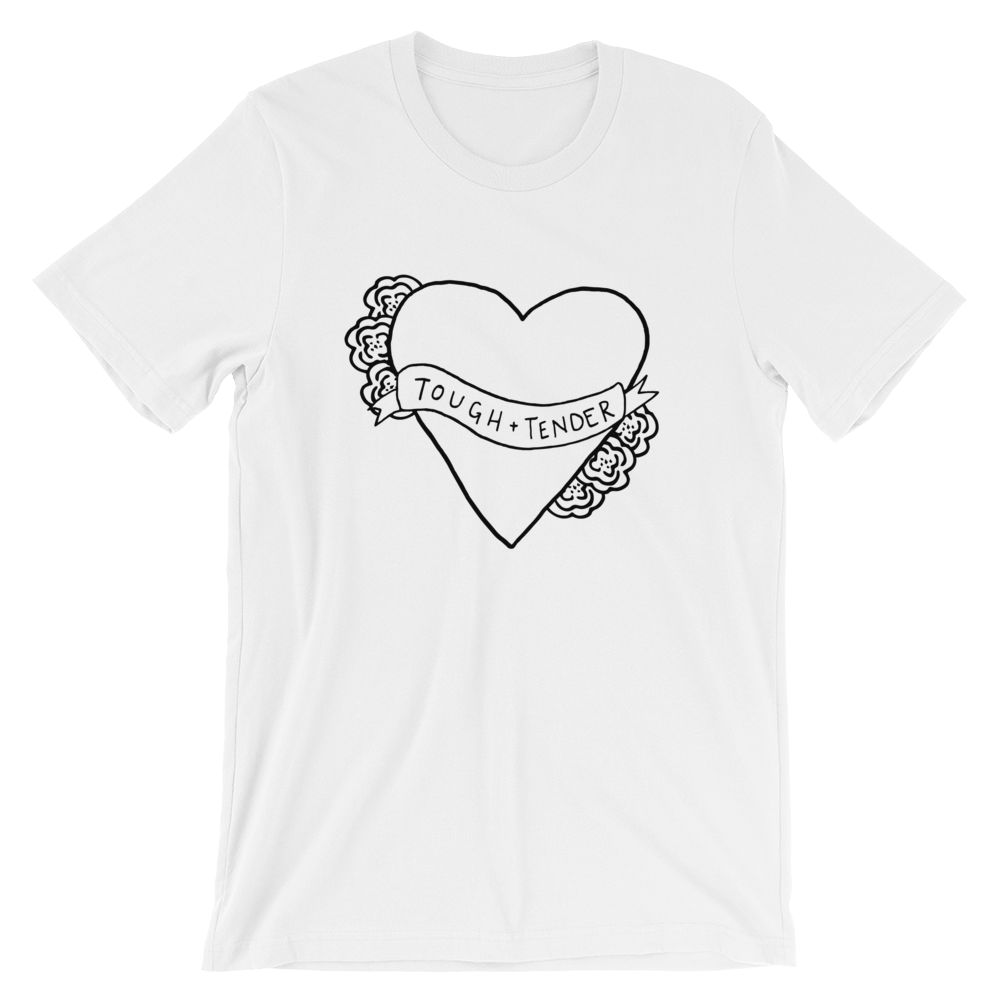
This tough and tender t-shirt is sold out at the moment but here’s my current favourite alternative!

Heads Above The Waves is a not-for-profit organisation that raises awareness of depression and self-harm in young people. They promote positive, creative ways of dealing with the bad days.

This hoodie was inspired by Alan Watts who said “I have realised that the past and future are real illusions – that they exist in the present, which is what there is and all there is”.

Hoodies are essential garments for me. Although I’m all for reclaiming my mental illness with confidence, I still have those days where I want to be enveloped in comfort. This soft hoodie is exactly what I need on those days!

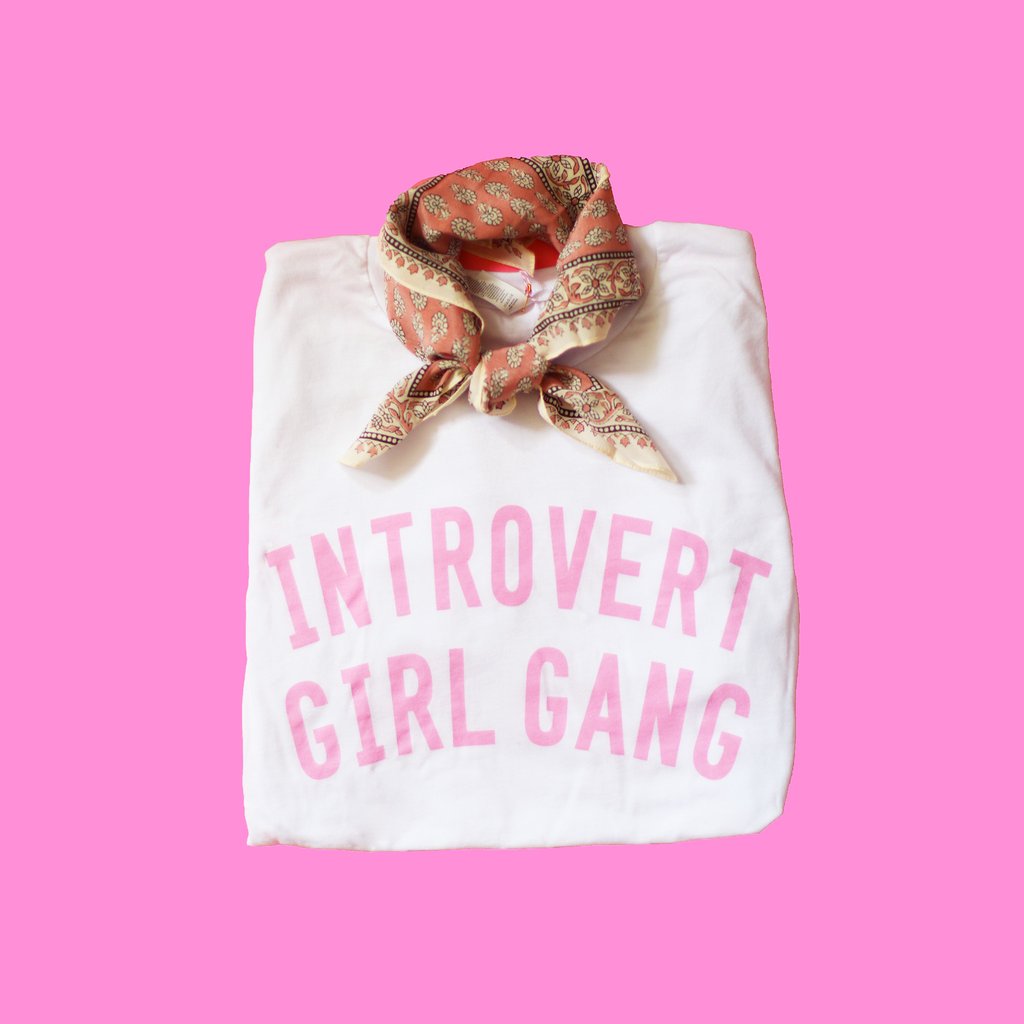
I’m always banging on about being an introvert, mainly because I only realised I was one less than a year ago. This Introvert Girl Gang t-shirt from Shop Luella number one on my wish list because I want everyone to know that I’m not rude, I’m just introverted!

Looking for specific tips on how to manage your self-care as an introvert? Check out this blog post where I explain why creativity is key and how it helped me get my self-care routine sorted out once and for all.

Wear Your Label have been flying the flag for mental illness for a few years now. Started by two friends who had their own mental health struggles, you can really feel that the creators understand how difficult it is to talk about mental illness.

I talk about negative body image a lot, and I’m still a work in progress when it comes to loving the skin I’m in. Just because you’re not fully ‘there’ with your self-love doesn’t meant you can’t still be an activist on the subject though.

I believe sometimes you just have to fake it til you make it. I’m continually ignoring the negative voices in my head and trying to amplify the positive thoughts, so have this t-shirt on hand for the bad days is a plan I need to put into action.

Model Felicity Hayward has been kicking arse in front of the camera for several years now by being bold, beautiful and proud of her body. She’s embodied her ethos in a range of t-shirts plastered with the “self love brings beauty” slogan and quirky illustration.

I love the image of hands creating a heart, because it really drives home the idea that you are in control of your own self-image. It shouldn’t be dictated by the way others see you, or how certain body types are portrayed in the media.

As long as you can learn to treat yourself with care, you’ll feel beauty from within.


Mental illness merchandise

I’m not going to lie, looking at this inspiring lot has got me more than a little bit tempted to start working on my own mental health clothing to sell online. In fact, I might just make a batch for me to wear myself! Are there any areas of mental illness that you feel are particularly marginalised and need to be put in the spotlight?

My Scottish pals will be pleased to know that there’s a new outlet for t-shirt printing in Glasgow called Printsome who have kindly sponsored this post. They offer free shipping on all orders and will print anything from 10 to 10,000 items catered to your specific needs. They also have a blimmin’ good selection of t-shirts, hoodies, bags and hats.

How will you choose to wear your mental illness? I’d love to know in the comments below!

Creative self-care ideas for introverts with depression

Creative self-care ideas for introverts with depression

Introverts, this one’s for you.

I’m sitting at my desk, home alone, with only the light of my laptop to light the room. Rain eerily taps against the open window and I suddenly realise that I’ve not spoken to anyone in about 12 hours. This might sound like the start of a horror film but for an introvert like me, this is heaven. Sweet, lonely heaven.

I love my husband, family, friends, work colleagues and all the people I’ve met online since I started writing about mental illness but by gosh, do I need my alone time. I mean real alone time, on the regular.

After several years of recoiling from every human interaction, I’ve become quite skilled at the art of pretending to be a ‘people person’. I’ve mastered making polite conversation with strangers, and realised that whilst said stranger talks I should think constantly about what to say next.

Filling in the gaps is essential to avoiding awkward silences and the dreaded ‘weather’ chat. If I have to pull out the weather card then I’ll always punctuate it with a convenient exit to the bathroom to buy me a few minutes of solitude before the next surge of energy is required and more small talk is thrown required.

Inevitably I’ll use the bathroom break excuse one too many times and realise that it’s probably time to exit the vicinity, instead of hiding in the en suite quietly watching You Tube videos or going through the receipts in my purse.

The point is, when you hit your limit as an introvert you just hit it. That’s it. With the pain and immediacy of a gunshot wound it needs urgent medical attention, otherwise the situation will be critical. For many introverts, a creative self-care routine is essential. Here are some ideas…

Baking

I’m no Mary Berry that’s for sure. Baking is an exact science, and as someone who’s prone to tossing in more than one haphazard substitutions I normally give it a miss. Spending hours mixing dry ingredients separately to wet ingredients only to combine them and forget to add something important- like eggs or sugar- is my idea of hell.

It’s a creative outlet for sure, but one which often leaves me feeling more deflated and useless than when I started. Luckily I’ve found the perfect solution which requires no skills whatsoever. Superfood Bakery offer pre-packaged mixes which are all natural, gluten-free and filled with superfoods.

introvert creative self-care

Most recipes require the addition of an egg (I think I can manage to remember that ONE egg, although I’m not making any promises) or a vegan substitute such as one ripe banana. I tried out the Spirit Lifters Cookies last weekend and was pleasantly surprised that I managed to create 18 perfectly formed cookies with little to no effort!

No electric mixer needed and no last minute dash to pick up weird and wonderful ingredients. The best part was the feeling of accomplishment that came from honestly about 10 minutes work. The ultimate lazy girl activity. I got extra creative and made some vegan ice cream sandwiches with some Alpro dairy free vanilla ice cream too.

introvert self-care creative

Scrap-booking

I’m not talking anything elaborate (although maybe you’re more committed to the cause than me) but scrapbooking some of your favourite photographs can be a nice way to remind yourself of happy memories. Practising gratitude is something a lot people advise for introverts with depression, and I find looking through old photos is a nice little nudge in the right direction. It reminds me of how much fun I have with my friends and family and often spurs me on to phone my mum, message a friend or set up a meet up in the future.

Upcycling

Being creative for the sake of creativity is something I’m a huge believer in. You don’t need to paint solely with the aim of creating a picture which will hang on your wall or be sold to a buyer. Paint because you love the feeling of mixing colours, brushing it onto canvas and making something out of nothing.

Upcycling is a way to get creative in a way which just happens to have a functional end result, assuming that you’re any good at it. I know someone who is a dab hand at upholstering chairs, repainting old furniture and even making new things such as wall-mounted shelves out of cabinet drawers. The best I’ve done is to rescue a wooden crate and paint it a nice mint green shade. It’s nothing exciting but I use it to house my recycled bottles and cardboard, and acts as a friendly reminder that I did something productive that day!

When you feel ready – possibly weeks later, no judgement here – you can revisit the list and group them into actions, feelings and worries. Now it’s time to create an action plan. Think logically about how to problem solve the negative feelings, kind of like a very informal CBT session. Prioritise the quick, easy jobs first and then schedule days and times for the rest. My tip would be to overestimate how long each task will take you, and try and tackle at least one job per day.

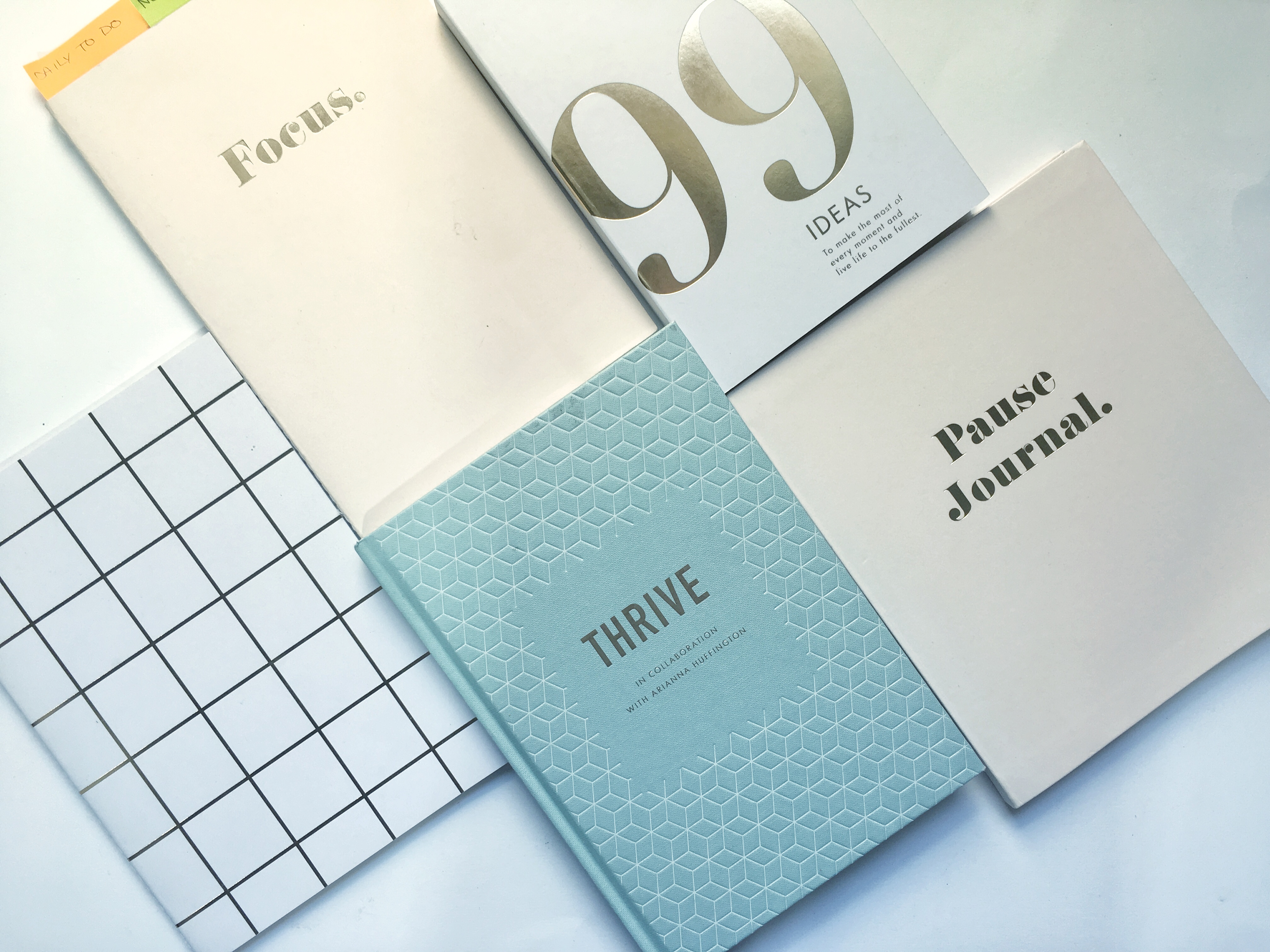
I’ve gone face-first into into the irresistible cream-cake that is stationery addiction and amassed quite a collection of Kikki.K notebooks. I’m strangely proud of this stockpile and find myself gravitating towards my notebooks when I need a little me time. I’ve even found myself muttering ‘I need my notebooks’ when I’m stressed, in a slightly strange manner.

Dance classes

I’m no Beyonce but when it comes to busting out a few moves at a Zumba class I like to think I’m just as good as anyone else in the room. I’ve genuinely seen some of the most uncoordinated introverts look blissfully at home in amateur dance classes. It’s such a joy to watch. Some of us just NEED a physical release. Dancing is one of those things that you can do around the house or out at the weekend, but in a class you get that wonderful group atmosphere and the camaraderie of people failing and succeeding at different speeds as the teacher set the routine for the group.

Blogging

Although I consider blogging a part-time job it’s also a creative outlet for me. I used to think maybe blogging was a terrible pastime for an awkward little introvert like me. I was certain that I had to override my urge to be alone, but now I realise it’s just the way my brain works. I knew I had anxiety so I tried to force myself to fill up my time with social activities, hoping I could somehow change my personality through force. Now I’ve realised I actually need that alone time to keep me on an even keel the rest of the time.

introvert self care

Blogging is great because you can literally write about whatever you want and publish it instantly There are loads of very niche specific sites out there, so you’ll definitely find other people who are interested in what you have to say! I’ve found blogging is a form of therapy for me, a way to express my feelings and also talk to people online who have similar problems. There is a huge online community of mental health bloggers and I now totally feel part of something, even though it’s something I do alone from my laptop.

Still wondering if blogging is for introverts? Find out more here.

Photography

Think you’re not a good enough photographer to take it up as a hobby? That’s bullshit! Self-care activities from introverts aren’t about being the best at something, or even remotely good for that matter. Trust me, I’m a truly awful photographer! It’s about finding time for yourself and nurturing your creative side with all it’s flaws.

I use my iPhone and find it does just fine for taking basic snaps for Instagram and on the blog. There are loads of good guides out there which help you utilise the camera feature on your iPhone and some very helpful apps which can help you edit too.

Organisation

In the same vein as stationery, organising is one of those hobbies that not everyone will understand. I got you girl, don’t worry. I’m in awe of those who can take the time to painstakingly file every book they own in alphabetical order. I long to have a wardrobe which is arranged by colour, displaying a majestic fabric rainbow every morning when I select my outfit for the day.

The truth is, organising your belongings can give you a great sense of pleasure but it doesn’t have to be on a grand scale. Your whole life does not have to be organised, but if your underwear drawer is neat and tidy then you can feel secretly smug as the rest of your life falls apart. When I have a bad relapse of depression I often shun the daily chores in favour of small tasks which really don’t need tackled, but make me feel better anyway.

self-care introverts

You might want to audit your kitchen cupboards and throw out any out of date food, clean the insides and rearrange everything to make things easier to find. You can make a list of everything in your fridge and freezer then create a meal plan for the week in order to use up all the random things you have in there. Matching up odd socks is always a fun task. Joke – that is literally an impossible task which should not be attempted under any circumstances.

Visit musuems

I studied art at school and although I never really immersed myself in the work of others. I’ve always been interested in visiting art galleries. A lot of them are free to visit and have a kick-ass gift shop where you can stock up on comedically huge erasers and crystal jewellery until you heart’s content. That aside, walking around in the eerie silence of an old building filled with historical paintings which have existed for hundreds of years is something that speaks to me deeply.

I’m not great at meditation, but this is a form of mindfulness that I can get on board with. My phone is turned off in my bag, there are minimal distractions and I get to tap into that creative part of my brain for an hour or so in relative peacefulness. End this outing with tea and cake in the cafe (what introvert dreams are made of) and you can consider yourself mentally invigorated and ready to take on the world.

Introverts, you got this

Self-care is not a substitute for medical help, but it’s a key addition to recovery from depression and working towards preventing a relapse. I’ve found being creative and learning to express my feelings is a big part of my self-care routine, and this might look different for every person. Finding a few activities that work for you is a great way to have a back-up plan for when you feel low, or crave alone time after a lot of social activity. Just remember, find something you enjoy and don’t be afraid to fail. It’s all about having fun and getting some creative satisfaction. For more info download my free eBook!

Contains affiliate links and PR samples

Podcasting

As a creative introvert with anxiety, I’m forever adding projects to my list of jobs I’d love to do. It’s kind of overwhelming sometimes, but there’s just so much I want to try. Starting a podcast is something that I’ve toyed with for almost a year, but ultimately I don’t think I’ve got the time, technical abilities or the commitment to tackle this one just yet. Watch this space.

I’ve started a You Tube channel and it’s let me talk about mental illness in a new way which doesn’t involve blogging. But back to podcasting. When you’re feeling burnt out, tired, and in need of that recharge time which us introverts thrive on, you might want to consider listening to a podcast. For me it bridges that gap when you want alone time but with a little background noise. A friendly voice can do a lot to make you feel like you’ve been sociable when really you’ve sat at home all day scrolling through Pinterest and convincing yourself you don’t need to shower.

Is listening to podcasts creative though? I find that listening to entrepreneurial talks are really inspiring, and get me thinking about how I can create better content, focus my mind or look at new income streams for my business. Sometimes it will give me new ideas but it might also just confirm that I’m already on the right path, which is a welcome feeling for someone constantly worries they’re a complete failure. I also listen to a lot of true crime podcasts. It might sound weird (I know there are other Murderinos out there, hey, I see you) but I get enthralled in the details about serial killers, religious cults and crimes of passion. I also listen to feminist podcasts, ones about blogging, social media and little Desert Island Discs too. Whatever floats that boat of yours.

Stationery

I know I’m not the only girl introvert who considers buying and using stationery an activity in itself. Concerned? Don’t be. I’ve been using stationery as a form of creative therapy for the past few months and it’s a game-changer. Get your highlighters at the ready gang.

I’ve found most negative feelings can be soothed with a tool known as a Brain Dumping. All you need to do is grab a scrap of paper (I’ll choose my £15 embossed, hardback dream journal but whatevz, no big deal) and dump all of your thoughts down on one page. The beauty of a Brain Dump is that you don’t need to do anything this these thoughts. Just leave ’em. The simple act of dumping them on the page is therapeutic enough that you’ll feel lighter, calmer and more relaxed by getting them off your mental to-do list and recorded on paper.

introvert self-care creative


Customer service work ruined my mental health

Customer service work ruined my mental health

UPDATE: Since writing this post I’ve successfully pivoted from hospitality into a career in freelancing. My book Out of Office: Ditch the 9-5 and Be Your Own Boss is an Amazon bestseller and the perfect guide for anyone who craves a more flexible work life. Learn more about my journey from barista to book deal in this podcast episode.

Mental health is a difficult subject in customer service. In fact it’s MORE than just difficult… it’s awkward as hell, but it shouldn’t be.

“Do we have any spare till roll downstairs in the office Boss?”

I turned to Deb, stared her straight in the eye and quietly whispered, “I haven’t got a fucking clue. I’ve got a million and one things on my to-do list today Deb and it’s NOT MY JOB to find the till roll now, is it?”

Her eyes widened and her weight slowly shifted onto her back foot as she stepped away. “Sorry, Fiona” she said.

I didn’t fly off the handle often, and Deb was one of my best workers when I was managing a big cafeteria in a well-known Scottish tourist attraction, so it’s no wonder she was taken aback when I escalated so quickly over a simple stationery related inquiry.

Over the years (13 years to be exact) I’ve held down a variety of jobs. A local bakery, late-night coffee shop, cafeteria, student lunch hotspot and sandwich deli to name a few. The tasks have often been different but the one thread so painfully piercing its way through every career move has been customer service.

The customer is always right. The phrase which gave Joe Public license to complain about everything and forced minimum wage workers to accept the inevitability of being emotionally trampled on 12 hours a day, 5 days a week.

From my first after-school job when I spent one day a week in my local cafe sweeping, mopping floors and scrubbing crusty coffee cups, I was told to be polite, courteous and to accommodate any customer requests with a smile.

When I moved to the capital city, the job of keeping customers happy became a trickier. I was bombarded with requests for very particular orders such as decaf, half-calf, extra hot, wet, frothy, dairy-free and fair-trade. These are just a few beverage related demands I encountered on an hourly basis.

The mind numbing concentration required to process these orders for umpteen hours a day was considerable. Human error always fell into the mix and meant some customers were served half-fat milk instead of full-fat. They may even have enjoyed an extra shot of caffeine on me, or a shot less if my sloppiness didn’t go in their favour.

customer service mental illness

Making chat with customers became like torture, especially when the red flags of my declining mental health began to pop up uninvited. Lying awake until 3am fantasizing about falling down the stairs and breaking a leg was the norm, as was a sudden death in the family; anything to avoid going back to the painstaking task of pretending to be happy in front from strangers.

Around the same time when till roll-gate was kicking off, I found myself unable to cope on a daily basis. I was religiously painting on a full face of designer make up, determined to appear the picture of success whilst my love for life was slowly fading into the abyss. I filled my diary up with hourly slots of management tasks e.g. order stock, check invoices, staff training, meeting with finance department, stock take. I was adding more and more skills into my repertoire and mastering none of them. Updating my CV for future employers seemed the only way to skim some minor benefits off the top of this stinking mess I’d created for myself.

The repetitive nature of the job was soul-sucking. The most difficult aspect was that the overall goal of my job (other than making money) was to keep the customer happy. I was finding this concept increasingly harder to digest as my hatred for everyone and everything became overwhelming.

Why was I such a failure? How come everyone else I knew could serve the public and not want to end their life after a day at work? I couldn’t understand. I’d worked for so long to secure a career and now the entire industry seemed off-limits to me as I despised every single milk-frothing moment of it. From the moment I swiped in, turned on the coffee machine and reset the tables to the moment I stocked up the drinks fridge and mopped that same patch of floor for the 10th time that week. Every. Single. Moment.

I looked into other jobs but I didn’t want to start again. I felt entitled to this career path that I’d forged for myself, and I wasn’t willing to hand it back. The result was a mental breakdown. There are no two ways about that. I fell apart. On the end, I felt I had to quit my job to focus on taking care of my mental health. I won’t go into that here, as I’ve written a lot about why I had to lose my career to save my mental health already. You might want to read this later to get a bit more background.

So what can you do to change it? Can you try and save your mental health before it all gets too much? I really believe you can.

Change industry if you can

I feel like anyone should have the right to do any job they’re qualified to do, regardless of their mental health. Unfortunately working in retail is a high-pressure, past-paced environment that requires employees to maintain good composure in stressful situations. Not everyone is qualified to do this to a standard that companies expect. Sorry, but that’s the truth.

On top of that, many companies are ill-equipped to deal with staff who have a mental illness which affects their ability to work. This might leave you with little support when you need it most. I’m not 100% sure what the best industry is for people with mental illness as I’m still experimenting myself, but my advice to you would be to try something new if you feel up to it. I currently divide my time between freelance writing, blogging and working part-time in a sandwich shop. It’s worth mentioning that retail and catering work is a varied industry, and so you might find one form of customer service that is slightly easier on your mental state than others.

If you’re a waitress and multi-tasking stresses you out, then maybe doing a more focused job – like checkout work – sounds more appealing to you. Maybe it’s your level of responsibility that’s making you uneasy. I spent years as a catering manager and I know I’m more comfortable in a server role, where I don’t have to worry about so many things. Check out my free mini worksheet below which will help you brainstorm some ideas for new industries you’d like to work in.

Move around

My current role has a few plus points that make is particularly good. It’s mostly takeaway food which I find easier as I only have to concentrate on one order at a time, as opposed to the panic-inducing practice of waiting 5 tables at once, taking orders, making drinks and running everything over with a smile.

I’ve found that larger organisations often have better systems in place for dealing with employees who have mental illnesses that need accommodating. With that said, some of the most sympathetic bosses I’ve had are people who own their own businesses. Sometimes having that face-to-face connection and a closer relationship with your employer will be the extra thing that helps your open up about your situation and get the assistance you need to work happily.

The point I’m trying to make is that it’s quite possible for you to continue working in customer service if you’re given the proper environment to do it in. That means the right amount of hours, enough staff to make the job enjoyable and an honest discussion with your employer about what you’re comfortable doing. Don’t underestimate the power of simply trying somewhere new.

Find an outlet

This might sound a bit vague, but I can only explain it in the way that it’s helped me in my daily life. I have this blog and I work on it everyday. I write posts, create images, design the website, send out newsletters, do live broadcasts and manage all the social media outlets that go along with it.

I spend every spare moment I have working on building this concept that I have and it gives me a reason to get up in the morning. It even makes me get up earlier than I need to just to get stuff done. I even look forward to going to work with the public now as a welcome break from staring at a computer screen. It helps me get that human contact that is so often lacking from a job which is desk-based. Working on my blog on the other hand, fills the intellectual and creative void that working in the shop can’t provide.

My other outlet is exercising. I go to the gym between 3-5 times a week and I find it’s a great physical release for emotions that I can’t express verbally. It’s great for a digital detox (leave your phone in your locker) and gives me time to think through anything that’s on my mind. A good yoga session is phenomenal at releasing tension you never even knew you had.

That’s the two hobbies that really get me motivated, and I’m rarely not in the mood to do either of those things so I feel like I’ve always got somewhere to turn when I’m frustrated after another draining day of pointless conversations with customers. I’ve even complied this list of hobbies for depression so you should check it out for some inspiration.

Flipping burgers or stacking shelves might be your day job, but it doesn’t define you. If you enjoy doing that everyday then congratulations, you’ve cracked it. Rock on. But if like me you find yourself cursing customers under your breath, hiding in the store cupboard because you’re having a panic attack or crying on the bus home because you can’t do it any more then maybe it’s time to re-evaluate your situation.

You don’t NEED to quit your job in retail to improve your mental health, but it is worth considering; could it make your life a hell of a lot easier?